

More and more people are starting to become interested in issues that have already been raised by 'wappies'. The 'With today's knowledge' argument is also increasingly used, 'they couldn't have known that then'. There is also the Lab Leak theory for which WOB (or FOIA) documents have now provided additional evidence. During the lively discussion of the last few weeks, I sometimes feel like I am in a time vortex: there is excitement about things that we (could have) known for a long time. I therefore reread this translation of what was published in May 2021 article by Nicholas Wade, whether I remembered that correctly. It's a lot of text, but once you've read this you'll wonder, just like me: why all this additional evidence, that consternation, that dismay...? Perhaps the time is now finally right? I have fragments that I find meaningful Bolded.
The Origins of COVID: Have Humans or Nature Opened Pandora's Box in Wuhan?
ThroughNicholas Wade| 5 May 2021
Introduction
The COVID-19 pandemic has disrupted lives around the world for more than a year. The death toll will soon reach three million people.[Note: this article is dated May 5, 2021!] Yet the origins of the pandemic remain uncertain: the political agendas of governments and scientists have thrown up smokescreens that the mainstream press helplessly wants to stay away from.
In what follows, I will examine the available scientific facts, which contain many clues as to what happened, and provide readers with the evidence to make their own judgments. I will then try to assess the complex issue of guilt, which begins with, but extends far beyond the government of China.
By the end of this article, you may have learned a lot about the molecular biology of viruses. I will try to keep this process as painless as possible. But science cannot be avoided, because for the time being, and probably for a long time, it provides the only sure thread through the maze.
The virus that caused the pandemic is officially known as SARS-CoV-2, but it can be referred to as SARS2 for short. As many people know, there are two main theories about its origins. One is that it naturally jumped from wildlife to humans. The other is that the virus was studied in a laboratory, from which it escaped. That makes a lot of difference when it comes to preventing a second such incident.
I will describe the two theories, explain why each is plausible, and then ask which one gives the better explanation of the available facts. It is important to note that so far there have beenthere is no direct evidencefor both theories. Each depends on a range of reasonable suspicions, but so far there is a lack of evidence. So I only have clues, not conclusions, to offer. But those clues point in a certain direction. And after distracting that direction, I'm going to delineate some of the wires in this tangled strand of disaster.
A story of two theories.After the pandemic first broke out in December 2019, Chinese authorities reported that many cases had occurred on the 'Wet Market' – a place where wild animals are sold for meat – in Wuhan. This reminded experts of the 2002 SARS1 epidemic, in which a bat virus first spread to civets, an animal sold at those markets, and from civets to humans. A similar bat virus caused a second epidemic in 2012, known as MERS. This time camels were the intermediate host animal.
The decoding of the genome of the SARS-2 virus showed that it belonged to a viral family known as beta-coronaviruses, which also includes the SARS1 and MERS viruses. That relationship supported the idea that it was also a natural virus that had managed to jump from bats, via another animal host, to humans. The connection to the Wet Market, the main point of similarity with the SARS1 and MERS epidemics, was quickly broken: Chinese researchers found previous cases in Wuhan where the link with the Wet Market Lacked.But that didn't seem to matter; More evidence in support of natural emergence was expected in the near term.
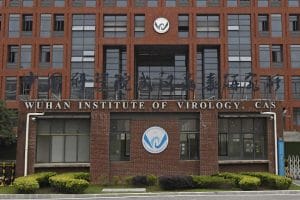
However, Wuhan is home to the Wuhan Institute of Virology, a leading world center for coronavirus research. The possibility that the SARS2 virus had escaped from the laboratory could therefore not be excluded. There were therefore two plausible scenarios of origin on the table.
From the beginning, the perceptions of the public and the media were shaped in favor of the natural emergence scenario by strong statements made by two scientific groups. Initially, these statements were not viewed as critically as they should have been.
"We are speaking out collectively to strongly condemn conspiracy theories suggesting that COVID-19 has no natural origin," a group of virologists and others wrote in theLancetop 19 februari 2020, toen het echt veel te vroeg was voor iemand om zeker te zijn wat is er gebeurd. Wetenschappers "concluderen overweldigend dat dit coronavirus zijn oorsprong vindt in dieren in het wild", zeiden ze, met een opzwepende oproep aan lezers om samen met Chinese collega's in de frontlinie van de bestrijding van de ziekte te staan.
Contrary to what the letter writers claimed, the idea that the virus may have escaped from a lab was an accident, not a conspiracy. It certainly had to be examined, not dismissed out of hand. A characteristic trait of good scientists is that they go to great lengths to distinguish between what they know and what they don't know. According to this criterion, the signatories of the Lancet letter behaved like bad scientists: they assured the public of facts they were not sure were true.
Later it turned out that the Lancet letter wasInitiated and drafteddoor Peter Daszak, voorzitter van de EcoHealth Alliance of New York. De organisatie van Daszak financierde coronavirusonderzoek aan het Wuhan Institute of Virology. Als het SARS2-virus inderdaad was ontsnapt uit onderzoek dat hij financierde, zou Daszak mogelijk schuldig zijn. Dit acute belangenconflict werd niet aan de lezers van The Lancet gemeld. Integendeel, de brief concludeerde: "We verklaren geen concurrerende belangen."

For virologists like Daszak, the stakes were high in assigning blame for the pandemic. For twenty years, they played a dangerous game, usually out of public view.In their laboratories, they routinely created viruses that were more dangerous than those found in nature.Ze voerden aan dat ze dit veilig konden doen en dat ze door de natuur vóór te zijn, natuurlijke 'spillovers' konden voorspellen en zo de overdracht van virussen van een dierlijke gastheer naar mensen zouden kunnen voorkomen. Als SARS2 inderdaad aan zo'n laboratoriumexperiment was ontsnapt, kon een enorme terugslag worden verwacht en zou de storm van publieke verontwaardiging wereldwijd virologen treffen, niet alleen in China. "Het zou het wetenschappelijke bouwwerk van boven naar beneden verbrijzelen",SaidAntonio Regalado, editor ofMIT Technology Review, in March 2020.
A second statement that had a huge impact on public opinion was aletter(so an opinion piece, not a scientific article) published in the journal on 17 March 2020Nature Medicine was published. The authors were a group of virologists led by Kristian G. Andersen of the Scripps Research Institute."Onze analyses laten duidelijk zien dat SARS-CoV-2 geen laboratoriumconstructie of een doelbewust gemanipuleerd virus is", verklaarden de vijf virologen in de tweede alinea van hun brief.
Helaas was dit weer een geval van slechte wetenschap, in de hierboven gedefinieerde zin. Het is waar dat sommige oudere methoden voor het knippen en plakken van virale genomen duidelijke tekenen van manipulatie behouden. Maar nieuwere methoden, "no-see-um" of "naadloze" benaderingen genoemd, laten geen kenmerkende sporen achter. Noch andere methoden voor het manipuleren van virussen, zoals seriële passage, de herhaalde overdracht van virussen van de ene celcultuur naar de andere. Als een virus is gemanipuleerd, hetzij met een naadloze methode of door seriële passage, is er geen manier om te weten dat dit het geval is. Andersen en zijn collega's verzekerden hun lezers van iets dat ze niet konden weten.
Het discussiegedeelte van hun brief begint: "Het is onwaarschijnlijk dat SARS-CoV-2 is ontstaan door laboratoriummanipulatie van een gerelateerd SARS-CoV-achtig coronavirus." Maar wacht, zei de leiding niet dat het virusclearwas not manipulated? The authors' degree of certainty seemed to slip a few notches when it came to expounding their reasoning.
The reason for the slip is clear once the technical language has penetrated. The two reasons the authors give for assuming that manipulation is unlikely are by no means convincing.
[Note vv: Later, their mutual Slack communication revealed that they thought very differently about it than what they wrote publicly.]
First, they say that sars2's spike protein binds very well to its target, the human ACE2 receptor, but does so in a different way than would fit best according to physical calculations. Therefore, the virus must have been created by natural selection, not by manipulation.
If this argument seems difficult to understand, it's because it's so far-fetched. The authors' basic assumption, which has not been further explained, is that anyone trying to get a bat virus to bind to human cells can only do so in one way. First, they would calculate the strongest possible fit between the human ACE2 receptor and the spike protein with which the virus attaches to it. They would then design the spike protein accordingly (by selecting the appropriate set of amino acid units that make it up). Since the SARS2 spike protein is not of this calculated best design, the Andersen paper says, it could therefore not have been manipulated.
But this ignores the way virologists actually get spike proteins to bind to chosen targets, which is not by computation, but by spike protein genes from other viruses or by splicing serial passage. With serial passage, every time the offspring of the virus is transferred to new cell cultures or animals, the more successful ones are selected until one emerges that makes a really close bond with human cells. Natural selection has done all the heavy lifting. The Andersen paper's speculation about designing a viral spike protein through computation has no bearing on whether or not the virus is manipulated by either of the other two methods.
The authors' second argument against manipulation is even more artful. While most living things use DNA as their hereditary material, a number of viruses use RNA, the close chemical cousin of DNA. But RNA is difficult to manipulate, so researchers working on coronaviruses, which are based on RNA, will first convert the RNA genome into DNA. They manipulate the DNA version, either by adding or changing genes, and then cause the engineered DNA genome to be converted back into infectious RNA.
Slechts een bepaald aantal van deze DNA-backbones is beschreven in de wetenschappelijke literatuur. Iedereen die het SARS2-virus manipuleert, zou "waarschijnlijk" een van deze bekende backbones hebben gebruikt, schrijft de Andersen-groep, en aangezien SARS2 niet van een van hen is afgeleid, is het daarom niet gemanipuleerd. Maar het argument is opvallend inconsistent. DNA-backbones zijn vrij eenvoudig te maken, dus het is gewoon mogelijk dat SARS2 is gemanipuleerd met een niet-gepubliceerde DNA-backbone.
And that's it. These are the two arguments made by the Andersen group in support of their statement that the SARS2 virus has clearly not been manipulated. And this conclusion, based on nothing but two inconclusive speculations, convinced the world press that SARS2 could not have escaped from a laboratory. A technical critique of Andersen's letter catches upharsher words.
Science is supposedly a self-correcting community of experts who constantly check each other's work. So why didn't other virologists point out that the Andersen group's argument was full of absurdly large holes?Perhaps because in today's universities, speech can be very costly. Careers can be destroyed if they step out of line. Any virologist who questions the community's position runs the risk of having their next grant application rejected by the panel of fellow virologists advising the government grant distribution agency.
[Note vv: it is questionable whether virologists do not accept GoF research and undersecurity as well-kept guild secrecy to secure research. In addition, there are also bio-military interests at play that are not discussed in this entire piece.]
Daszak and Andersen's letters were in fact political, not scientific, statements, but still amazingly effective. Articles in the mainstream press repeatedly stated that a consensus of experts had ruled that escape from the laboratory was out of the question or extremely unlikely. Their authors largely relied on the letters of Daszak and Andersen and did not understand the gaping gaps in their arguments. The mainstream newspapers all employ science journalists, as do the major networks, and these specialized reporters should be able to question scientists and check their claims. But Daszak and Andersen's claims went largely unchallenged.
Doubts about natural origin
Natural origin, zoonosis, was the media's preferred theory until around February 2021 and the visit of a World Health Organization (WHO) committee to China. The composition and access of the committee were strictly controlled by the Chinese authorities. Its members, including the ubiquitous Daszak, continued to argue that escape from the lab was extremely unlikely; before, during and after their visit. But this was not quite the propaganda victory that the Chinese authorities had hoped for. What became clear was that the Chinese had no evidence that the committee would provide support for the zoonosis theory.
The lack of evidence was surprising because both the SARS1 and MERS viruses had left abundant traces in the environment. The intermediate host species SARS1 waswithin four monthsidentified after the outbreak of the epidemic and the host of MERS within nine months. But some 15 months after the SARS2 pandemic began, and after what was likely an intensive search, Chinese researchers had not found the original bat population, or the intermediate species to which SARS2 would have jumped, or any serological evidence that any Chinese population, including that of Wuhan, had ever been exposed to the virus before December 2019. The natural genesis remained a conjecture that, however plausible, had not amassed a shred of supporting evidence in more than a year.
And as long as that remains the case, it makes sense to pay serious attention to the alternative suspicion, that SARS2 escaped from a laboratory.
Why would anyone want to create a new virus that can cause a pandemic? Ever since virologists have been given the tools to manipulate a virus's genes, they have claimed that they can get ahead of a potential pandemic by examining how close a particular animal virus might be to making the jump to humans. And that justified laboratory experiments to increase the ability of dangerous animal viruses to infect humans, virologists claimed.
With this rationale, they recreated the 1918 influenza virus, showed how to synthesize the nearly extinct polio virus from the published DNA sequence, and introduced a smallpox gene into a related virus.
These improvements in viral capabilities are known as gain-of-function experiments. In coronaviruses, there has been particular interest in the spike proteins, which protrude around the bulbous surface of the virus and virtually determine which species it will target. In 2000, Dutch researchers earned the gratitude of rodents for discovering the spike protein of a mouse coronavirus.manipulated in such a waythat it would only attack cats.
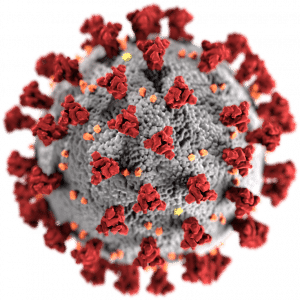
Virologists began seriously studying bat coronaviruses after they were found to be the source of both the SARS1 and MERS epidemics. In particular, researchers wanted to understand what changes needed to take place in a bat virus's spike proteins before it could infect humans.
Onderzoekers van het Wuhan Institute of Virology, onder leiding van China's toonaangevende expert op het gebied van vleermuisvirussen, Shi Zheng-li of "Bat Lady", ondernamen veelvuldige expedities naar de door vleermuizen bevolkte grotten van Yunnan in het zuiden van China en verzamelden ongeveer honderd verschillende vleermuiscoronavirussen.
Shi then collaborated with Ralph S. Baric, a leading coronavirus researcher at the University of North Carolina.Their workrichtte zich op het vergroten van het vermogen van vleermuisvirussen om mensen aan te vallen om "het opduikingspotentieel (d.w.z. het potentieel om mensen te infecteren) van circulerende vleermuis CoV's [coronavirussen] te onderzoeken". Om dit doel te bereiken, creëerden ze in november 2015 een nieuw virus door de ruggengraat van het SARS1-virus te nemen en het spike-eiwit te vervangen door een van een vleermuisvirus (bekend als SHC014-CoV). Dit gefabriceerde virus was in staat om de cellen van de menselijke luchtwegen te infecteren, tenminste toen het werd getest tegen een laboratoriumcultuur van dergelijke cellen.
"Als het virus zou ontsnappen, zou niemand het traject kunnen voorspellen",
SaysSimon Wain-Hobson, a virologist at the Pasteur Institute in Paris.
The SHC014-CoV/SARS1 virus is known as a chimera because its genome contains genetic material from two virus strains. If the SARS2 virus had been created in Shi's lab, then the direct prototype would have been the SHC014-CoV/SARS1 chimaera, the potential danger of which worried many observers and sparked heated debate.
Baric and Shi refer to the clear risks in their article, but argue that these must be weighed against The Advantage of Predicting Future (Zoonosis) Infections. Wetenschappelijke beoordelingscommissies, schreven ze, "kunnen soortgelijke onderzoeken naar het bouwen van chimere virussen op basis van circulerende stammen te riskant vinden om voort te zetten". Gezien de verschillende beperkingen die worden opgelegd aan GOF-onderzoek (gain-of-function), zijn ze van mening dat "de bezorgdheid over GOF-onderzoek op een kruispunt is beland; het potentieel om zich voor te bereiden op toekomstige uitbraken en deze te beperken moet worden afgewogen tegen het risico van het creëren van gevaarlijkere pathogenen. Bij het ontwikkelen van beleid voor de toekomst is het belangrijk om de waarde van de gegevens die door deze studies worden gegenereerd te wegen en na te gaan of dit soort studies naar chimere virussen verder onderzoek rechtvaardigen versus de inherente risico's ervan."
That ruling was made in 2015. In hindsight, in 2021, one can say that the value of gain-of-function studies in preventing the SARS2 epidemic was zero.In fact, the risk was catastrophic, if the SARS2 virus was indeed generated in a gain-of-function experiment.
Inside the Wuhan Institute of Virology
Baric had developed a general method—and explained it to Shi—to develop bat coronaviruses in such a way that they could attack other species. The specific targets were human culture cells and humanized mice. These lab mice, a low-cost and ethically sourced replacement for human subjects, have been genetically engineered to carry the human version of the protein ACE2, which lines the surface of cells lining the airways.
Shi returned to her lab at the Wuhan Institute of Virology and resumed the work she had begun genetically engineering coronaviruses to attack human cells. How can we be so sure?
Because, due to a strange twist in the story, her work was funded by the National Institute of Allergy and Infectious Diseases (NIAID), a division of the U.S. National Institutes of Health (NIH). And grant proposals Specify exactly What she was up to to do with the money.
The grants were awarded to the main contractor, Badger bag from the EcoHealth Alliance, which outsourced them to Shi. Below are excerpts from the grants for the financial years 2018 and 2019. ("CoV" stands for coronavirus, and "S protein" refers to the spike protein of the virus.)
"Voorspellingen van CoV-overdracht tussen soorten. Voorspellende modellen van gastheerbereik (d.w.z. emergentiepotentieel) zullen experimenteel worden getest met behulp van omgekeerde genetica, pseudovirus- en receptorbindingstests en virusinfectie-experimenten in een reeks celculturen van verschillende soorten en gehumaniseerde muizen."
"We zullen S-eiwitsequentiegegevens,Infectious Cloning Technology, in vitro en in vivo infectie-experimenten en analyse van receptorbinding gebruiken om de hypothese te testen dat % divergentiedrempels in S-eiwitsequenties overlooppotentieel voorspellen."
What this means, in non-technical language, is that Shi was out to create new coronaviruses with the highest possible infectivity to human cells. Haar plan was om genen te nemen die codeerden voor spike-eiwitten met een verscheidenheid aan gemeten affiniteiten voor menselijke cellen, variërend van hoog tot laag. Ze zou deze spike-genen één voor één inbrengen in de ruggengraat van een aantal virale genomen ("reverse genetica" en "infectieuze kloontechnologie"), waardoor een reeks chimere virussen ontstond. Deze chimere virussen zouden vervolgens worden getest op hun vermogen om menselijke celculturen (“in vitro”) en gehumaniseerde muizen (“in vivo”) aan te vallen. En deze informatie zou helpen bij het voorspellen van de waarschijnlijkheid van ‘overloop’, de sprong van een coronavirus van vleermuizen naar mensen.
The Methodical Approach is designed to find the best combination of coronavirus backbone and spike protein for infecting human cells. The approach could have generated SARS2-like viruses, and could indeed have created the SARS2 virus itself with the right combination of virus backbone and spike protein.
It can't yet be said whether or not Shi generated SARS2 in her lab because her data is sealed, but it seems that she was at least on the right track. "Het is duidelijk dat het Wuhan Institute of Virology systematisch nieuwe chimere coronavirussen construeerde en hun vermogen om menselijke cellen en muizen met humane-ACE2-expressie te infecteren beoordeelde", zegt Richard H. Ebright, een moleculair bioloog aan de Rutgers University en vooraanstaand expert op het gebied van bioveiligheid.
"Het is ook duidelijk," zei Ebright, "dat, afhankelijk van de constante genomische contexten die voor analyse zijn gekozen, dit werk SARS-CoV-2 of een proximale voorloper van SARS-CoV-2 had kunnen produceren." "Genomische context" verwijst naar de specifieke virale ruggengraat die wordt gebruikt als testbed voor het spike-eiwit.
The lab-escape scenario for the origin of the SARS2 virus, as should be clear by now, is not just guesswork in the direction of the Wuhan Institute of Virology. It is an elaborate hypothesis, based on the specific project funded by NIAID there.
Even if the grant required the work plan described above, how can we be sure that the plan has actually been implemented? For that, we can rely on the word of Daszak, who from the beginning of 2020 already vehemently protested against the ridiculousconspiracy theoryof an escape from the lab, invented by China-bashers.
On 9 December 2019, before the outbreak of the pandemic became public knowledge, Tie bag ainterviewin which he recounted in radiant terms how researchers at the Wuhan Institute of Virology had reprogrammed the spike protein and generated chimeric coronaviruses capable of infecting humanized mice.
"En we hebben nu, weet je, na 6 of 7 jaar dit te hebben gedaan, meer dan 100 nieuwe SARS-gerelateerde coronavirussen, heel dicht bij SARS", zegt Daszak rond minuut 28 van het interview. “Sommigen komen in het laboratorium in menselijke cellen terecht, andere kunnen SARS-ziekte veroorzaken in gehumaniseerde muizenmodellen en zijn onbehandelbaar met therapeutische monoklonale middelen en You can't vaccinate against it with a vaccine. So this is a clear and present danger....
"Interviewer: You're saying that these are different coronaviruses and you can't vaccinate against them, and not antivirals – so what do we do?
"Daszak: Nou, ik denk… coronavirussen - je kunt ze vrij gemakkelijk manipuleren in het lab. Het spike-eiwit bepaalt veel van wat er gebeurt met coronavirussen, in zoönotisch risico. Dus je kunt de sequentie krijgen, je kunt het eiwit bouwen en we werken veel samen met Ralph Baric van UNC om dit te doen. We voegen het in de ruggengraat van een ander virus en doen wat werk in het lab. Je kunt dus meer voorspellen als je een sequentie vindt. Je hebt deze diversiteit. De logische ontwikkeling voor vaccins is nu dat als je een vaccin voor SARS gaat ontwikkelen, mensen pandemisch SARS gaan gebruiken [?], maar laten we een aantal van deze andere dingen toevoegen om een beter vaccin te krijgen." De inserties waarnaar hij verwees, bevatten misschien een element dat de furine-splitsingsplaats wordt genoemd, hieronder besproken, dat de virale infectiviteit voor menselijke cellen aanzienlijk verhoogt.
In incoherent style, Daszak refers to the fact that once you've generated a new coronavirus that can attack human cells, you can take the spike protein as the basis for a vaccine.
You can imagine Daszak's reaction when he heard about the outbreak of the epidemic in Wuhan a few days later. He would know better than anyone the Wuhan Institute's goal of making bat coronaviruses contagious to humans, as well as the weaknesses in the institute's defenses against the contamination of their own researchers.
But instead of providing public health authorities with the copious information at his disposal, he immediately launched a public relations campaign to convince the world that the epidemic could not possibly have been caused by one of the institute's souped-up viruses. “The idea that this virus escaped from a laboratory is pure nonsense. It is simply not true,” he said in a statement.interviewin April 2020.
The safety features at the Wuhan Institute of Virology
Daszak may have been unaware of, or perhaps he knew all too well, the Long history of viruses that escaped from even the best-run laboratories. The smallpox virus escaped from laboratories in England three times in the 1960s and 1970s, resulting in 80 cases and 3 deaths. Since then, dangerous viruses have escaped from laboratories almost every year. In more recent times, the SARS1 virus has proven to be a true escape artist. SARS1 has escaped from laboratories in Singapore, Taiwan and no less than four times from the Chinese National Institute of Virology in Beijing.
One of the reasons SARS1 was so difficult to handle was that there were no vaccines available to protect lab workers. As Daszak noted in the Dec. 19 interview quoted above, the Wuhan researchers too had not been able to develop vaccines against the coronaviruses they had designed to infect human cells.Without a vaccine, the researchers would have been as defenseless against a self-generated SARS2 virus as their colleagues in Beijing were against SARS1.
A second reason for the serious danger of novel coronaviruses has to do with the required levels of laboratory safety. There are four safety grades, referred to as BSL1 to BSL4, with BSL4 being the most restrictive and designed for deadly pathogens such as the Ebola virus.
Het Wuhan Institute of Virology had een nieuw BSL4-laboratorium, maar de staat van paraatheid baarde de inspecteurs van het ministerie van Buitenlandse Zaken die het in 2018 bezochten vanuit de ambassade van Peking grote zorgen. "Het nieuwe lab heeft een ernstig tekort aan goed opgeleide technici en onderzoekers die nodig zijn om dit high-containment laboratorium veilig te laten werken”, schreven de inspecteurs in eentelegramof 19 January 2018.
The real problem, however, was not the unsafe state of the Wuhan BSL4 lab, but the fact that virologists worldwide do not like to work in BSL4 conditions. You have to wear a spacesuit, perform surgeries in locked closets, and accept that everything will take twice as long. So the rules that assigned each kind of virus to a certain level of safety were more lax than some might have thought sensible.
Prior to 2020, it was mandatory under the rules of virologists in China and elsewhere to conduct experiments with the SARS1 and MERS virus under BSL3circumstances. But all other bat coronaviruses could be studied in BSL2, the next level down. BSL2 requires taking free Minimum security measures, such as wearing lab coats and gloves, not vacuuming liquids into a pipette, and putting up biohazard warning signs. Still, a gain-of-function experiment conducted in BSL2 could produce an agent more infectious than SARS1 or MERS. And if so, lab workers have a high chance of infection, especially if they are unvaccinated.
A lot of Shi's work on gain-of-function in coronaviruses was conducted at the BSL2 safety level, as stated in her publications and other documents. She has in ainterviewwith the magazineSciencegezegd dat "the coronavirus research in our laboratory is carried out in BSL-2 or BSL-3 laboratories."
"Het is duidelijk dat een deel van of al dit werk werd uitgevoerd met behulp van een bioveiligheidsnorm - bioveiligheidsniveau BSL-2, the biosafety level of a standard U.S. dental office - which would pose an unacceptably high risk of infection to laboratory personnel upon contact with a virus with the transmission properties of SARS-CoV-2,” says Ebright.
"Het is ook duidelijk", voegt hij eraan toe, "dat dit werk nooit had mogen worden gefinancierd en nooit had mogen worden uitgevoerd." Dit is zijn mening, ongeacht of het SARS2-virus ooit de binnenkant van een laboratorium heeft gezien.
Concerns about safety conditions at the Wuhan lab were not misplaced. According to aFactsheetissued by the State Department on January 15, 2021: "The U.S. government has reason to believe that several researchers within the WIV became ill with symptoms consistent with both COVID-19 and common seasonal illnesses in the fall of 2019, before the first identified case of the outbreak."
David Asher, a fellow of the Hudson Institute and former State Department adviser, gave more details about the incident during aseminar. Kennis van het incident kwam van een mix van openbare informatie en "wat hoogwaardige informatie verzameld door onze inlichtingengemeenschap", zei hij. Drie mensen die in een BSL3-lab op het instituut werkten, werden binnen een week na elkaar ziek met ernstige symptomen waarvoor ziekenhuisopname noodzakelijk was. Dit was “het eerste bekende cluster waarvan we ons bewust zijn, van slachtoffers van wat volgens ons COVID-19 is.” Influenza kon niet volledig worden uitgesloten, maar leek in de gegeven omstandigheden onwaarschijnlijk, zei hij.
Comparison of the rival scenarios of SARS2 origin
The evidence above is a serious indication that the SARS2 virus could have been created in a laboratory, from which it then escaped. But the evidence, however substantial, is not sufficient. Evidence would include evidence from the Wuhan Institute of Virology, or related laboratories in Wuhan, that SARS2 or a precursor of the virus was in development there. In the absence of access to such data, a different approach is needed. To do this, we take certain salient facts about the SARS2 virus and see how well they can be explained by the two competing scenarios of origin, that of natural origin and escape from the lab. Here are four tests of those two hypotheses. A few have some technical details, but these are among the most compelling for those who want to follow the argument.
1) The place of origin.Start with geography. The two closest relatives of the SARS2 virus were collected from bats living in caves in Yunnan, a province in southern China.If the SARS2 virus had first infected people living around the Yunnan Caves, that would strongly support the idea that the virus had naturally passed to humans. But this is not what happened. The pandemic broke out 1500 kilometers away, in Wuhan.
Beta coronaviruses, the family of bat viruses to which SARS2 belongs, infect the horseshoe-nosed batRhinolophus affinis, which is found in southern China. The range of the bats is 50 kilometers, so it is unlikely that they reached Wuhan. In any case, the first cases of the COVID-19 pandemic probably occurred in September, when thetemperatures in Hubei Provincewere already cold enough to send bats into hibernation.
What if the bat viruses first infected an intermediate host?You would need a long-term population of bats that is regularly in the vicinity of an intermediate host, which in turn often has to cross paths with humans. All these virus exchanges must take place somewhere outside Wuhan, a busy metropolis that is not known to be a natural habitat of colonies ofRhinolophus-Bats.The infected person (or animal) carrying this highly transmissible virus must have traveled to Wuhan without infecting anyone else. No one in his or her family got sick. If the person went to Wuhan by train, not one fellow passenger got sick.
In other words, it is a daunting task to allow the pandemic to break out naturally outside of Wuhan and then, without leaving any trace, make its first appearance there.
For a lab escape scenario, Wuhan is the first, obvious candidate. Wuhan is home to China's leading center for coronavirus research, where, as mentioned above, researchers genetically engineered bat coronaviruses to attack human cells. They did this under the minimum safety conditions of a BSL2 lab. If a virus with the unexpected contagiousness of SARS2 had emerged there, it would be no surprise that it would escape.
2)Natural History and Evolution.The original location of the pandemic is a small part of a larger problem, that of natural history. Viruses do not simply jump from one species to another. The coronavirus spike protein, adapted to attack bat cells, requires repeated jumps to another species, most of which fail, before acquiring a happy mutation. Mutation – a change in one of its RNA units – causes another amino acid unit to be incorporated into its spike protein and makes the spike protein better able to attack the cells of another species.
Through even more such mutation-driven adaptations, the virus adapts to its new host, for example an animal with which bats often come into contact. The whole process is then resumed as the virus moves from this intermediate host to humans.
In the case of SARS1, researchers have documented the sequential changes in the spike protein as the virus evolved step by step into a dangerous pathogen. After it changed from bats to civets, there were six more changes to the spike protein before it became a mild pathogen in humans. After a further 14 changes, the virus was much better adapted to humans, and with a further four, the virusEpidemic a flight.
But if you start looking for the fingerprints of a similar transition in SARS2, you're in for a strange surprise.The virus has hardly changed until recently.From the very beginning, it was well adapted to human cells. Researchers led by Alina Chan of the Broad Institute compared SARS2 to late-stage SARS1, which by then was well adapted to human cells, and found that the two viruses were equally well adapted."By the time SARS-CoV-2 was first detected in late 2019, it had already been pre-adapted to human transmission to a degree similar to the late epidemic SARS-CoV",Wrotethey.
Zelfs degenen die denken dat de oorsprong in het laboratorium onwaarschijnlijk is, zijn het erover eens dat SARS2-genomen opmerkelijk uniform zijn. Baric schrijft dat "vroege stammen die in Wuhan, China werden geïdentificeerd, een beperkte genetische diversiteit vertoonden, wat suggereert dat het virus mogelijk uit één enkele bron is geïntroduceerd."
A single source would, of course, be compatible with laboratory escape, but less so with the massive variation and selection that characterizes the way evolution operates.
The uniform structure of SARS2 genomes does not provide any indication of a passage through an intermediate animal host, and no such host has been identified in nature.
Proponents of natural emergence suggest that SARS2 was incubated in a yet-to-be-found human population before it acquired its special traits. Or that it has jumped to a host animal outside of China.
All these conjectures are possible, but very far-fetched. Proponents of a lab leak have a simpler explanation. SARS2 was adapted to human cells from the outset because it was grown in humanized mice or in laboratory cultures of human cells, as described in Daszak's grant proposal.The genome shows little diversity because the hallmark of laboratory cultures is uniformity.
Proponents of laboratory escape joke that the SARS2 virus naturally infected an intermediate host species before spreading to humans, and that they have identified it - a humanized mouse from the Wuhan Institute of Virology.
3)The furin cleavage site.The furin cleavage site is a minuscule part of the virus's anatomy, but one that exerts a major impact on its infectivity. It sits in the middle of the SARS2 spike protein. It's also at the heart of the puzzle of where the virus came from.
The spike protein has two subunits with different roles. The first, called S1, recognizes the target of the virus, a protein called angiotensin-converting enzyme-2 (or ACE2) that covers the surface of cells lining the human respiratory tract. The second, S2, helps the virus, once anchored to the cell, fuse with the cell membrane. After the virus's outer membrane fuses with that of the affected cell, the viral genome is injected into the cell, hijacking its protein-making machinery and forcing it to generate new viruses.
But this invasion can't begin until the S1 and S2 sub-units are taken apart. And right there, right at the S1/S2 junction, is the furin cleavage site that causes the spike protein to cleave in just the right place.
The virus, a textbook example of economic design, does not have its own cleaver. It depends on the cell to split. Human cells have a protein cutting tool on their surface known as furin. Furin will cut through any protein chain that carries its distinctive target cut site. This is the sequence of amino acid units proline-arginine-arginine-alanine, or PRRA in the code that refers to each amino acid with a letter of the alphabet. PRRA is the amino acid sequence at the nucleus of the furin cleavage site of SARS2.
Viruses have all kinds of clever tricks, so why does the furin cleavage site stand out? Because of all known SARS-related beta-coronaviruses, only SARS2 has a furin cleavage site. In all other viruses, their S2 unit is split in a different place and by a different mechanism.
So how did SARS2 get its furin cleavage site? Either the site evolved naturally, or it was inserted by researchers at the S1/S2 junction in a gain-of-function experiment.
First, consider its natural origin. Two ways in which viruses evolve are through mutation and through recombination. Mutation is the process of random change in DNA (or RNA for coronaviruses) that usually results in one amino acid in a protein chain being swapped for another. Many of these changes are detrimental to the virus, but natural selection preserves the few that do something useful. Mutation is the process by which the SARS1 spike protein gradually switched its preferred target cells from those of bats to civets and then to humans.
Mutation appears to be a less likely way to generate the furin cleavage site of SARS2, although it cannot be completely ruled out. The four amino acid units of the site are all together, and all in exactly the right place in the S1/S2 junction. Mutation is a random process triggered by copying errors (when new viral genomes are generated) or by chemical decay of genomic units. Thus, it typically affects some amino acids at different places in a protein chain. It is much more likely that a series of amino acids such as those from the furin cleavage site are all obtained together through a completely different process known as recombination.
Recombination is an unintentional swapping of genomic material that occurs when two viruses enter the same cell and their offspring are joined together with bits and pieces of RNA belonging to the other. Beta coronaviruses will only combine with other beta coronaviruses, but can acquire through recombination almost any genetic element present in the collective genomic pool. What they can't acquire is an element that the pool doesn't possess. And no known SARS-related beta-coronavirus, the class to which SARS2 belongs, possesses a furin cleavage site.
Proponents of natural emergence say SARS2 could have picked up the site from an as-yet-unknown beta-coronavirus. But vSARS-related beta-coronaviruses apparently don't need a furin cleavage site to infect bat cells, so it's not very likely that anyone has one, and so far none has even been found.
The proponents' next argument is that SARS2 obtained its furin cleavage site from humans. A precursor to SARS2 could circulate in the human population for months or years until, at some point, it gained a furin cleavage site of human cells. It would then have been ready to break out as a pandemic.
If this has happened, there should be traces in the hospital surveillance records of the people infected with the slow-developing virus. But so far, none have come to light. According to the WHOreport on the origin of the virushospitals in Hubei province, home to Wuhan, routinely monitor influenza-like illnesses and "no evidence of substantial transmission of SARSCoV-2 was found in the months leading up to the December outbreak."
Thus, it is difficult to explain how the SARS2 virus picked up its furin cleavage site naturally, either by mutation or recombination.
Dat laat een gain-of-function-experiment over. Voor degenen die denken dat SARS2 uit een laboratorium is ontsnapt, is het helemaal geen probleem om de furine-splitsingsplaats uit te leggen. "Sinds 1992 weet de virologische gemeenschap dat de enige manier om een virus dodelijker te maken is om het een furine-splitsingsplaats te geven op de S1/S2-kruising in het laboratorium", Writes Steven Quay, a biotech entrepreneur interested in the origins of SARS2. "Ten minste 11 gain-of-function-experimenten, waarbij een furine-site wordt toegevoegd om een virus besmettelijker te maken, zijn gepubliceerd in de open literatuur, o.a. door Dr. Zhengli Shi, hoofd van het coronavirusonderzoek aan het Wuhan Institute of Virology."
4)It's a matter of codons.There is another aspect of the furin cleavage site that narrows the path for a natural origin even further.
As everyone knows (or at least remembers from high school), the genetic code uses three units of DNA to specify each amino acid unit of a protein chain. When read in groups of 3, the 4 different types of DNA units can specify 4 x 4 x 4 or 64 different triplets, or codons as they are called. Since there are only 20 types of amino acids, there are more than enough codons to go around, allowing some amino acids to be specified by more than one codon. For example, the amino acid arginine can be denoted by one of the six codons CGU, CGC, CGA, CGG, AGA, or AGG, where A, U, G, and C represent the four different types of units in RNA.
Here's where it gets interesting. Different organisms have different codon preferences. Human cells like to denote arginine with the codons CBT, CGC or CGG. But CGG is the least popular coronavirus codon for arginine. Keep that in mind when you look at how the amino acids in the furin cleavage site are encoded in the SARS2 genome.
The functional reason why SARS2 has a furin cleavage site and its cousin viruses do not can be seen by aligning (in a computer) the sequence of nearly 30,000 nucleotides in its genome with those of its cousin coronaviruses, the closest known to date is one called RaTG13. Compared to RaTG13, SARS2 has a 12 nucleotide insert right at the S1/S2 junction. The insert is the sequence T-CCT-CGG-CGG-GC. The CCT codes for proline, the two CGGs for two arginines, and the GC is the start of a GCA codon that codes for alanine.
There are several curious features of this insert, but the strangest is that of the two adjacent CGG codons. Only 5 percent of SARS2's arginine codons are CGG, and the CGG-CGG double codon has not been found in any other beta-coronavirus. So how did SARS2 get a few arginine codons preferred by human cells, but not by coronaviruses?
Proponents of natural emergence have an uphill task to explain all the features of SARS2's furin cleavage site. They must postulate a recombination event at a site on the virus's genome where recombinations are rare, and the insertion of a 12-nucleotide sequence with a double arginine codon unknown in the beta-coronavirus repertoire, at the only site in the genome that significantly increases the infectivity of the virus.
"Ja, maar door uw formulering klinkt dit onwaarschijnlijk - virussen zijn specialisten in ongebruikelijke gebeurtenissen", is de reactie van David L. Robertson, een viroloog aan de Universiteit van Glasgow, die ontsnapping uit het laboratorium beschouwt als een complottheorie. "Recombinatie komt van nature heel, heel vaak voor bij deze virussen, er zijn recombinatiebreekpunten in het spike-eiwit en deze codons lijken ongebruikelijk, precies omdat we niet genoeg hebben bemonsterd."
Robertson is right that evolution always produces results that may seem improbable, but in fact are not. Viruses can generate an untold number of variants, but we only see the one in a billion that natural selection chooses to survive. But this argument could go too far. For example, any result of a gain-of-function experiment could be explained as a result that evolution would have achieved in time. And the numbers game can also be played the other way around. In order for the furin cleavage site to arise naturally in SARS2, a series of events must occur, each of which is quite unlikely for the reasons listed above. It is unlikely that a long chain with several improbable steps will ever be completed.
For the lab escape scenario, the double CGG codon is no surprise. The human-preferred codon is routinely used in laboratories.So anyone who wanted to insert a furin cleavage site into the genome of the virus would synthesize the PRRA-making sequence in the lab and would likely use CGG codons to do so. "Toen ik voor het eerst de furine-splitsingsplaats in de virale sequentie zag, met zijn arginine-codons, zei ik tegen mijn vrouw dat dit de smoking gun was voor de oorsprong van het virus", zei David Baltimore, een eminente viroloog en voormalig president van CalTech."Deze kenmerken vormen een krachtige uitdaging voor het idee van een natuurlijke oorsprong voor SARS2", zei hij. [1]
[1]A third scenario of origin.There is a variation of the natural rise scenario that is worth considering. This is the idea that SARS2 jumped directly from bats to humans, without passing through an intermediate host like SARS1 and MERS did. A leading advocate is the virologist David Robertson who notes that SARS2 can attack several species other than humans. He believes that the virusdeveloped a generalist ability while it was still in bats. Because the bats it infects are widespread in southern and central China, the virus had ample opportunity to jump to humans, although it appears to have done so on only one known occasion. Robertson's thesis explains why no one has yet found a trace of SARS2 in an intermediate host or in human populations surveyed before December 2019. It would also explain the puzzling fact that SARS2 has not changed since it first appeared in humans - it found no need to do so because it could already attack human cells efficiently.
One problem with this idea, however, is that if SARS2 jumped from bat to humans in one jump and hasn't changed much since then, it should still be good at infecting bats. And it looks like it isn't.
"Geteste vleermuissoorten zijn slecht geïnfecteerd door SARS-CoV-2 en daarom is het onwaarschijnlijk dat ze de directe bron voor menselijke infectie zijn",writes a scientific group thatis skeptical of natural emergence.
Still, Robertson may be on to something. The bat coronaviruses of the Yunnan Caves can infect humans directly. In April 2012, six miners cleaning up bat guano from the Mojiang mine contracted severe pneumonia with COVID-19-like symptoms, and three eventually died. A virus isolated from the Mojiang mine, called RaTG13, is still the most well-known relative of SARS2. Much mystery surrounds the origin, reporting, and strangely low affinity of RaTG13 for bat cells, as well as the nature of 8 similar viruses that Shireports thatcollected them at the same time but has not yet published them, despite their great relevance to the ancestors of SARS2. But that's all a story for another time. The point here is that bat viruses can infect humans directly, albeit only in special circumstances.
So Who else, apart from miners digging up bat guano, comes into particularly close contact with bat coronaviruses? Well, coronavirus researchers do.Shi says she and her group collected more than 1,300 bat samples during some eight visits to Mojiang Cave between 2012 and 2015, and there were undoubtedly many expeditions to other Yunnan caves.
Imagine the researchers regularly traveling from Wuhan to Yunnan and back, collecting bat guano in dark caves and mines, and you start to see a possible missing link between the two places. Researchers may have become infected during their collecting trips, or while working with the new viruses at the Wuhan Institute of Virology. The virus that escaped from the lab would have been a natural virus, not one that arose from a gain of function.
The straight-from-bats thesis is a chimera between the natural emergence and laboratory escape scenarios. It is a possibility that cannot be dismissed. But against this are the facts that 1) both SARS2 and RaTG13 appear to have only a weak affinity for bat cells, so one cannot be completely certain that either has ever seen the inside of a bat; and 2) the theory is no better than the natural emergence scenario at explaining how SARS2 acquired its furin cleavage site, or why the furin cleavage site is determined by human-preferred arginine codons rather than by bat-preferred codons.
Where we are so far
Neither the natural emergence nor the laboratory escape hypothesis can yet be ruled out. As of May 5, 2021, there is no direct evidence for both. Therefore, no definitive conclusion can be drawn at this time.
That said, the available evidence leans more strongly in one direction than the other. Readers will form their own opinions. But it seems to me that proponents of laboratory escape can explain all the available facts about SARS2 considerably more easily than those in favor of natural emergence.
It is documented that researchers at the Wuhan Institute of Virology were engaged in gain-of-function experiments designed to allow coronaviruses to infect human cells and humanized mice. This is exactly the kind of experiment that could have given rise to a SARS2-like virus. The researchers were not vaccinated against the viruses studied and worked in the minimum safety conditions of a BSL2 laboratory. So escaping a virus would not be surprising at all. Across China, the pandemic broke out on the doorstep of the Wuhan Institute. The virus was already well adapted to humans, as expected for a virus grown in humanized mice. It possessed an unusual enhancement, a furin cleavage site, which is not possessed by any other known SARS-related beta-coronavirus, and this site contained a double arginine codon that is also unknown in beta-coronaviruses.
Proponents of natural emergence have a somewhat more difficult story to tell. The plausibility of their case rests on a single assumption, the expected parallel between the emergence of SARS2 and that of SARS1 and MERS. But none of the expected evidence supporting such a parallel history has emerged so far.No one has found the bat population that was the source of SARS2, if it has indeed ever infected bats.No intermediate host has come forward, despite an intensive search by the Chinese authorities, including the testing of 80,000 animals. There is No evidence that the virus makes multiple independent jumps from its intermediate host to humans, as both the SARS1 and MERS viruses did. There is No evidence from hospital monitoring data that the epidemic gained strength among the population as the virus developed.There is no explanation why a natural epidemic should break out in Wuhan and nowhere else.There is no good explanation for this how the virus obtained its furin cleavage site, which does not possess any other SARS-related beta-coronavirus, nor why the place is composed of human-preferred codons.The theory of natural emergence disputes a series of implausibility.
The archives of the Wuhan Institute of Virology certainly contain a lot of relevant information. But it seems unlikely that the Chinese authorities will release them, given the significant likelihood of blaming the regime in the onset of the pandemic. Without the efforts of a courageous Chinese whistleblower, we may have had just about all the relevant information we're likely to get for a while.
So it is worth trying to assess responsibility for the pandemic, at least in a preliminary way, because the main objective remains to prevent a new pandemic. Even those who are not convinced that escape from the lab is the most likely origin of the SARS2 virus may see cause for concern about the current state of regulation of gain-of-function research. There are two obvious levels of responsibility: the first, to allow virologists to conduct gain-of-function experiments, with minimal profit and high risk; the second, if SARS2 was indeed generated in a laboratory, to allow the virus to escape and unleash a global pandemic. These are the players who would most likely be blamed.
1. Chinese virologists.First and foremost, Chinese virologists are responsible for conducting gain-of-function experiments in BSL2-level safety conditions that were far too lax to contain a virus with unexpected infectivity like SARS2. If the virus has indeed escaped from their laboratory, they deserve the world's censure for a foreseeable accident that has already caused the deaths of three million people. Granted, Shi was trained by French virologists, worked closely with American virologists and followed international rules for containing coronaviruses. But she could and should have assessed the risks herself. She and her colleagues bear responsibility for their actions.
I used the Wuhan Institute of Virology as an abbreviation for all virological activities in Wuhan. It is possible that SARS2 was generated in another laboratory in Wuhan, perhaps in an attempt to create a vaccine that worked against all coronaviruses. But until the role of other Chinese virologists is clarified, Shi is the public face of China's work on coronaviruses, and for now she and her colleagues will be first in line for defamation.
2. Chinese authorities.China's central authorities did not generate SARS2, but they certainly did their best to hide the nature of the tragedy and China's responsibility for it.They suppressed all records at the Wuhan Institute of Virology and shut down the virus databases.They released a trickle of information, much of which was outright false or intended to deceive. They did their best to manipulate the WHO's investigation into the origins of the virus and led the members of the committee on a fruitless walk.So far, they are far more interested in deflecting blame than in taking the necessary steps to prevent a second pandemic.
3. The Global Community of Virologists.Virologists around the world form a loose professional community. They write articles in the same journals. They attend the same conferences. They have a common interest in seeking funds from governments and not being inundated with safety regulations.
Virologists knew better than anyone the dangers of gain-of-function research. But The power to create new viruses, and the research funding that could be obtained from it, was too tempting. They continued gain-of-function experiments.They lobbied against the moratorium imposed in 2014 on federal funding for gain-of-function research, and it was increased in 2017.
The benefits of the research in preventing future epidemics are so far nil, the risks enormous.If research on the SARS1 and MERS viruses could only be done at the BSL3 safety level, it would certainly be illogical to allow any work with novel coronaviruses at the lower level of BSL2. Whether or not SARS2 escaped from a lab, virologists around the world are playing with fire.
Hun gedrag heeft andere biologen lange tijd gealarmeerd. In 2014 drongen wetenschappers, die zichzelf de Cambridge Working Group noemden, aan op voorzichtigheid bij het maken van nieuwe virussen. In vooruitziende woorden, specificeerden ze het risico van het creëren van een SARS2-achtig virus. "Ongevallenrisico's met nieuw gecreëerde 'potentiële pandemische pathogenen' roepen ernstige nieuwe zorgen op",Wroteze . “Het in laboratoria creëren van zeer overdraagbare, nieuwe stammen van gevaarlijke virussen, met name maar niet beperkt tot influenza, brengt aanzienlijk verhoogde risico's met zich mee. Een accidentele infectie in een dergelijke omgeving zou uitbraken kunnen veroorzaken die moeilijk of onmogelijk te beheersen zijn."
When molecular biologists discovered a technique to move genes from one organism to another, they held a public conference in Asilomar in 1975 to discuss the possible risks. Despite much internal opposition, they drew up a list of strict safety measures that could be relaxed in the future - and were properly so - once the potential dangers had been better assessed.
When the CRISPR gene-editing technique was invented, biologists released a joint report from the U.S., British, and Chinese National Academies of Science urging restraint in making hereditary changes to the human genome. Biologists who invented gene drives have also been open about the dangers of their work and have tried to get the public involved.
One might think that the SARS2 pandemic would spur virologists to re-evaluate the benefits of gain-of-function research, even to engage the public in their deliberations. But no. Many virologists scoff at lab escape as a conspiracy theory, and others say nothing.They have barricaded themselves behind a Chinese wall of silence that has so far worked well to dampen, or at least delay, journalists' curiosity and the public's anger. Professions that cannot regulate themselves deserve to be regulated by others, and this seems to be the future that virologists choose for themselves.
4. The U.S. role in funding the Wuhan Institute of Virology.[2] From June 2014 to May 2019, Daszak's EcoHealth Alliance received asubsidyof the National Institute of Allergy and Infectious Diseases (NIAID), part of the National Institutes of Health, to conduct gain-of-function research with coronaviruses at Wuhan Institute of Virology. Whether or not SARS2 is the product of that research, it seems a questionable policy to outsource high-risk research to foreign laboratories with minimal safety measures.And if the SARS2 virus has indeed escaped from the Wuhan Institute, then the NIH will find itself in the terrible position of having funded a disastrous experiment that has led to the deaths of more than 3 million worldwide, including more than half a million of its own citizens.
The responsibility of the NIAID and the NIH is even more acute because for the first three years of the grant to EcoHealth Alliance, there was a moratorium on funding Gain-of-Function research. When the moratorium expired in 2017, it not only disappeared, but was replaced by a reporting system, the Potential Pandemic Pathogens Control and Oversight (P3CO) Framework, which required agencies to report any dangerous GoF work they wanted to fund for review.
The moratorium, officially called a “pause,” specifically blocked funding for any gain-of-function research that increased the pathogenicity of the influenza, MERS, or SARS viruses. Itdefined gain of functionheel eenvoudig en ruim als "onderzoek dat het vermogen van een pathogeen om ziekte te veroorzaken verbetert."
But then there is afootnoteon p.2 of the moratorium document that "an exception to the study pause may be obtained if the head of the USG funding agency determines that the study is urgently necessary to protect public health or national security."
This seemed to mean that either the director of the NIAID, Anthony Fauci, either the director of the NIH, Francis Collins, or perhaps both, allegedly invoked the exemption to keep the money flowing to Shi's gain-of-function research and not notify the federal reporting system of her research.
"Helaas maakten de NIAID-directeur en de NIH-directeur gebruik van deze maas in de wet om vrijstellingen te verlenen voor projecten die onder de Pauze vallen - belachelijk bewerend dat het vrijgestelde onderzoek 'dringend noodzakelijk was om de volksgezondheid of de nationale veiligheid te beschermen' - waardoor de Pauze teniet werd gedaan," Dr. Richard Ebright zei in eeninterviewwith Independent Science News.
Maar het is niet zo duidelijk dat de NIH het nodig vond om eventuele mazen in de wet in te voeren. Fauci vertelde een hoorzitting van de Senaat op 11 mei dat "de NIH en NIAID categorisch geen gain-of-function-onderzoek hebben gefinancierd dat moet worden uitgevoerd in het Wuhan Institute of Virology."
Dit was een verrassende uitspraak gezien al het bewijsmateriaal over Shi's experimenten met het versterken van coronavirussen en de taal van het moratoriumstatuut dat gain-of-function definieert als "elk onderzoek dat het vermogen van een pathogeen om ziekte te veroorzaken verbetert."
De verklaring kan een definitiekwestie zijn. Daszak's EcoHealth Alliance is bijvoorbeeld van mening dat de term gain-of-function alleen van toepassing is op verbeteringen van virussen die mensen infecteren, niet op dierlijke virussen. "Dus functiewinstonderzoek verwijst specifiek naar de manipulatie van menselijke virussen om ofwel gemakkelijker overdraagbaar te zijn, een ergere infectie te veroorzaken of gemakkelijker te verspreiden", vertelde een functionaris van de Alliantie aan The Dispatch Fact Check.
Als de NIH de opvatting van de EcoHealth Alliance deelt dat "functiewinst" alleen van toepassing is op menselijke virussen, zou dat verklaren waarom Fauci de Senaat kon verzekeren dat het nooit dergelijk onderzoek aan het Wuhan Institute of Virology had gefinancierd.But the legal basis of such a definition is unclear and differs from that of the moratorium language that presumably applied.
Definitions aside, the bottom line is that the National Institutes of Health supported research of a kind that could have generated the SARS2 virus, in an unguarded foreign laboratory doing work in BSL2 biosecurity conditions.
Finally
If the question of whether SARS2 originated in a lab is so substantial, why isn't it more widely known? As should be clear by now, there are many people who have reason not to talk about it. The list is, of course, led by the Chinese authorities. But virologists in the United States and Europe have no great interest in fomenting public debate about the gain-of-function experiments their community has been engaged in for years.
Nor have other scientists stepped forward to raise the issue. Government research funds are distributed on the advice of committees of scientific experts from universities. Anyone who changes course by raising difficult political issues runs the risk of not having their grant renewed and their research career being terminated. Perhaps good behavior is rewarded with the many benefits sloshing around the distribution system.And if you thought Andersen and Daszak would have tarnished their reputation for scientific objectivity after their partisan attacks on the lab's escape scenario, take a look at the second and third names on this oneList of recipientsof an $82 million grant announced by the National Institute of Allergy and Infectious Diseases in August 2020.
The US government shares a strange common interest with Chinese authorities: neither wants to draw attention to the fact that Shi's coronavirus work was funded by the US National Institutes of Health.Je kunt je het gesprek achter de schermen voorstellen waarin de Chinese regering zegt: "Als dit onderzoek zo gevaarlijk was, waarom heb je het dan gefinancierd, en ook op ons grondgebied?" Waarop de Amerikaanse kant zou kunnen antwoorden: "Het lijkt erop dat jij het was die het liet ontsnappen. Maar moeten we deze discussie echt in het openbaar voeren?”
Fauci is a longtime public servant who served with integrity under President Trump and has resumed leadership in the Biden administration in tackling the COVID-19 epidemic. It is undoubtedly understandable that Congress is reluctant to drag him over the coals over the apparent error of judgment in funding gain-of-function research in Wuhan.
To these contiguous walls of silence must be added that of the mainstream media. As far as I know, No major newspaper or television station has yet given readers an in-depth news story about the lab escape scenario, like the one you just read, although some have posted short editorials or op-eds.You might think that any plausible origin of a virus that killed three million people deserves serious investigation. Or whether it's worth exploring whether the wisdom of continuing gain-of-function research, regardless of the origin of the virus, is worthwhile. Or that funding of gain-of-function research by the NIH and NIAID would carry research during a moratorium on such research. What explains the media's apparent lack of curiosity?
FromOmertà of the virologistsis one of the reasons.Science reporters, unlike political reporters, have little innate skepticism about the motives of their sources; Most see their role largely as passing on the wisdom of scientists to the unwashed masses. So if their sources don't help, these journalists are at their wits' end.
Another reason may be the migration of a large part of the media to the left of the political spectrum. Because President Trump said the virus had escaped from a lab in Wuhan, editors gave little credence to the idea. They joined the virologists and considered escape from the laboratory to be a reprehensible conspiracy theory. During the Trump administration, they had no trouble rejecting the intelligence community's position that escape from the lab could not be ruled out. But when Avril Haines, President Biden's director of national intelligence, said the same thing, she too was largely ignored. This is not to say that editors should have endorsed the lab escape scenario, just that they should have fully and honestly explored the possibility.
People around the world who have been virtually confined to their homes for the past year may want a better answer than their media is giving them. Maybe one will show up in time. After all, the more months that pass without the theory of natural emergence gaining a shred of supporting evidence, the less plausible it seems. Perhaps the international community of virologists will be seen as a false and selfish guide. The common-sense perception that a pandemic breaking out in Wuhan could have something to do with a Wuhan lab cooking new viruses of maximum danger in unsafe conditions could end up crowding out the ideological insistence that whatever Trump said can't be true.
And then the reckoning can begin.
Comments:
[1] This quote was added to the article after its first publication.
[2] Section revised May 18, 2021
Credits
The first to take a serious look at the origins of the SARS2 virus was Yuri Deigin, a biotech entrepreneur in Russia and Canada. In a long and brilliantessayhe dissected the molecular biology of the SARS2 virus and, without approving it, raised the possibility that it had been manipulated. The essay, published on April 22, 2020, provided a roadmap for anyone who wanted to understand the origins of the virus. Deigin packed so much information and analysis into his essay that some doubted it could be the work of one person and suggested that some intelligence agency had written it. But the essay is written with more lightness and humor than I suspect ever found in CIA or KGB reports, and I see no reason to doubt that Deigin is the very capable sole author.
In Deigin's wake, several other skeptics of the virologists' orthodoxy have followed. Nikolai Petrovsky calculated how closely the SARS2 virus binds to the ACE2 receptors of different species and was surprised to find that itOptimizedlaymanfor the human receptor, leading him to conclude that the virus may have been generated in a lab. Alina Chan published aPaperwhich showed that SARS2 was very well adapted to human cells from its first occurrence.
Een van de weinige gevestigde wetenschappers die de absolute afwijzing van laboratoriumontsnapping door de virologen in twijfel heeft getrokken, is Richard Ebright, die al lang heeft gewaarschuwd voor de gevaren van gain-of-function-onderzoek. Een andere is David A. Relman van de Stanford University. "Hoewel er sterke meningen zijn, kan geen van deze scenario's met zekerheid worden uitgesloten of uitgesloten met de momenteel beschikbare feiten",streakhe. Kudos also to Robert Redfield, former director of the Centers for Disease Control and Prevention, whoCNNon 26 March 2021toldthat the "most likely" cause of the epidemic came "from a laboratory", because he doubted that a bat virus would become an extreme human pathogen overnight, without taking the time to evolve, as seemed to be the case with SARS2.
Steven Quay, a physician-researcher, hasstatistical and bioinformatic tools appliedon ingenious explorations of the origins of the virus, showing, for example, how the hospitals that receive the early patients are clustered along the WuhanNo2 Subway Linewhich connects the Institute of Virology at one end with the international airport at the other, the perfect conveyor belt to spread the virus from lab to globe.
In June 2020, Milton Leitenberg published aEarly Overviewof the evidence advancing laboratory escape from gain-of-function research at the Wuhan Institute of Virology.
Vele anderen hebben belangrijke stukjes van de puzzel bijgedragen. "De waarheid is de dochter," zei Francis Bacon, "niet van gezag maar van tijd." De inspanningen van mensen zoals de hierboven genoemde zijn wat het zo maakt.
Support the newsletter that published the original article
Jan Bonte
The above article is from 2021 and much more information has been released since then. Everything supports the main thrust of Wade's article, from WOB documents to genetic research. The pangolin and the raccoon dog did not last long. Want to know exactly how it works? Follow Jan Bonte on X and buy the book he is working on, he just posted it again a tweet .

Why such complicated reasoning? Every veterinarian knows that the outbreak of an animal disease (e.g. foot-and-mouth disease) can be found in a circle around the laboratory where the examination takes place (at foot-and-mouth disease Lelystad). In all likelihood, this will not have been different in Wuhan.
Every meteorologist, every physicist knows how aerosols behave, every doctor knows that vaccinating against rapidly mutating respiratory viruses makes no sense, every logician sees the crooked reasoning in policy, every statistician recognizes models and data interpretations, every politician knows... etc. etc. etc.
Those observations have been of little use to us. Where were all those experts? That's the point.
With such ridiculously long pieces of text, you don't convince anyone at all. A miscalculation by Anton this time. Nothing but praise for Vieusvaria.
@Theo yes, it's a (too) long piece but important. If you only scan the bold texts, you have the crux of the story.
If you only summarize it with highlights, without evidence, only conspiracy platitudes remain. The point is that all this underlying evidence was already there in 2021.
To my knowledge, no veterinarian has expressed the knowledge gained during training about the cause of the outbreak of illness in the outbreak of corona. However, a fellow virologist has been glorified.
See Lowi Advice 2022-09 on the Lowi Website and see minor sugestions on the wikipedia site about The Lancet Letter Covid 19.
Indeed. See also my answer to Hans Dekkers.
De inhoud van dit uitstekende artikel wordt bevestigd door Tulsi Gabbert ,juni 2026 ,in onderstaande video:
https://youtu.be/c7JAAF0VbQI