


shortlink: https://t.ly/gbaa
Aseem Malhotra, een controversiële cardioloog, gevaccineerd, overtuigde zijn patiënten om zich vooral tegen Covid te laten inenten. Hij ondersteunde het 'narratief' volledig, totdat zijn vader onverwacht en onverklaarbaar overlijdt. Het bleek een hartstilstand na pijn op de borst. En dat terwijl hij zijn vader nog vrij recent had onderzocht. De zoektocht die daarop volgt beschrijft hij in een Case Study, vandaag gepubliceerd. Omdat het zo'n toegankelijk en goed onderbouwd (peer reviewed) verhaal is deel ik het hier in het Nederlands. Ik realiseer me ook dat het hier alleen over hartproblematiek gaat. Ik heb het vermoeden dat we soortgelijke verhalen ook nog op andere vakgebieden gaan zien: herseninfarcten, oplaaiende kanker, neurologische problemen... Het blijft vooralsnog gissen.
Gisteren verscheen ook een interview van Steve Kirsch met Paul Marik, een bekende naam voor betrokken coronavaccin-critici. Op handen gedragen en opvallend vaak geciteerd medicus - totdat hij aan de bel trok over de vaccins. Hij zegt in dat interview onder meer:
"Covid onthulde de corruptie die er allang was. Ik moest alles afleren wat ik had geleerd. Ik vertrouwde op RCT's en die bleken geperverteerd en gecorrumpeerd door Big Pharma."
Dr. Paul Marik during his interview on Steve Kirsch's podcast
Strong language. Your career will be based on it. Marik says that it took a while before he could accept how the reality around the corona vaccines worked.
Van Aseem Malhotra vind ik het bijzonder dat hij nu eens niet één van de usual suspects is die als arts het "safe and effective" narratief in twijfel trekt. Hij is bovendien nog arts, zijn licentie is hem nog niet ontnomen (luister het interview met Marik als je wil horen hoe dat in zijn werk gaat).
[edit: I just saw that Robert Malone has one substack has dedicated to, with a video of Malhotra in it.]
Below is the translation of the two articles from The Journal of Insulin Resistance. The 48 references refer to the original english article. There you will also find the document and research details, PDF/XMS/EPUB versions, contact addresses etc. If you read English well, please go there. This is Part 1 only. For Part 2 of the paper look here.
Het met echte 'evidence-based medicine' bestrijden van de pandemie van desinformatie over de COVID-19 mRNA-vaccins - Deel 1
Vaccines save lives
The development of safe and highly effective vaccines in the second half of the 20th century is one of the greatest achievements of medicine. The prominent scars on my left arm are a constant reminder of the success of our ability to contain some of the deadliest diseases like smallpox, tuberculosis (TB), measles, mumps and rubella, to name a few. It is estimated that the traditional vaccines together save about 4 to 5 million lives per year1. The greatest success of vaccination was the global eradication of smallpox, which had a mortality rate of 30%.2
Met andere woorden, bijna één op de drie mensen die de pokken opliepen, stierf. De ontwikkeling van een veilig en doeltreffend vaccin na veel vallen en opstaan leidde ertoe dat 95 van de 100 personen werden beschermd tegen symptomatische besmetting met pokken en dat de immuniteit vijf jaar duurde, waardoor het virus in de jaren zeventig volledig was uitgeroeid. Evenzo wordt gezegd dat één dosis mazelenvaccin "95% effectief" is. Wat wordt daarmee bedoeld? De meeste mensen gaan ervan uit dat 95 van de 100 mensen die de inenting krijgen, beschermd zijn tegen symptomatische infectie en overdracht en ook langdurige immuniteit hebben. Evenzo zullen bij blootstelling aan waterpokken slechts vijf van de 100 gevaccineerde kinderen deze ziekte oplopen.
Vaccines are also among the safest interventions in the world compared to most drugs used in the treatment of chronic diseases, as we should expect, since they are administered to prevent something in healthy people and not to treat a disease. Therefore, it was good news that in the summer of 2020, several pharmaceutical companies, including Pfizer and Moderna, announced the results of their two-month randomized controlled trial, which showed that they had developed a vaccine with an effectiveness of more than 95% to prevent infection of what was at the time the most circulating strain of the coronavirus 2019 (COVID-19).
The experience of a doctor
Als vrijwilliger in een vaccinatiecentrum was ik een van de eersten die eind januari 2021 twee doses van het mRNA-vaccin van Pfizer kreeg. Hoewel ik wist dat mijn individuele risico klein was van COVID-19 op 43-jarige leeftijd met optimale metabolische gezondheid1, was de belangrijkste reden dat ik de prik nam om overdracht van het virus aan mijn kwetsbare patiënten te voorkomen. Begin 2021 werd ik zowel verrast als bezorgd door een aantal van mijn vaccin-weigerachtige patiënten en mensen in mijn sociale netwerk die mij vroegen om commentaar op wat ik op dat moment beschouwde als louter "anti-vax" propaganda.
I was asked for Good Morning Britain after a film director, Gurinder Chadha, Order of the British Empire (OBE), who was previously wary of vaccines and was also interviewed, explained that I had convinced her to take the jab.
Maar een paar maanden later gebeurde er een zeer onverwachte en uiterst schrijnende persoonlijke tragedie die het begin zou zijn van mijn eigen reis naar wat uiteindelijk een openbaring en eye-opening zou blijken te zijn, zo diepgaand dat ik na zes maanden van kritische beoordeling van de gegevens zelf, en gesproken hebbend met vooraanstaande wetenschappers die betrokken zijn bij COVID-19 onderzoek, de veiligheid en ontwikkeling van vaccins, en met twee onderzoeksjournalisten, langzaam en met tegenzin heb geconcludeerd dat, in tegenstelling tot mijn eigen aanvankelijke dogmatische overtuigingen, het mRNA-vaccin van Pfizer lang niet zo veilig en effectief is als we aanvankelijk dachten. Deze kritische beoordeling is gebaseerd op het analytische kader voor het beoefenen en onderwijzen van evidence-based medicine, waarbij specifiek gebruik wordt gemaakt van individuele klinische expertise en/of ervaring met gebruikmaking van het beste beschikbare bewijsmateriaal en rekening wordt gehouden met de voorkeuren en waarden van de patiënt.
A case study
Case studies are a useful way to convey complex clinical information and can reveal useful data that would be lost or not made clear in the summary results of a clinical trial.

On July 26, 2021, my father, Dr Kailash Chand OBE, former deputy chairman of the British Medical Association (BMA) and its honorary vice-chairman (who had also taken both doses of the Pfizer mRNA vaccine six months earlier) went into cardiac arrest at home after chest pain. A later investigation found that a significant delay in the ambulance likely contributed to his death.3 But I found his post-mortem findings particularly shocking and inexplicable. Two of his three major arteries had severe blockages: 90% blockage in his left vein and 75% blockage in his right heart vein. Considering he was an extremely fit and active 73-year-old man, who had walked an average of 10-15000 steps a day during his entire lockdown, this was a shock to everyone who knew him, but especially to me. I knew his medical history and lifestyle in detail. My father, who had been an avid athlete all his life, was fitter than the vast majority of men his age. Since the previous heart scans (a few years earlier, which had revealed no significant problems with perfect blood flow through his arteries and only slight ramps) he had stopped sugar, lost belly fat, reduced the dose of his blood pressure pills, had started regular meditation, reversed his prediabetes and even massively lowered his triglycerides in the blood, which significantly improved his cholesterol profile.
I couldn't explain his postmortem findings, especially since there was no evidence of a real heart attack but with severe blockages. This was exactly my own special area of research. That is, how to slow and even reverse the progression of heart disease. In my own clinic, I successfully prescribe a lifestyle protocol to my patients based on the best available evidence on how to achieve it. In fact, I co-authored a highly impactful peer-reviewed paper with two internationally renowned cardiologists (both editors of medical journals) on shifting the paradigm on how heart disease can be most effectively prevented through lifestyle changes.4 We benadrukten het feit dat coronaire hartziekte een chronische inflammatoire aandoening is die wordt verergerd door insulineresistentie. In november 2021 werd ik geattendeerd op een peer-reviewed abstract gepubliceerd in Circulation, met verontrustende bevindingen. Bij meer dan 500 patiënten van middelbare leeftijd onder regelmatige follow-up, met behulp van een voorspellend scoremodel gebaseerd op ontstekingsmarkers die sterk gecorreleerd zijn met het risico van een hartaanval, werd het mRNA-vaccin in verband gebracht met een significante verhoging van het risico van een coronaire gebeurtenis binnen vijf jaar van 11% vóór het mRNA-vaccin tot 25% 2-10 weken na het mRNA-vaccin. Een vroege en relevante kritiek op de geldigheid van de bevindingen was dat er geen controlegroep was, maar toch, zelfs als het gedeeltelijk juist was, zou dat betekenen dat er een grote versnelling zou zijn in de progressie van coronaire hartziekte, en belangrijker nog, het risico van een hartaanval, binnen enkele maanden na het nemen van het vaccin. Ik vroeg me af of de Pfizer-vaccinatie van mijn vader, die hij zes maanden eerder had gekregen, kon hebben bijgedragen tot zijn onverklaarbare vroegtijdige dood en dus begon ik de gegevens kritisch te beoordelen.
Doubts about the data
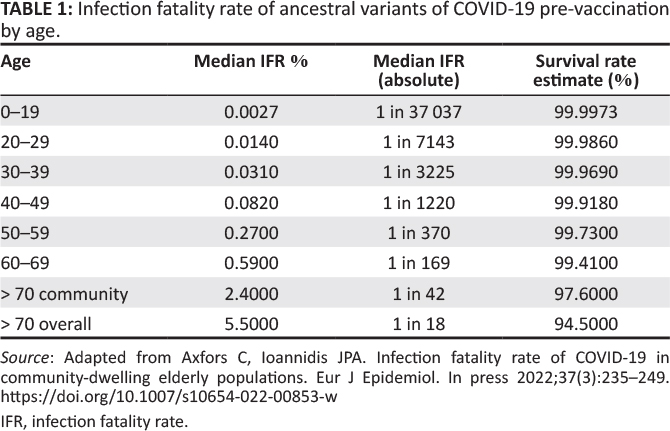
I remember a fellow cardiologist informing me, to my surprise at the time, that he had decided not to take the vaccine for a number of reasons, including his personal low background risk of COVID-19 (see Table 1)6 and concerns about unknown short- and longer-term damage. One thing that troubled him about Pfizer's crucial mRNA study, published in The New England Journal of Medicine, was the data in the supplement, specifically that there were four cardiac arrests in those who took the vaccine, versus only one in the placebo group. 7
These figures were small in absolute terms and did not achieve statistical significance in the study, suggesting that it may just be a coincidence, but without further studies it was not possible to rule out that this is a true causal relationship (especially without access to the raw data), in which case it could cause a wave of cardiac arrests once the vaccine is distributed to tens of millions of people around the world.
Wat de doeltreffendheid betreft, werden in de krantenkoppen over de hele wereld zeer gewaagde beweringen gedaan over 95% doeltreffendheid, waarbij het verwisselbare gebruik van "doeltreffendheid" en "effectiviteit" het grote verschil tussen gecontroleerde proeven en reële omstandigheden verdoezelt.8 It would be understandable to the lay public and doctors to interpret this as meaning that 95% of people would be protected from infection if 100 people were vaccinated. Even the director of the Centers of Disease Control (CDC), Rochelle Walensky, recently admitted in an interview that it was the first reports from CNN that made her optimistic that the vaccine would significantly stop transmission and infection, but it later turned out that this was far from true for the COVID-19 vaccines.9 Uit de oorspronkelijke proef bleek dat een persoon 95% minder kans had om de herfstvariant van COVID-19 op te lopen. Dit staat in medische termen bekend als relatieve risicovermindering, maar om de werkelijke waarde van een behandeling te kennen, moet men voor die persoon nagaan met hoeveel zijn individuele risico door de interventie is verminderd - d.w.z. de absolute individuele risicovermindering.10
Belangrijk is dat de proefresultaten erop wijzen dat het vaccin alleen voorkomt dat iemand een positieve test met symptomen krijgt, en dat de absolute risicovermindering daarvoor 0,84% bedraagt (0,88% verminderd tot 0,04%). Met andere woorden, als 10000 mensen waren gevaccineerd en 10.000 niet, zouden voor elke 10.000 gevaccineerden in proef 4 mensen positief hebben getest met symptomen, vergeleken met 88 die niet waren gevaccineerd. Zelfs in de niet-gevaccineerde groep zouden 9.912 van de 10.000 (meer dan 99%) niet positief getest zijn tijdens de proefperiode. Een andere manier om dit uit te drukken is dat je 119 mensen zou moeten vaccineren om één zo'n symptomatische positieve test (die verondersteld wordt te wijzen op een infectie, wat op zich mogelijk misleidend is, maar buiten het bestek van dit artikel valt) te voorkomen.
Deze absolute risicovermindering (0,84%) is uiterst belangrijk voor artsen en patiënten om te weten, maar hoeveel van hen werd dit verteld toen ze de prik kregen? Transparante communicatie over risico's en voordelen van elke interventie is een kernbeginsel van ethische, op bewijs gebaseerde medische praktijk en geïnformeerde toestemming.11
The Academy of Medical Royal Colleges made this clear in an article published in the BMJ in 2015.12Een co-auteur was destijds ook de toenmalige voorzitter van de General Medical Council. Gerd Gigerenzer, de directeur van het Max Planck Instituut, stelde in een bulletin van de Wereldgezondheidsorganisatie (WHO) uit 2009 zelfs: "Het is een ethische imperatief dat iedere arts en patiënt het verschil begrijpt tussen relatieve en absolute risico's om patiënten te beschermen tegen onnodige angst en manipulatie".13
Contrary to popular belief, the study did not show a statistically significant reduction in serious illness or COVID-19 mortality from the vaccine during the six months of the study, but the actual number of deaths (attributed to COVID-19) is still important to note. There were only two deaths from COVID-19 in the placebo group and one death from COVID-19 in the vaccine group. Looking at all-cause mortality over a longer period of time, there were actually slightly more deaths14in the vaccine group (19 deaths) than in the placebo group (17 deaths). Also noteworthy was the extremely low number of cases of COVID-19 disease identified as severe in the placebo group (nine severe cases out of 21,686 subjects, 0.04%), indicating a very low risk of serious illness, even in areas chosen for the study because the infection was thought to be common.
Finally, the trials in children did not even show a reduction in symptomatic infections, but used the surrogate measure of blood antibody levels to establish efficacy, although the link between the antibody levels caused by the Wuhan spike vaccine and protection against infection is weak at best. The Food and Drug Administration (FDA) website states that:
The results of the currently permitted SARS-COV-2 antibody tests should not be used to evaluate a person's level of immunity or protection against COVID-19 at any time, and certainly not after the person has received a COVID-19 vaccination.15
Now that we know what the published trial did and did not show in terms of vaccine efficacy, we can try to extrapolate what the effect of the vaccine would be in reducing the mortality rate or other negative consequences of the virus. If there is a 1 in 119 chance that the vaccine will protect you from symptomatic infection by ancestral variants, then in order to find protection against mortality, this figure (11 = 119), must be multiplied by the number of infections leading to one death for each age group. This would result (up to two months after the vaccination) in the absolute risk reduction (before death) of the vaccine. For example, if my risk of dying from Delta at age 44 (should I become infected with it) is 1 in 3,000, then the absolute risk reduction of the vaccine that protects me from death is 1 in 3,000 multiplied by 119, so 1 in 357,000.
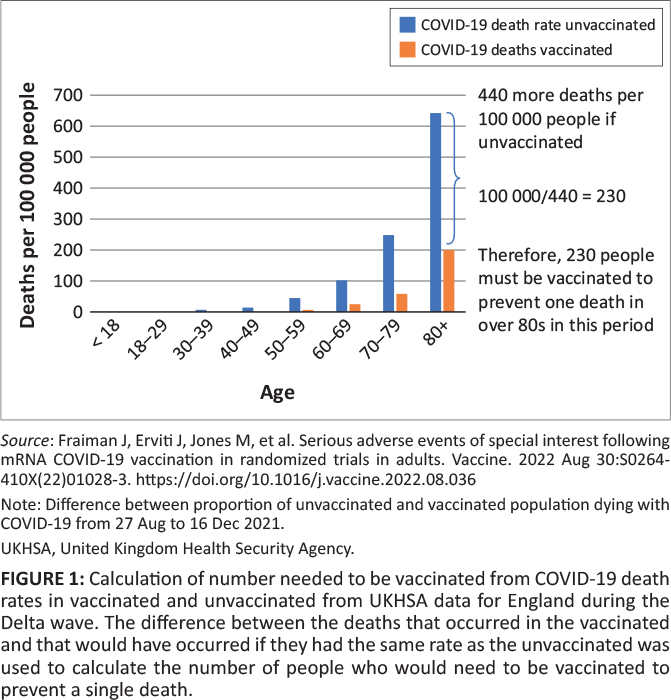
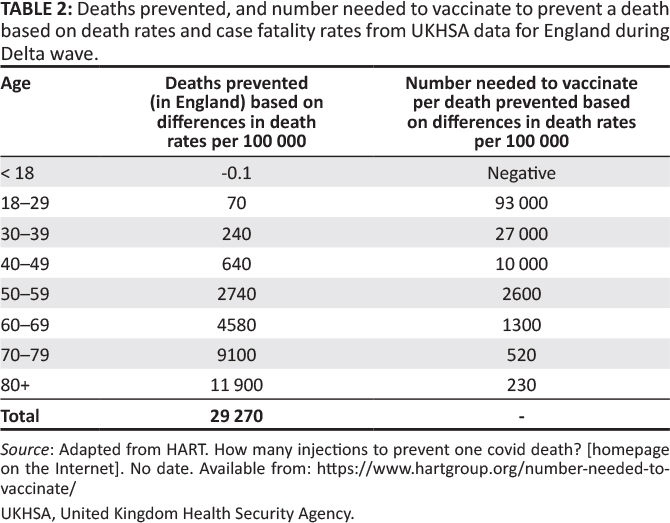
Of course, even for the people who become infected, the vaccination can provide some protection against death. Observational data can be used to calculate how many people need to be vaccinated to prevent a COVID-19 death. A comparison of population mortality rates16 for example, during the Delta wave indicates that 230 over-80s need to be vaccinated to prevent one death during that period, while that number rises to 520 for 70-year-olds and 10000 for 40-year-olds (see Table 2 and Figure 1 17).
Deze cijfers worden echter vertekend door onnauwkeurigheden in de meting van de omvang van de niet-gevaccineerde bevolking. Zoals ook wordt opgemerkt in een recent hoofdartikel van John Ioannidis in BMJ evidence-based medicine, kan de uit niet-gerandomiseerde studies afgeleide werkzaamheid van het vaccin "onecht" zijn, waarbij de vertekening wordt veroorzaakt door "reeds bestaande immuniteit, verkeerde classificatie van de vaccinatie, verschillen in blootstelling, testen, verwarring door ziekterisicofactoren, beslissingen over ziekenhuisopname, verschillen in het gebruik van behandelingen en toerekening van overlijden".18
These figures refer to the entire population of England and do not necessarily apply to the healthy population; More than 95% of the deaths involved people with pre-existing conditions.19 It is also important to note that the vaccinated and unvaccinated populations differ from each other in other ways, which can skew mortality rates. For example, the unvaccinated are more likely to belong to a lower socioeconomic population, putting them at greater risk of serious illness or death if infected.
Professor Carl Heneghan, the director of the Centre of Evidence Based Medicine at Oxford, has explained his own clinical experience with the bias of healthy users. Some of his own patients who ended up in intensive care unit (ICU) with COVID-19 (classified as unvaccinated) did not take the vaccine because they were already suffering from a terminal illness.
Given these limitations, the above figures are likely to be an overestimation of the individual benefit of vaccination; Discussing such uncertainties openly and honestly is an essential part of shared decision-making.
What should be part of the discussion about shared informed consent when someone is considering taking the jab is something along these lines: Depending on your age, hundreds or thousands of people like you should be injected to prevent one person from dying from the Delta variant of COVID-19 over a period of about three months. For people over 80, this number is at least 230, but it rises the younger one is, to at least 2,600 for people aged 30 and over, 10,000 for people aged 40 and 93,000 for people aged 18 to 29. For omicron, which has been shown to be 30%-50% less lethal, that means significantly more people need to be vaccinated to prevent one death. How long the protection actually lasts is unknown; Currently, in some countries, boosters are recommended after only 4 months.
But how many people have had a conversation even close to such a statement? Not to mention the known, unknown and not yet fully quantified damage.
While many have proposed that omikron is intrinsically less lethal (supported by the observed molecular differences between omikron and the Wuhan-type virus), the immunity built up from previous exposure to protect against severe disease is also likely to be relevant to some extent. The crucial point is that, whether viral or immune-related, the milder nature of omikron is evident in the unvaccinated and therefore the reduction in mortality should not be attributed to vaccines.
What are the disadvantages?
Concerns have already been raised about the underreporting of adverse events in the clinical trials for the COVID-19 vaccines. Investigating medical reporter Maryanne Demasi analyzed the various ways the pivotal mRNA tests failed to account for serious damage.20 Not only were trial participants limited to the types of side effects they could report on their digital apps, but some participants who were hospitalized after the inoculation were taken out of the trial and not reported in the final results. After two months in the pivotal trials, the FDA allowed vaccine companies to offer the vaccine to subjects in the placebo group, essentially torpedoing any chance of proper record of side effects from then on and forcing a reliance on pharmacovigilance data.
Such data shows that one of the most common damage caused by the mRNA COVID-19 vaccine is myocarditis. A study in several Scandinavian countries showed an increased risk of mRNA vaccination relative to background, especially in young men.21 Authorities have repeatedly claimed that myocarditis is more common after COVID-19 infection than after vaccination.22 Onderzoeksgegevens die aantonen dat vaccinatie het risico op myocarditis bij latere infectie vermindert, zijn echter ongrijpbaar, en in feite kunnen de risico's additief zijn. De incidentie van myocarditis schoot omhoog vanaf het voorjaar van 2021, toen de vaccins werden uitgerold naar de jongere cohorten die het hele jaar daarvoor binnen het normale niveau waren gebleven, ondanks COVID-19,23with the most recent evidence, a paper from Israel24found that the infection itself, prior to the vaccine rollout, did not increase the risk of myocarditis or pericarditis from COVID-19, strongly suggesting that the increases observed in previous studies were due to the mRNA vaccines, with or without COVID-19 infections as an additional risk in the vaccinated.24
Indeed, this reflects my own clinical experience advising and guiding several patients in the community who presented with a clear suggestion from the history of myocarditis after mRNA vaccination, but who were not necessarily unwell to be hospitalized. A very fit lady in her 50s developed fatigue and shortness of breath with exercise a few weeks after her second Pfizer injection. An echocardiogram showed severe impairment of her left ventricular function. Another 30-year-old lady developed similar symptoms with disturbing palpitations within a few days of her second injection; an ultrasound also showed a slight deterioration in left ventricle function, and a subsequent MRI scan of the heart showed several areas of lategadolinium elevation, a feature seen on the scan that corresponds to damaged heart tissue, and since heart cells cannot be replaced, this is likely to have long-term consequences.
Although vaccination-induced myocarditis is not often fatal in young adults, MRI scans show that about 80% of those who are hospitalized have some degree of myocardial damage.25,26Het is alsof men een klein hartinfarct krijgt en een - waarschijnlijk blijvend - letsel aan de hartspier oploopt. Het is onzeker hoe dit op de langere termijn zal uitpakken, onder meer of en in welke mate dit het risico op een slechte levenskwaliteit of mogelijk ernstigere hartritmestoornissen in de toekomst zal verhogen.
A number of reports, depending on age, have yielded rates of myocarditis ranging from 1 in 6,000 in Israel27 up to 1 in 2,700 in a study in Hong Kong involving male children and adolescents aged 12-17.28Most epidemiological studies that have been conducted have measured cases of myocarditis diagnosed in a hospital setting, and do not pretend to be a complete measurement of more mild cases (from which long-term damage cannot be excluded). Moreover, underreporting of adverse events is the scourge of pharmacovigilance data.29
Het Verenigd Koninkrijk vertrouwt op het "Yellow Card"-rapportagesysteem van de Medicines and Health Regulatory Agency (MHRA's),30 which is far from sufficient for a rapid rollout of a brand new product. It discovered the clotting problems that led to the withdrawal of the AstraZeneca product in April 2021 for young people only after 9.7 million doses had been administered in the United Kingdom31; in Denmark, on the other hand, the problem was discovered after only 150,000 doses were administered.32
In the United Kingdom, almost 500,000 reports of adverse events have been registered since the distribution of the vaccine (via the yellow card system) in relation to the mRNA COVID-19 vaccinations, involving more than 150,000 people. In terms of the number of reports per person (i.e. who has received at least one dose), the MHRA's figures show that around 1 in 120 people have a probable adverse event that is more than minor.30De MHRA is echter niet duidelijk over het percentage en maakt bovendien geen onderscheid tussen ernstige ongewenste voorvallen. Niettemin is dit niveau van meldingen ongekend in het moderne medische tijdperk en gelijk aan het totale aantal meldingen dat in de eerste 40 jaar van het meldingssysteem van de gele kaart (voor alle geneesmiddelen - niet alleen vaccins) tot 2020 is ontvangen.33 By comparison, for the measles, mumps and rubella (MMR) vaccine, the number of reports per vaccinated person was about 1 in 4,000, more than thirty times less often than the 1 in 120 reports of the yellow card for recipients of a COVID-19 vaccine.34 Norway does separate the reported serious side effects and shows a rate of about 1 in 1000 after two doses of BioNTech/Pfizer mRNA product that lead to hospitalization or are life-changing.35
Een andere, meer bruikbare informatiebron (vanwege de gedetailleerdheid van elk rapport dat aan het publiek ter beschikking wordt gesteld) is het Vaccine Adverse Effect Reporting System (V AERS) van de Verenigde Staten (VS). Net als bij het systeem van het VK is het aantal meldingen - waaronder ernstige - in verband met COVID-19-vaccins volkomen ongekend. Vanaf 02 maart 2022 zijn bijvoorbeeld meer dan 24.000 sterfgevallen geregistreerd in VAERS; 29% daarvan deed zich voor binnen 48 uur na de injectie en de helft binnen twee weken. Het gemiddelde meldingspercentage vóór 2020 bedroeg minder dan 300 sterfgevallen per jaar. Een vaak gegeven verklaring hiervoor is dat de uitrol van het COVID-19-vaccin ongekend omvangrijk is; dit gaat echter niet op, aangezien de Verenigde Staten (in ieder geval de afgelopen tien jaar) jaarlijks 150 miljoen -200 miljoen vaccinaties hebben toegediend. Een andere kritiek op V AERS is dat "iedereen een melding kan maken", maar een analyse van een steekproef van 250 vroegtijdige sterfgevallen wees uit dat de overgrote meerderheid bestaat uit meldingen door ziekenhuizen of artsen36Knowingly filing a false VAERS report is a violation of federal law that is punishable by a fine and imprisonment.37
Since VAERS was set up to generate early signals of potential harm for new vaccines, and has played a role in the process for several products, it seems perverse to criticize it as unreliable only now, when no changes seem to have been made to its operation.
It is estimated that the serious adverse events that are officially reported are in fact a gross underestimate, and this should be kept in mind with the above comments on VAERS reports. For example, an article by David Kessler (former FDA commissioner) cites data showing that only 1% of serious adverse events are reported to the FDA.38Similarly, in relation to the yellow card scheme in the United Kingdom, it is estimated that only 10% of serious adverse reactions are reported.39,40 A recent pre-publication co-authored by some of the most trusted medical scientists in the world in connection with data transparency adds validity to pharmacovigilance data. By consulting data from the FDA and Health Canada websites and combining results from journal articles publishing the Pfizer and Moderna trials, the authors concluded that the absolute risk of a serious adverse event from the mRNA vaccines (a rate of one in 800) was significantly higher than the risk of hospitalization for COVID-19 in randomized controlled trials.17
What VAERS and other reporting systems (including the yet-to-be-referenced and independently evaluated raw data from randomized controlled trials) will miss are potential medium- to long-term harms that neither patients nor physicians will automatically attribute to the drug. For example, if the mRNA vaccine increases the risk of coronary disease within a few months (which was likely a contributing factor to my father's sudden cardiac death), then this would increase the rate of disease well beyond the first few weeks of the jab, but it is very unlikely that this will be attributed to the vaccine later and thus reported.
It is instructive to note that according to ambulance service data, in 2021 (the year of the vaccine rollout) there were about 20,000 (-20% increase) additional calls for out-of-hospital cardiac arrest compared to 2019, and about 14,000 more than in 2020. Data obtained under freedom of information legislation from one of the largest ambulance trusts in England suggests that there was no increase from November 2020 to March 2021, and since then the increase has been seen disproportionately in young people.41 This is a huge signal that certainly needs to be investigated with some urgency.42
Similarly, a recent article in Nature showed a 25% increase in both acute coronary syndromes and cardiac arrests in the 16 to 39 age groups that were significantly associated with administration of the first and second doses of the mRNA vaccines, but no association v.1 with COVID-19 infection.43 The authors state that:
The findings raise concerns about vaccine-induced undetected serious cardiovascular side effects and reinforce the already established causal link between vaccines and myocarditis, a frequent cause of unexpected cardiac arrest in young people. (p. 1)
The disturbing findings in this article have led to calls for retraction. In the past, scientists with a different view of how data should be analyzed would have published an article with divergent assumptions and interpretation for discussion. Now they are trying to censor.
Much more concern has been raised about potential harm from the vaccines in the medium to long term. While some of these concerns remain hypothetical, it may be a serious mistake to focus only on what is measurable and not on the broader picture, especially for young people.
What could be the damage mechanism?
Bij "conventionele vaccins" wordt een inert deel van de bacterie of het virus gebruikt om het immuunsysteem "op te voeden". De immuunstimulans is beperkt, gelokaliseerd en van korte duur. Voor de COVID-19-vaccins is aangetoond dat het spike-eiwit continu (en in onvoorspelbare hoeveelheden) wordt geproduceerd gedurende ten minste vier maanden na vaccinatie44 and is distributed throughout the body after intramuscular injection.45The spike protein was chosen for the vaccines against the coronavirus of severe acute respiratory syndrome 2 (SARS-CoV-2), possibly because it makes cell entry possible. However, this protein is not inert, but rather is the cause of much of the pathology associated with severe COVID-19, including endothelial damage,46 coagulation abnormalities47 and lung damage.
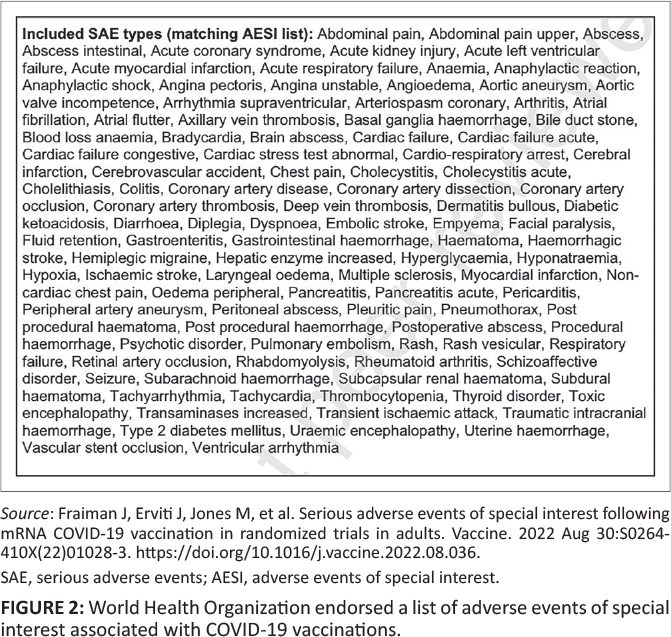
It is instructive to note that before the introduction of the mRNA products, the WHO approved a priority list of potential serious adverse events of particular importance that may occur as a direct result of COVID-19 vaccines.
The list was based on the specific vaccine platform, adverse reactions from previous vaccines in general, theoretical associations based on animal models, and COVID-19-specific immunopathogenesis40 (see figure 2).
Does the vaccine do more harm than good?
De meest objectieve manier om te bepalen of de voordelen van de vaccins opwegen tegen de nadelen is de analyse van de effecten op de "sterfte door alle oorzaken". Dit omzeilt de netelige kwestie van wat als een COVID-19-dood moet worden aangemerkt, en houdt ook volledig rekening met eventuele negatieve effecten van het vaccin. Het zou op zijn minst verrassend zijn indien tijdens een schijnbaar dodelijke pandemie niet duidelijk en ondubbelzinnig zou kunnen worden aangetoond dat een doeltreffend vaccin de sterfte door alle oorzaken vermindert.
Pfizer's pivotal mRNA trial in adults showed no statistically significant reduction in all-cause mortality, and in absolute numbers, there were even slightly more deaths in the treatment arm than in the placebo group.
Work by Fenton et al. showed an unusual spike in mortality in each age group of the unvaccinated population, coinciding with the vaccine rollout for each age group.48 De snelle afname van de omvang van deze populatie betekent dat een klein tijdsverschil dit effect theoretisch kunstmatig zou kunnen veroorzaken. Een alternatieve verklaring is de (meer waarschijnlijke) mogelijkheid dat een stijging van de sterfte na vaccinatie ten onrechte werd toegeschreven aan de niet-gevaccineerde bevolking: met andere woorden, degenen die werden geteld als "niet-gevaccineerde sterfgevallen" zouden in feite degenen zijn die binnen 14 dagen na de vaccinatie waren overleden (een verzoek om vrijheid van informatie [FOI] heeft nu bevestigd dat de autoriteiten in Zweden sterfgevallen binnen 14 dagen na de vaccinatie inderdaad categoriseerden als niet-gevaccineerd, waardoor een misleidend beeld ontstond van werkzaamheid versus sterfte).
It is possible that the excessive cardiac arrest and the continued pressure on hospitals in 2021/2022 from non-COVID-19 admissions all point to a non-COVID-19 health crisis that is exacerbated by interventions, which of course also include lockdowns and/or vaccines.
Given these observations and the reassessment of the data from randomized controlled trials of mRNA products, it seems difficult to argue that vaccine adoption has been net beneficial across all age groups. While it can be argued that the vaccines have saved some lives in the elderly or otherwise vulnerable groups, this seems questionable at best for other sections of the population, and when the potential short-, medium- and unknown longer-term harms are taken into account (particularly for multiple injections, for which there is simply no solid safety data), the introduction to the entire population seems at best a reckless gamble. It is important to recognize that the risk of adverse reactions to the vaccine remains constant, while the benefits diminish over time, as new variants are (1) less virulent and (2) do not target an outdated product. After reviewing the data, it remains a real possibility that my father's sudden cardiac death was related to the vaccine. A pause and reconsideration of the vaccination policy for COVID-19 is long overdue.
Again the link to the original english article.
For Part 2 of the paper, click here

https://www.theatlantic.com/science/archive/2022/09/mrna-covid-vaccine-booster-lymphoma-cancer/671308/
There are many n=1 stories but no one follows it through. "Extremely rare cases", "Ultra rare" – anything to not dampen the willingness to get vaccinated...
It always starts with N=1. Sometimes it ends in a dead end; Sometimes it is the first sheep.
We'll see. https://link.springer.com/article/10.1007/s00428-022-03400-w
What kind of bullshit is this?
Just take the 2nd sentence: "Scars on my arm (???)… deadliest diseases such as mumps, measles, rubella (???)"
This article is not to be taken seriously at all.
I have those scars too. Is it too personal and therefore unscientific, you mean?
In terms of form, it is more of a substantiated blog than an old school study. This makes it very accessible, which is also a quality.
I don't know why you wouldn't take a good blog article seriously. I could understand that an editorial board of a scientific journal wants to get rid of that personal touch. Before you know it, your magazine is full of whining stories.
I personally think it is valuable because it reflects the bias that you can take into account when interpreting. The analysis holds up well.
What a strange reaction. The article is full of facts and figures. Why such a strange clincher about 1 sentence? Why is it unacceptable for people like Theo that there are others who criticize the dominant narrative? Do you regret that you had it vaccinated with a barely tested vaccine? Please comment on the content of the data. All the figures (not just this article) that I see indicate that the government measures, including vaccinations, have had 0 effect at best.
The essence of the article is m.i. dat people have never been properly informed about the pros and cons of these vaccines. Your response fits exactly into that picture. You like to be vaccinated with a vaccine without knowing the underlying facts? Excellent. But why such a primitive reaction to this article?
@Cees Mul: You draw completely wrong conclusions about my person. I am not vaccinated. Not against Covid19, and I also let the annual flu shots pass me by.
My qualification 'bullshit' against this article stems from the fact that a cardiologist is going to tell you what vaccinations are, a subject he shows to know little more about than the 1st interested citizen with any intelligence. And that is abundantly clear from what he writes under the heading Vaccines save lives. There is very little good of this. And if you don't understand that, then I dare to conclude that you don't know much about vaccinations either.
I would like to tell Anton that a doctor who dares to count mumps, measles and rubella among the deadliest diseases in the world is really not to be taken seriously. I am of an age when you were not vaccinated against these diseases. You got it 'just' as a child and then you were immune to it for the rest of your life. And furthermore what you say, it is mainly an emo story. Whereby the author cannot dispel the impression that if his father had not died so tragically, he would still have been an enthusiastic defender of the vaccines.
He mentions, with the CFR in parentheses according to Wikipedia – sorry I didn't find another source so quickly:
– smallpox (30%, other forms 95%)
– tuberculosis (43%)
– measles (1-3%)
– mumps (1% but meningitis and deafness) and
– rubella (mild but very serious for unborn children).
They are indeed not the deadliest but still very deadly or debilitating diseases and are easily transmissible. That combination may justify the term "deadliest" as in "most deaths".
There are also diseases that are 100% fatal, but if hardly anyone catches them, they are not much in terms of risk.
I don't think that "inaccuracy" is enough to dismiss the story accordingly.
@Theo. Thank you for explaining. I myself am 60+, have never taken a flu shot and certainly not a Covid 'vaccine'. I have been forced to read a few things about virus infections in recent years. I see Malhotra's comments about other vaccinations more as an introduction. Probably to cut the grass from under the feet of critics in advance (otherwise someone will immediately be put in the corner of antivaxxers, and that is not so relevant to this discussion).
The fact that he is a cardiologist does not seem to me to be a reason to doubt his findings. It is mainly about studies that compare the ratio between risk of Covid death and the side effects of the vaccines.
The fact that the death of his father has made him doubt the government's approach is also not very relevant. I myself have not believed the story from the beginning, and have always relied on natural immunity. Others come to an understanding later, for whatever reason. Better late than never, I would say.
I think the essence of his argument is that the risks of Covid-19 (and all its variants) have been systematically exaggerated by governments, while the risks of the vaccines have been systematically reduced. Hugo de Jonge: "these vaccines are 100% safe". Now that's Bullshit. As a result, many people have been persuaded under false pretenses to accept an Mrna vaccine. That is particularly bad.
I am glad that someone like Malhotra is publicly questioning the vaccination drive. It seems to me that anyone with a critical view of mass vaccination (and we seem to agree on this) should be happy with a publicly known figure who denounces this.
I think he wants to indicate with the scars the number of vaccines he has been administered to indicate how he stands in the whole vaccine discussion. As far as that is not already apparent from the text. After all, reading comprehension is also quite an art.
Article is intriguing to say the least and many studies like this will follow. The "new world Order" should ring a bell, as it did in 2009 with the vaccine against the swine flu.
If you think it's bullshit, you should take the next shot as well. Nothing happens to you, does it?
I assume that "Theo" is a troll.
I don't take that for granted. In my own circle of friends and acquaintances, I know doctors of integrity who react exactly the same way.
I think the link at part 2 (halfway through this page) should be this: https://insulinresistance.org/index.php/jir/article/view/72/228
That was the link to Part 1, that was indeed not logical so I understand the confusion. I have adjusted it. Thank you!
Oh dear. After Robert Malloot, we now have Aseem Malle Hoaxer. Respected cardiologist...
https://snowdon.substack.com/p/the-downward-spiral-of-aseem-malhotra?utm_medium=web
That with that award is indeed a strange stunt. Very stupid... You would almost think of a failed joke.
In terms of content, I think what he says makes sense (also when it comes to fat and sugar, he is not the only one who thinks so). By the way, that substack criticizes him also contains things that are not right, as soon as it becomes substantive.
I still think he knows how to create a strong, coherent and substantiated story.
The bottom line: as long as there is no openness of data, we cannot rule out that the vaccines contribute to excess mortality. The fact that these data are constantly kept secret suggests the worst. He nicely reinforces the call for transparency and independent evaluation.
But indeed, 'respected' is not good. I made it 'controversial'.