


Het tweaken van de lockdown spitst zich steeds weer toe op de de beschikbare IC-capaciteit. Onvoldoende IC-capaciteit leidt immers tot desastreuze gevolgen voor de volksgezondheid. Een paar maanden geleden namen we met dat uitgangspunt het zekere voor het onzekere. Inmiddels zijn er meer data. Voortschrijdend inzicht roept nieuwe vragen op. Welke desastreuze data zijn dat dan ongeveer? En is dat erger dan de sociaal-economische ramp die zich nu voltrekt? Hoe kun je sterfgevallen omrekenen naar volksgezondheid?
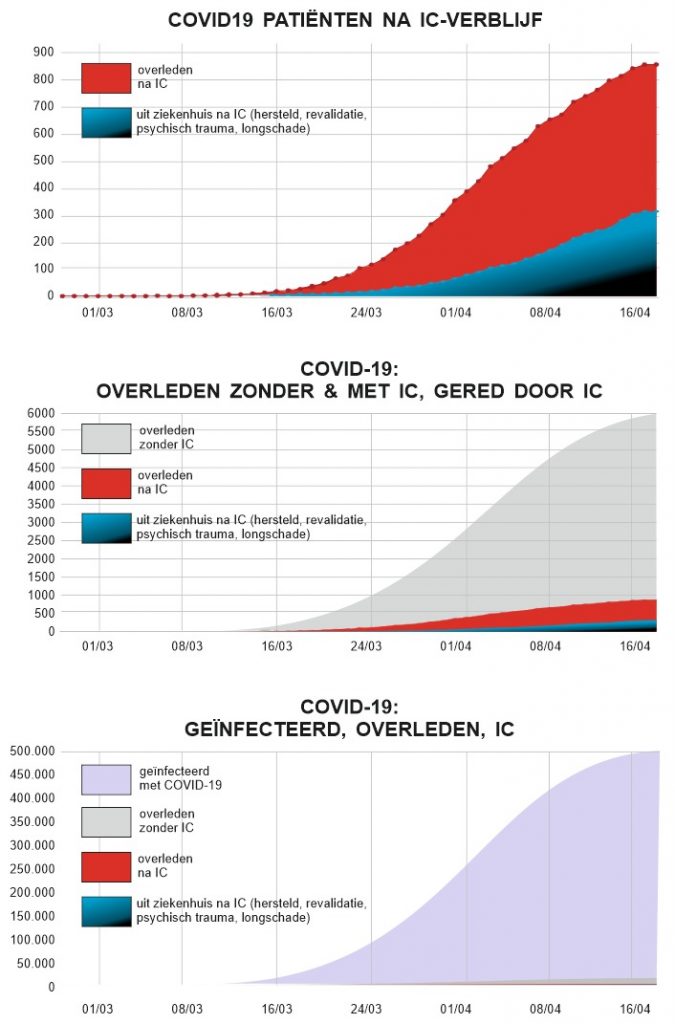
I visualized some key figures to gain insight into the importance of the ICU and to what extent it could affect the mortality rate. It is a rough visualise, but the figures come from Statistics Netherlands, RIVM and the National Intensive Care Evaluation Foundation.
Three pictures:
- Treatment results in the ICU
- ICU results related to total mortality
- ICU results related to total number of sick (infected).
The fourth picture I had in my head is pointless because there is nothing left to see on it. That picture would contrast with Public Health: 17 million Dutch people. And then juggling with QALY-like weightings also comes into play. On average, 17 million people still have 40 years to live, which is 17x40 = 680 million years of life. But let's say that only the next 5 years will be ruined (an underestimate according to many). This then represents 17 million x 5 = 85 million years of compromised well-being and deteriorated facilities and health.
So, for example, if we save 850 corona victims in the ICU (of people who on average have less than 10 years to live in questionable health, after such ICU treatment), then every life saved has ruined approximately 100,000 years of well-being.
It remains an impossible decision, but we will have to do something with it.

0 Reactions