


MANAGING EXPECTATIONS
Just as Olav Mol regularly explodes when a driver returns to the track after a pit stop in a position that is totally surprising to Olav, the RIVM shakes to its foundations when the flu mortality is higher than expected year after year. And really: every year.
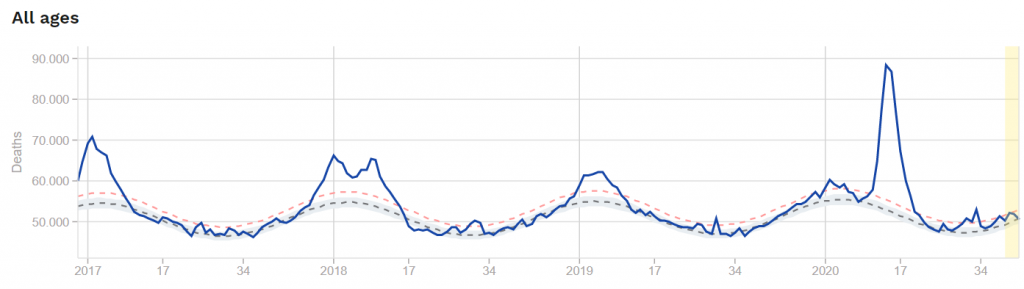
Now suppose you are a facilities manager and this graph shows your energy costs. Year after year, costs break through your forecast - and yet you never adjust your forecast. In fact, you don't even try to do anything about it, you just end up with a huge hole in your budget every year.
"Gôh, dit jaar wéér meer dan verwacht, erg hè?" En weer over tot de orde van de dag, begroting copy/pasten voor volgend jaar. Je baas snapt er toch niks van, daarvoor heeft hij jou immers ingehuurd.
Een bedrijf dat zo wordt gerund gaat op een gegeven moment ten onder, dat kan niet anders. Er komt een jaar dat het ineens niet meer op te vangen is. Als je er dan tussentijds ook nog bezuinigd wordt, gaat de rek eruit. Je houdt je mond maar want anders krijg je "had je daar niet wat eerder mee kunnen komen?".
The RIVM also regularly reports "a higher mortality than expected". Now there is a higher mortality rate every flu season than the RIVM expects. After all, that's what the term "excess mortality" was coined for. Then RIVM does not have to adjust expectations.

If you look at previous years, you would have expected this mortality.
The bandwidth that RIVM traditionally expects is indicated by dotted lines in the graph. You wonder how professionals can work like this. (By the way, the graph shows several countries, not just NL. The picture is the same; perhaps it is an international-virological way of looking at figures.)
Wat had het RIVM dan kunnen doen met de jaarlijkse onderschatting die ze "oversterfte" hebben genoemd? Nou, proberen om zware besmettingen en groepsbesmettingen minder kans te geven bijvoorbeeld: wat dacht je van een beter binnenklimaat? Dat had die sterfbergen in het jaarlijkse landschap aanzienlijk af kunnen vlakken. En baat het niet dan schaadt het ook niet: dan zitten mensen de hele dag in schone lucht op kantoor of bij een concert, heel erg kan dat niet zijn.
Let's not even mention the other healthcare institutions: the WHO, but also in the Netherlands: controlling, supervising, quality assurance, they all exist, are in large buildings with civil servants, doctors, labs and I don't know what else, entire HR and Communications departments - and they have all looked away.
Ik hoop dat je hier nog eens aan denkt als het RIVM weer eens komt met "een hogere sterfte dan verwacht".
