

 This work is licensed under a Creative Commons Attribution-NonCommercial 4.0 International License.
I'll wait a little longer to vaccinate, at least until after the summer
So I did not go to get my Astra shot two weeks ago. This led to shocked and even indignant reactions in my circle of friends. Among them are a number of doctors, proud that they already have a shot themselves, and other sensible and educated friends who are worried about me and point out the statistics to me. I still want to share how I feel about it. I am also concerned, but about their fear and how they have become part of the state propaganda.
[edit dated 15 May: This article in the Lancet strengthens me in my considerations]
"De statistieken geven je ongelijk: het virus is gevaarlijker dan het vaccin"
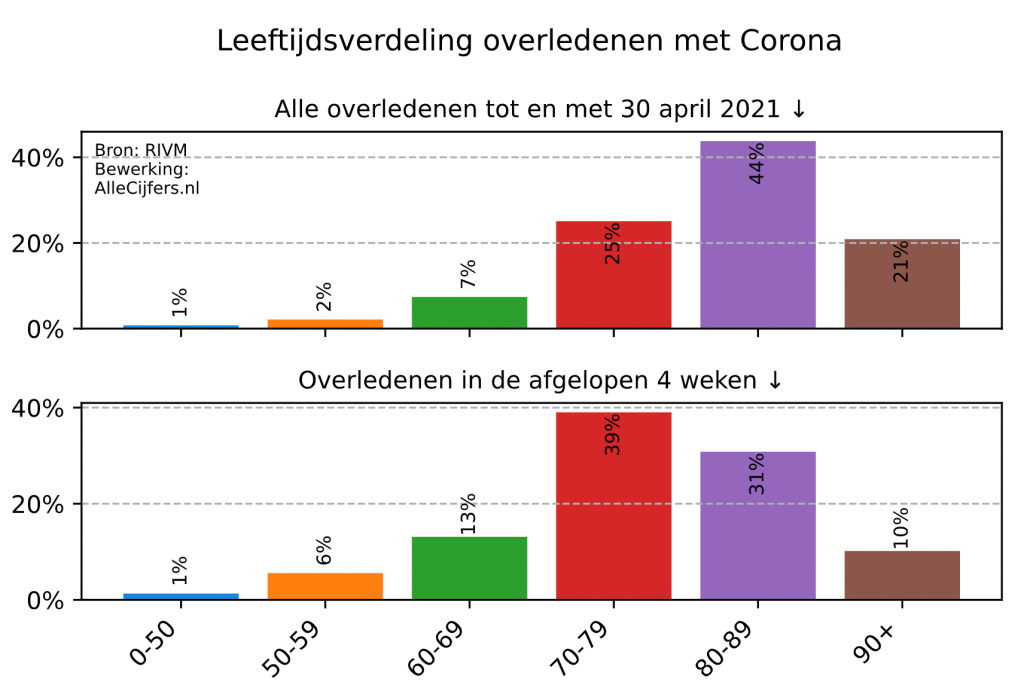
Of course, fewer people die from vaccinations than from Covid-19, that is true. If I then ask how that works per age category, it usually becomes more difficult - most people have never actually gotten that far and some actually find it too 'wappy'. You don't ask such critical questions. But people do not know that only 1% of all deaths occur under the age of 50 and the announcement itself does not mean much, most people do not simply calculate that. Now I am over 50 myself, but it is not just about me, I also think about 'the other'.
To inject or not is a personal decision. What matters to me is that the chance of becoming infected is much smaller for me than for the average Dutch person. He does not know how to protect himself against corona. In fact, their protection is counterproductive. People feel safe with face masks, disinfected hands and/or a distance of one and a half meters. That leads to accidents, as if you tell people that they can cross the highway in peace if they wear checked socks and have a dime in their right pocket. That goes wrong - and we see that reflected in all curves.
After all, overseeing the entire process, you first have to get infected. To do this, you have to let yourself be infected somewhere by standing for some time talking into the aura of an infected person or staying for a longer period of time in a poorly ventilated room where there is contaminated air. I don't do both. Contamination is therefore already virtually excluded.
To get sick from an infection, you have preferably never thought about your Vitamin D intake - let alone Zinc - and your BMI is (much) too high, maybe you are heading towards diabetes. You don't like to eat vegetables and as fruit you prefer to eat grapes in fermented form. The fact that people are still infected is mainly because they respect the rules and do not take their resistance seriously.
Anyway, if the average Dutch person does become infected, despite all the above risk-increasing characteristics, he will still not become ill in about 85% of cases! The amount of virus must exceed a threshold value of a person's individual resistance. If this does not happen to 85% of the unsuspecting, what if you take into account both your environment and your resistance? I estimate that at least. Yes, you can of course be unlucky, but that is also possible if you are vaccinated.
Then you have to get so sick that you have to go to the hospital, which is also a small chance (about 15%), and there your condition has to worsen so that you have to go to the ICU. That's just a small, mostly obese and Vitamin D-deficient part, but of course you really don't want that. Fortunately, the chance that you will end up there is very small, the chance that you will die there is even smaller (now about 25%, quite a lot of people come out of the ICU alive these days).
Of the deaths that eventually remain after that entire process, 1 in a hundred is under the age of fifty, above that the percentages rise. 90% are over 70 years old. Three-quarters of corona deaths bring forward the expected date of death by a few months at most.
"Het is wel een dodelijk virus hoor"
Mortality is no longer as high as when the pandemic was declared. It is actually surprising that for a flu-like illness of this severity, daily life is still stopped. The graph below shows that mortality in autumn and spring is lower than in winter, in relation to hospital admissions. This could have to do with the lower doses and fortunately the treatments in hospitals are also getting better. If we can ever get started nationwide with supportive medication such as Ivermectin, hopefully not much will remain of this killer virus.
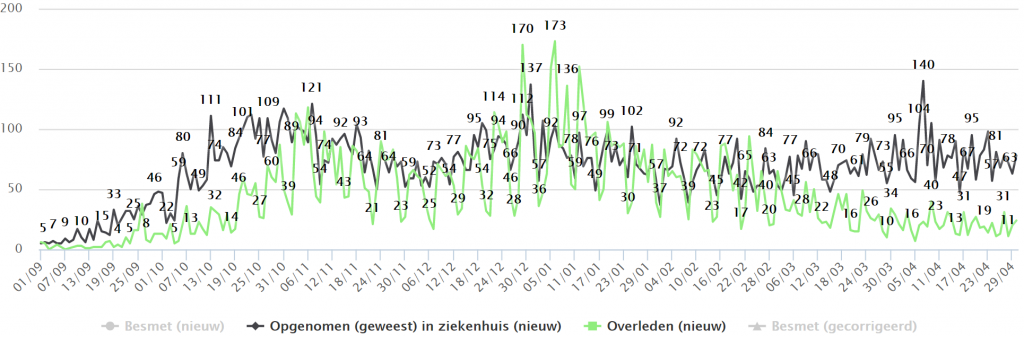
The beautiful spring will take a while, but another week or two and then all the lines will drop back to zero. It is only in September/October that things pick up again: Covid-21. Let's hope that the Covid-19 vaccine is still just as effective.
So to be injected with a few months old, conditionally authorized vaccine, only for the coming summer, while it may no longer work after the summer... I'll wait a little longer. At least for myself. Who knows, maybe some interesting data will be released in the coming months.
"Je doet het ook voor een ander"
The AstraZeneca vaccine protects for 60%. Pfizer protects more than half(!) better: 95%. In summer there is not much to protect. So it is better, also for 'the other person', to wait for Pfizer until the autumn. It seems a bit pointless to take an Astra flu shot just before the summer, which only provides 60% protection - if it turns out to be effective at all next winter. After all, persistent mutants cannot be tolerated.
Outbreak among vaccinated people
What also surprises me is the fuss about the Gelderland nursing home, where 12 of the 29 infected vaccinated people have become ill. 12 is about 40% of the 29, so this is exactly as expected for the 60% protection. What's nice: there are no deaths. That was different before. This cannot be anything other than thanks to the vaccine. At the same time, this has shown that you do NOT have to vaccinate for the other person. After all, such a wave of infection is only possible if vaccinated people can simply pass on the virus - even to each other.
And again we see that there is hopeless fiddling with face masks, splash guards and aprons. The tried and tested recipe for unimpeded outbreaks is prescribed again:
According to Sensire, the fact that the virus still leads to an infection of this magnitude despite the vaccination underlines the importance of the current measures.[...] Visitors must register and wear a face mask, a plastic halter apron and splash goggles.
De Stentor on outbreak among vaccinated nursing home residents
Do you understand what I mean when I say that I run much less risk than the people who neatly watch Op1 and read Volkskrant?
Even more risk assessment
What age category do I fall into? I can't deny that I'm 62. Now the over-60s fall into a high risk category and when I look at my peers, I understand that. Almost all of them (much) too fat, at least a big belly. In my own circle they are often straight types, averse to nutritional supplements. Epicureans, some avoid vegetables... People drink good wine and smoke a little here and there, but that used to be worse.
That is only in my circle of acquaintances. Yesterday I looked around the market in Amstelveen. I understand very well how the risk becomes a lot higher in my age group: you see a lot of unappetizing fat people who (therefore) eat poorly. A growing number do not understand the wheel of five, have never heard of the cold ground, many have skin that does not produce Vitamin D and regularly have to share each other's breath in groups in rooms where they sometimes all speak or sing at the same time and thus spread any germs around. And all this while at that age your immune system really starts to lose its indestructibility. They are dependent on scaremongering in accessible media ('fear sells').
So I count myself a lot richer: no overweight, Vitamin D and Zinc up to standard, excellent eating habits thanks to my hobby cooking wife. I understand how infections work and take my CO2 meter and ionizer with me everywhere. That sometimes seems exaggerated and hopefully it will become superfluous. If I don't trust the indoor climate somewhere and window/door can't open (well-known example: closed consultation rooms at doctors) then I'll be gone quickly.
I don't rule out that I will get sick, but in my opinion that chance is comparable to the side effects of an injection with a substance for which the research results will become available in two years.
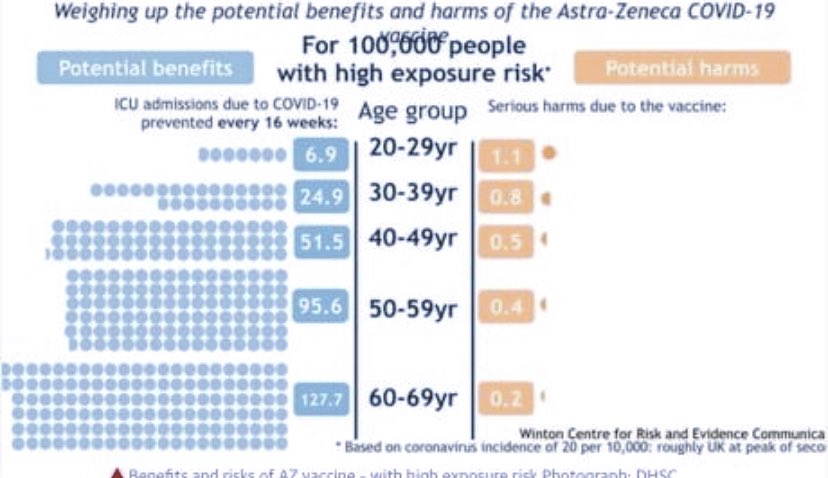
Als je rekent met absurd hoge besmettingsrisico's ziet het plaatje er natuurlijk anders uit. Hier wordt gerekend met een "coronavirus incidence" van 20 per 10.000, wat vergelijkbaar zou zijn met de top van de tweede piek in de UK. Die piek lag (qua sterfte) 15 keer hoger dan de huidige situatie in Nederland dus daar de gaat de vergelijking een beetje mank. Deel alle blauwe bolletjes maar door 15. Verder wordt de indruk gewekt dat we de "serious harms" van vaccinatie strak in het vizier hebben. Die indruk heb ik helaas niet, bijvoorbeeld door uitspraken als de volgende.
The side effects according to the EMA
"We hebben geen data over bijwerkingen op langere termijn dus we maken ons daar geen zorgen over. "
A spokesperson for the EMA with Patrick Lodiers on Radio 1, 30 April.
Eigenlijk zei hij het niet letterlijk zo. Hij zei: "We hebben geen data die ons aanleiding geven om ons zorgen te maken over de bijwerkingen van het vaccin." Je kunt mijn parafrase flauw vinden maar hij is inhoudelijk correct. Deze 'misquote' is dus opzettelijk, om de impliciete betekenis bloot te leggen en stelt helemaal niets voor bij de vernietigende desinformatie die dagelijks over ons wordt uitgestrooid.
Kern van het zinnetje is: "Wij hebben geen data."
So what data does the EMA have?
There is another thing to criticize about the statistics themselves. First of all, you assume that the figures are correct. But there are hardly any figures on side effects, except for the studies done by the manufacturers. The track record of the pharmaceutical companies is not impressive in that respect. If it went well, it went well, if it went wrong, the examinations beforehand were just as reassuring.
The studies exclude groups such as pregnant women, people with comorbidities and the vulnerable. In general, the test subjects in these trials are healthy and in the prime of their lives, even if the patients to be combated mainly concern patients in the final phase of life - which is the case with corona. The research population of model citizens will be able to handle vaccinations well - just like corona infections.
We don't yet know anything about long-term side effects, the vaccines have simply not been around for too long. Test subjects who had received a placebo have now also been vaccinated for ethical reasons, so the comparison of those two groups is over. This is quite a gamble, especially with such a new mRNA method. The effect on the population will have to provide a definitive answer.
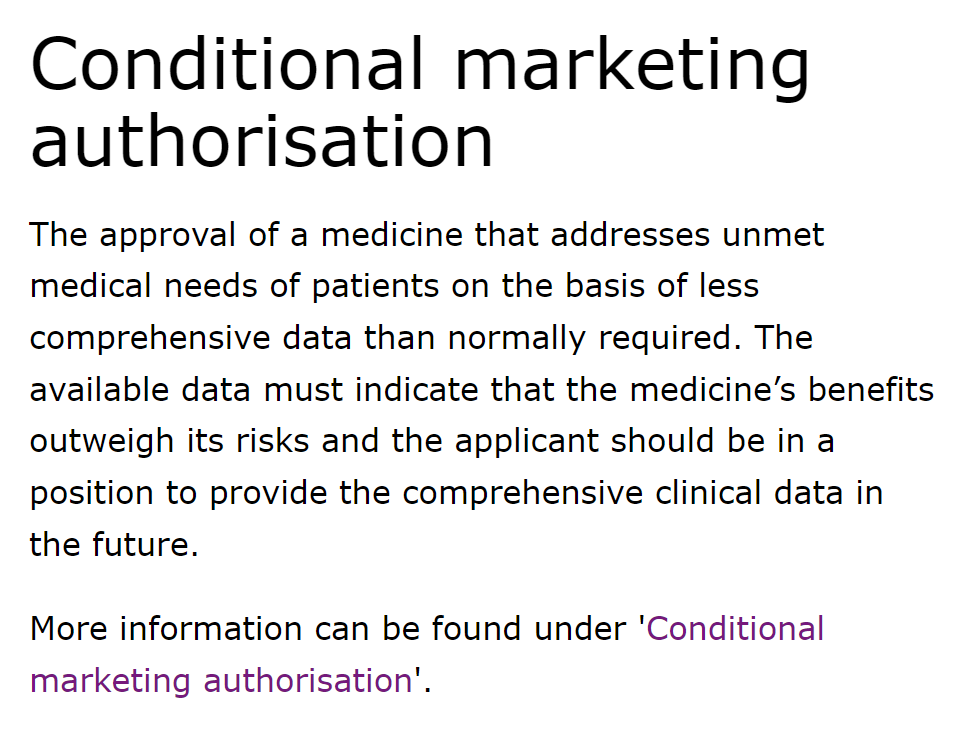
De vaccins mogen dan ook alleen "onder voorwaarden" worden toegediend. Een van die voorwaarden is strikte monitoring.
De toegezegde status is "Conditional marketing authorisation". Je kunt read here conditions attached to this.
An important condition:
"Facilitating the conduct of high quality, multi-centre, independent post-authorisation safety
studies (PASS) with a focus on observational research"
I don't have the impression that the Netherlands adheres very strictly to this focus on observational research. For that, the registration and reporting must be in order in any case. Fortunately, our society is transparent enough to know that this is not the case.
[Edit: I updated the part below on August 20 in https://virusvaria.nl/lareb/, also posted on maurice.nl ]
Look, for example, at the deaths after corona vaccination. These are important, which is why they are also mentioned on Lareb's updates (the last one dates from April 25):
"Tot nu toe zijn er 286 meldingen van overlijden na coronavaccinatie."
Lareb.nl 2 May 2021
Lareb explains: "These are very complex reports. When someone is older, there are often underlying diseases and you often don't know exactly what someone will die of. What was going on medically before the vaccination, and what after? Is there a pattern to be discovered? Has something like this been reported in other countries? These are all questions that our people, doctors and pharmacists, then investigate. They are also thinking about whether the effect of the vaccine can explain what has been reported."
It is nice that such a nuanced distinction is made between dying WITH or FROM a vaccine. That doesn't happen with the flu, for example. Then the entire winter excess mortality is attributed to flu in one sweep. And with corona, two seasons are even effortlessly added together.
But only 286 deaths after vaccination reported, that's not much! So that's good news? Nevertheless? Less than expected probably? Let's take a look.
Roughly speaking, about 2,500 people over 60 die every week. In two weeks, there are 5000.
There are 4.5 million people over sixty in the Netherlands. They have largely been vaccinated, many twice now.
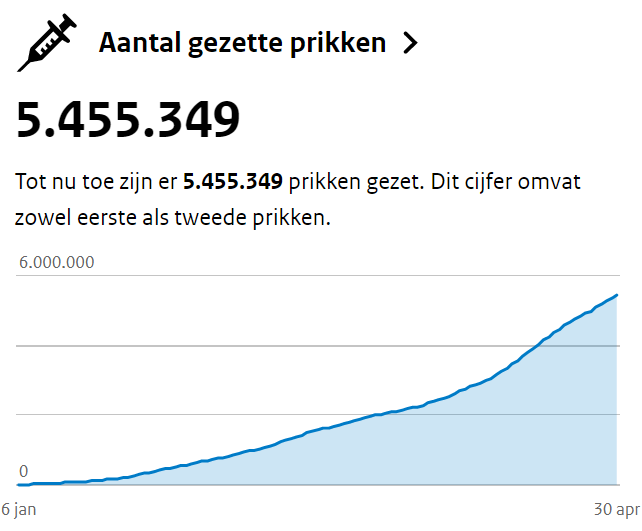
If you vaccinate all 4.5 million, approximately 5,000 should die within two weeks after vaccination. If you assume two injections, you could even end up with 10,000, depending on your calculation model. If Lareb now says that there have been 286 reports of 'death after vaccination', what can we conclude from that? Even if you only report deaths within 1 week after vaccination, it is only a fraction of what must have actually happened. There seems to be something wrong with it "focus on observation".
Agnes Kant (of side effects hotline Lareb) recently said on TV that she did not know exactly either. That is not possible because if you receive less than 10% of the reports, you will never recognize a pattern in time.
Toch moeten we het als goed nieuws opvatten dat er slechts 286 meldingen van bijwerkingen zijn gedaan van "Overlijden na vaccinatie" terwijl we weten dat dat getal in de duizenden had moeten lopen.
Een kritische journalist zou in paniek kunnen raken van zo'n bericht. Het maakt duidelijk dat het fenomeen "overlijden na vaccinatie" NIET gemeld, gemonitord laat staan nauwlettend onderzocht wordt. Patronen waarvan iedereen denkt 'dat is toeval' komen niet tijdig aan het licht. Na verloop van tijd gebeurt dat misschien alsnog, aan de hand van de sterftecijfers. Hopelijk hebben we geluk en valt het mee. Maar opnieuw is dit iets wat mijn vertrouwen in de vaccinpush ondermijnt.
The fact that there is such nonchalant experimentation with the population is completely in line with how we are bullied with the curfew, the face masks, the one and a half meters etc. etc. People just try something. People just do something.
Al met al: ik wacht liever nog even.
P.S.: Leestip: https://stopdelockdown.wordpress.com/2021/05/02/veel-meer-jongeren-op-ic-totale-onzin-bekijk-de-cijfers-niet-de-hype/
