


Maurice de Hond has rummaged through 70 pages of WOB documents regarding the Maassluis issue, that's how he blogs today. Dat ging over die zorginstelling waar een aantal ouderen de dood had gevonden omdat de overheid nalatig was geweest in het nemen van adequate maatregelen - en er zouden nog velen volgen. De correspondentie van rivm en VWS daaromtrent geeft weer wat we al begrepen en wat ook gecommuniceerd werd: aerosolen mogen koste wat kost niet serieus worden genomen. De reden daarvan wordt helaas niet duidelijk en dat was eigenlijk waarop ik had gehoopt. Er zijn passages zwartgelakt, grote kans dat juist die iets hadden kunnen ophelderen. Wat is dat, "openbaarheid" in theorie en in de praktijk?
Van Dale dictionary:

"Iets"...?
"Iets" kan strikt genomen staan voor "Een onderdeel", "Een detail", "Een en ander", "Iets irrelevants", "Dat gene wat men kwijt wil" etc. Die nauwe opvatting past echter niet bij het woord "Openbaarheid". Als iets openbaar moet worden gemaakt is dat juist omdat er vermoedelijk delen niet openbaar zijn en andere wel, uitgelekt of openbaar gemaakt maar incoherent of wat dan ook. Dat betekent dus het verzoek om "Iets in zijn volledigheid" openbaar te maken, niet gewoon "iets ervan openbaar maken". Het gaat om transparantie en daar hoort gedeeltelijk verduisteren simpelweg niet bij.
...and that the RIVM does not agree with it. A certain fragment about ventilation had to be removed, but was blacked out in the WOB document.
Maurice de Hond about an email from RIVM to GGD about adjustments to the draft report
Hoe de besluiten tot stand kwamen, wat er overwogen is, dat mogen we dus niet in detail weten, of eigenlijk helemaal niet. Terwijl dat nu juist over bestuurlijke besluitvorming gaat. Dat een cruciaal begrip als "wetenschappelijke integriteit" door de overheid alleen voor de bühne wordt gehandhaafd was already clear maar is onze "openbaarheid" net zo'n wassen overheidsneus?
Disappointment
Toen Peter de Man bij Op1 zat en vertelde over het dwarsliggen van rivm bij onderzoeken van de GGD naar aerosolenverspreiding, dacht ik dat we zaten te kijken naar de doorbraak waar we al maanden op wachtten. Wetenschappelijk was al heel vaak aangetoond -als je terugkijkt met de kennis van nu: al decennia geleden- hoe verspreiding van respiratoire virussen gaat, alleen is er een select clubje virologen dat zich onderscheidt door klassieke opvattingen. De "echte" experts.
Uit alles was en is duidelijk hoe zij zich in bochten draaiden om hun grote druppels overeind te houden. Ik had gehoopt op aanvullende informatie in de WOB-documenten, iets van een drijfveer om zo onwetenschappelijk te werk te gaan en de waarheid en wetenschap geweld aan te doen. Helaas... Vermoedelijk zit de enige interessante nieuwe informatie in het zwartgelakte stukje. Dat heb ik eerder gezien: het lijkt erop dat als iets belastend wordt, dat een reden is om het zwart te lakken. Hoe dit onder de wet "openbaarheid" geaccepteerd kan worden - ik begrijp er niets van.
They don't want a sounding board but an echo well
Ronald Meester, professor of statistics at the VU, is a member of the sounding board group of a study into excess mortality by RIVM/CBS. Not to be confused with the research referred to in the Omtzigt motion, which asked for external evaluation. This has simply not been implemented, with the defense plea of rivm/CBS as a sweetener. The Master may supervise to see whether this is being achieved properly. He is just not allowed to view the data. What do you mean public...
Hoe zou de overheid reageren op: "Ik vertel de belastinginspecteur wel hoe het is gegaan; mijn afschriften krijgt hij helaas niet te zien".
The WOO
The WOB has been changed to the WOO as of May 1: the B for Administration has been replaced by the O for Government. This will mean that non-governmental authorities such as large NGOs (NG stands for Non-Government) will be released from the obligation to provide open government. Also consider global idealistic, climate and health organizations. Everything can be communicated there without the risk that it will ever end up on the street, with the parties involved but also the public, from campaigns to nudging. Even if these NGOs are (largely) financed by governments.
On rijksoverheid.nl I wanted to find out what can actually be painted black. Names and contact details, I understand that, but in my opinion it is also about substantive relevant information. What does the law say about this?
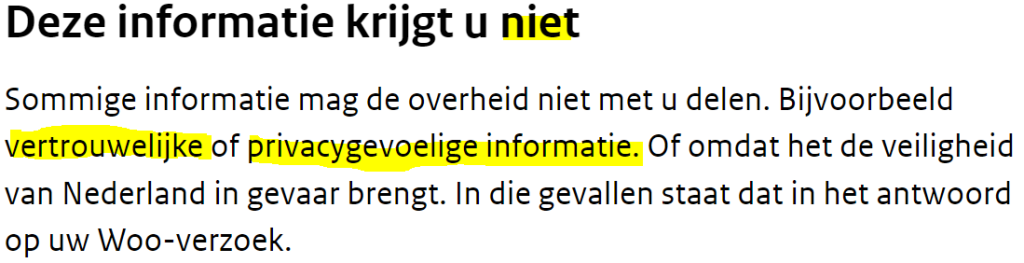
On the website of the government are exceptions that do not need to be made public. Zaken die in vertrouwelijkheid zijn medegedeeld bijvoorbeeld. (Wat is "vertrouwelijke" informatie?) Ook mag de veiligheid van Nederland niet in gevaar worden gebracht - dat begrijp ik, dus als blijkt dat het volk een rad voor ogen is gedraaid, moet dat zwartgelakt worden. Anders krijg je oproer... Dat is niet goed voor de veiligheid. En moet er misschien iemand voor de rechter komen - dat is dan weer een privacy-kwestie.
Er wordt op de WOO-pagina alleen gesproken over wel of niet openbaar maken. Er staat niets over openbaar maken met zwartgelakte passages. Afgezien van het feit dat "milieu-informatie" kennelijk een heel andere categorie is qua openbaarheid, valt vooral 5.1.2.g op:
The disclosure of information is also omitted insofar as its interest does not outweigh the interest in the proper functioning of the State, other public bodies or administrative bodies.
Article 5.1.2.g WOO
So the State does not have to cooperate in research into possible failures of its own or that of its institutions...?
Check with a government institute: MEB
The page public access to information op de site van Het Centraal Bureau voor Geneesmiddelenregistratie biedt hoop: "Van iedere Collegevergadering publiceren we eenagendaand apublic report." En:
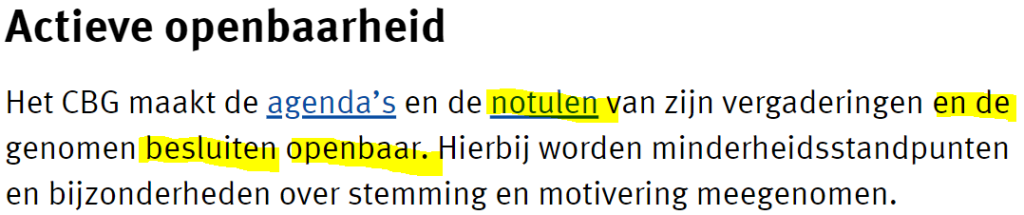
I look in the last minutes, because they say: Minutes are public, including minority opinions.
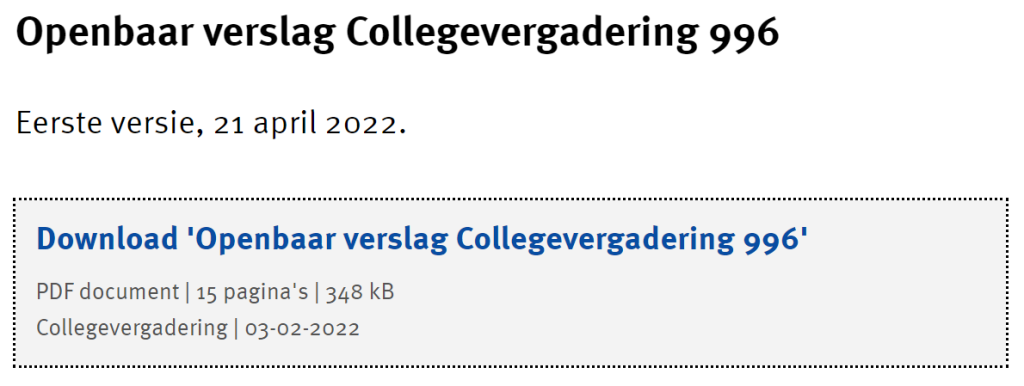
Agenda item 4 is the Covid-19 update (while there is no more COVID-19 ). Worth reading because the MEB still seems to be based on the situation at the beginning of 2020. Not a word is said about age groups while not only the disease but also the injection turns out differently per age group. Shouldn't age differentiation be part of the job description when assessing medicines?
Agenda item 6 is also about vaccinations.
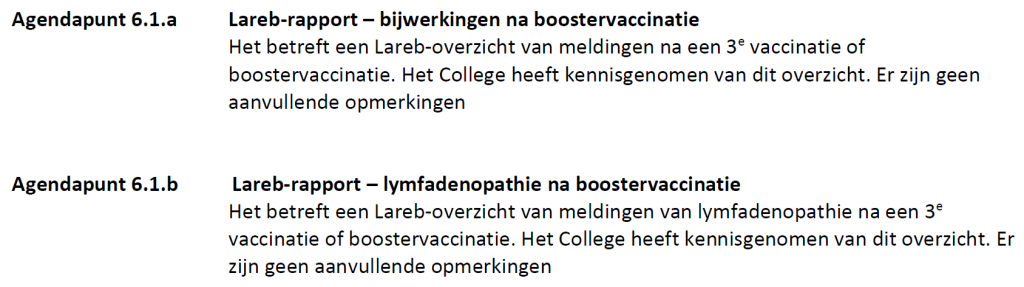
This speaks for itself, I have no additional comments.
There is a lack of transparency on several pages of the minutes: I think there should be extremely critical reservations and question marks in every minute. The culture that only voices of approval are allowed to see the light of public and the rest is discussed confidentially in back rooms is spreading.
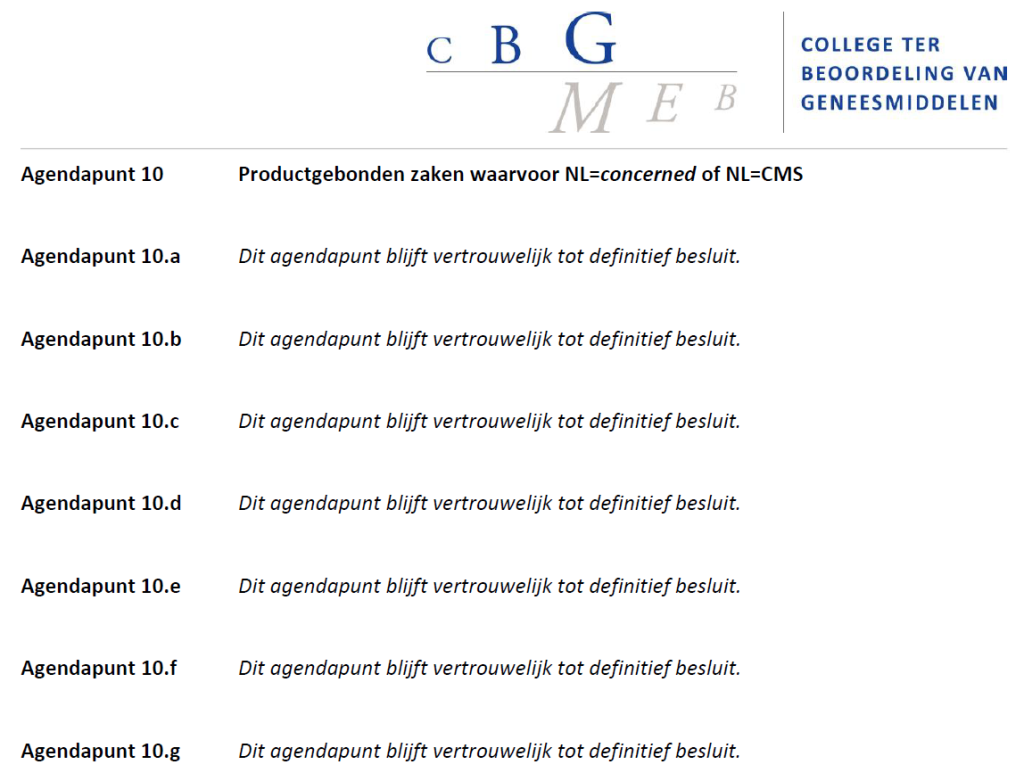
This is not possible, you would say. Is it the same with other things that we are not allowed to see? About vaccinations, or excess mortality? Something else that is not convenient for the government or its advisors? Early treatments perhaps? Of course, HCQ, Ivermectin, Budesonide were promising and of course the Pfizer reports were severely below par. But the Minister of Health, Welfare and Sport eagerly listened to the RIVM advice and let the vaccine producers do their thing. Isn't that a hot item at the MEB?
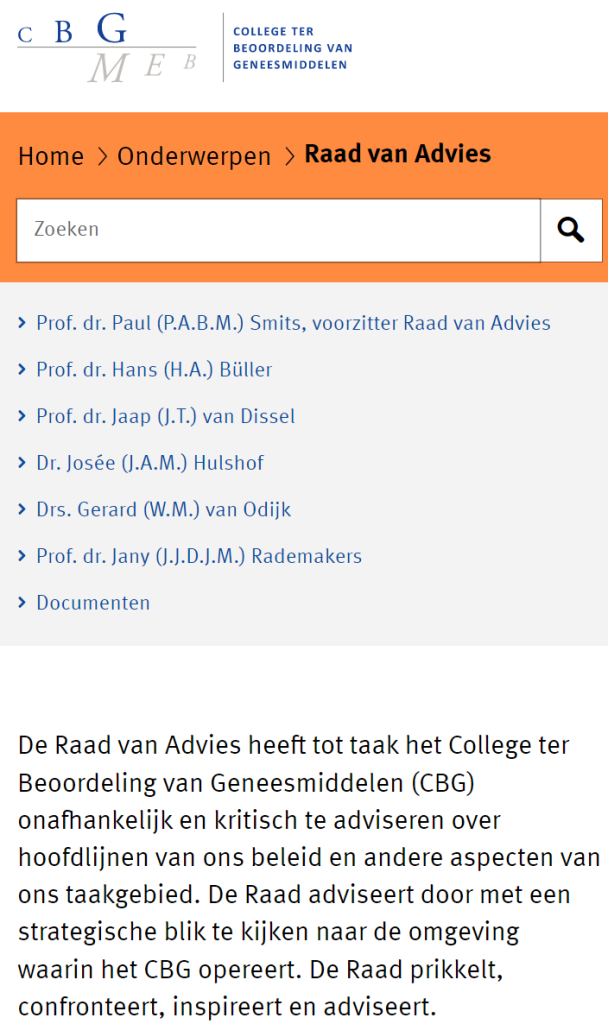
Sensible people should say something about that. Does that 'College' itself have no supervisors or advisors? And yes, even a real Advisory Board! And who do we see as third in the list of members of the Advisory Board? The director of the RIVM.
Jaap van Dissel is therefore part of the Advisory Board of the body that must critically assess Jaap's own advice to the government.
The Council stimulates, confronts, inspires and advises.
Independence is an impossibility in government circles, as it turns out. In any case, it gives the impression of a sticky clique of each other's hands instead of sharp supervisors.
I searched for the annual accounts on the MEB website (Page Governance, Organisation and Finances) but the annual report does not mention any figures, which Follow The Money may be able to look for elsewhere. I did see this:
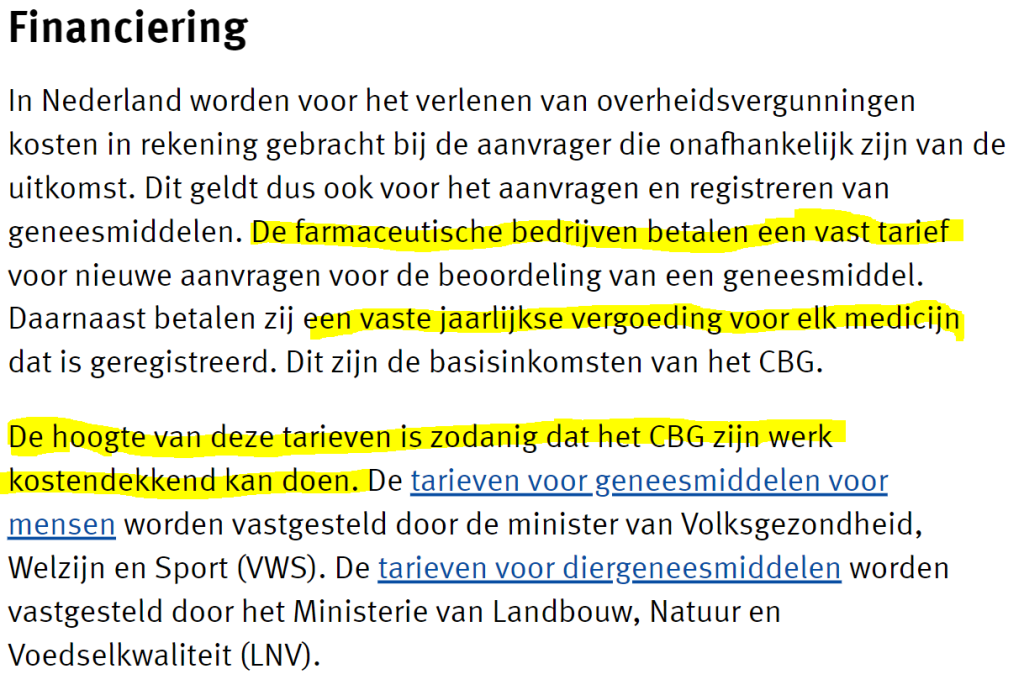
Whose bread one eats, whose word one speaks. You don't bite the hand that feeds you.
Controlling institutes live either off the money of the government, or from the companies they serve with admission tickets. This requires watchdogs, sharp advisors and supervisors. In practice, they are all fish from the same pond. The European Medicine Agency is largely funded by pharmaceutical companies, the same goes for Lareb.
The MEB is paid for by pharmaceutical companies. But hey, just find someone else who can and wants to pay that money for it... The government? It has now been saturated with other agendas. Also from NGOs.
The EG previously wrote about similar entanglement within the American FDA.

0 Reactions