

There are rumors that not aspirate with injections has a lot to do with side effects and death. Aspirating is when you pull up the piston for a very short time after inserting the needle, before pressing the piston. If you then suck up some blood, you are in a blood vessel with the tip of your needle. However, the injections must be given into the muscle, intramuscularly, not into the vein or intravenously. Then you have to find another place, at least two centimeters away.
Dr. Campbell (now a YouTube star) has been campaigning for months for the reintroduction of aspiration that was abolished by the WHO not long ago. The reason for abolition was that it causes discomfort for the jabbed, it takes too much time and so on a few not particularly essential considerations.
Bij dierproeven bleek toediening in de bloedbaan schadelijk, dodelijk, en bij herhaling trad een cumulatief effect op: "Conclusion: This study provided in vivo evidence that accidental intravenous injection of COVID-19 mRNA vaccines can cause myopericarditis. Briefly withdrawing the plunger from the syringe to exclude aspiration of blood can cause a be a possible way to reduce such a risk."
Intravenous injection of COVID-19 mRNA vaccine can induce acute myopericarditis in mouse model - PubMed (nih.gov)
But are intravenous injections really the only way to get toxic elements into the blood? I have learned that capillaries constantly exchange substances with their environment, to supply oxygen and nutrition and to remove waste through the bloodstream. Of course, this also applies to stuff that has ended up somewhere through an injection. That too must be removed. You can expect that the well-circulated muscles of high-moving young athletes do better than the dry arms of older people.
Removed = recorded
Some think that aspirate prevents injection fluid from entering your blood. A Vilans handbook describes that you should inject intramuscularly if the liquid enters the bloodstream within 15 to 20 minutes recorded should be.

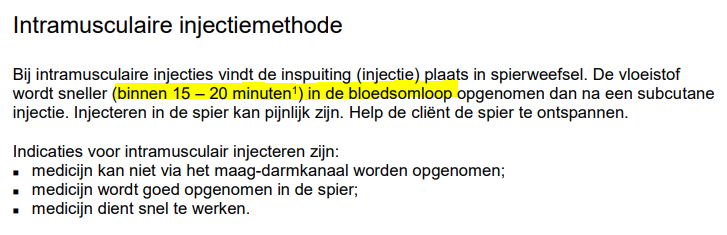
If you read the above, you will also understand that aspiration has been abolished. The liquid will get into the blood anyway, whether the patient and the nurse are startled by a drop of blood or not. From that moment on, those mRNAs flutter through the bloodstream. But they will be gone in no time, we were assured in advance. They irritate some cells and then they just disappear, poof!
That disposal should not be a problem in itself. If the blood picks up lactic acids, pus, infectious waste, inactivated virus particles or other waste, that is no problem at all, after all, that is what it is intended for. This is true even for toxic substances, to a certain extent. (What a miracle the body is.)
But when it comes to elements that react with blood cells themselves, with heart cells, with other tissues with the right ACE2 receptors, then it becomes a completely different story. Blood goes everywhere to bring nutrition/oxygen and absorb waste products. Almost everything in your body touches blood.
Not entirely unexpected
In a post dated March 19, 2021, about vaccine-induced thrombosis, I quoted a serious warning from Wolfgang Wodarg:
"A side effect of spike proteins is thrombosis/microthrombosis. Spike proteins that come with the whole virus are normally rendered harmless by the local immune response in the upper respiratory tract during a corona infection.
Coronaviruses and their spikes are dangerous if they get into the blood. Fortunately, this is extremely rare unless the normally effective protective mechanisms in the upper respiratory tract have been bypassed or damaged by treatment or other conditions."
Wolfgang Wodarg later modified the message slightly due to confirmation in a Japanese study.
[From the original text of the modified text, found at https://www.wodarg.com/english/:
Coronaviruses and their spikes themselves are dangerous, but only if they get into the blood!
Fortunately, this is extremely rare unless the normally effective protective mechanisms in the upper respiratory tract have been bypassed or damaged by treatment or other circumstances.
High-risk side effects of genetic “vaccination” are concealed!
The vaccination, however, bypasses the natural barriers against coronaviruses and goes directly into the well supplied shoulder muscle. It is not known for sure whether the dangerous spike proteins are formed only there or whether other target cells are also stimulated to do so.]
Hopefully someone can demonstrate that it is impossible (not just a reduced chance) for mRNA to enter the bloodstream during aspiration. And I mean 100% impossible - otherwise it could be life-threatening and then the risk should at least be investigated and weighed, perhaps per patient. While there will be further boosting in the meantime, of course. I am again surprised that the injections have been approved, but then I am not a doctor.
What does aspiration actually mean?
It is estimated that an expert opinion gives a positive result in 1 in 3000 injections: accidentally punctured in a blood vessel. But is there any research that shows what percentage of blood vessel damage is signaled by aspiration? In fact, we don't even know if aspiration can prevent mRNA from entering the bloodstream. It is an assumption from old-fashioned nursing.
It is quite conceivable that a blood vessel is damaged during injection without aspiration showing it. You have to be close to that wound with the tip of the needle. Maybe the tip is just not close enough to the (minimal) wound, or it has gone right through it and the blood vessel only opens properly after the needle has been withdrawn. Or, as the handbook says, the stuff is absorbed into the blood within 15 to 20 minutes anyway, aspirate or not to aspirate, whereby a gradual absorption may be less harmful than an intravenous mRNA kick. Or not, those are things that you figure out before you start injecting something into people worldwide, right?
mRNA injections have proven promising and useful for drugs that need to spread throughout the body, such as treatments for metastatic cancer. If there is a risk that such a spread takes place uncontrollably in healthy people, with stuff that causes their own cells to stimulate the immune system, then you should not even aspirate. Then you simply should not inject unless after a well-considered doctor's consultation.
The relationship between vaccination and the risk of heart failure and the taboo that rested on it already discussed.
For heaven's sake, don't let the kids get jabbed!
This just in: Norway 33k vs Denmark 13k
In Denmark people aspirate, in Norway they don't.
John Campbell notes that 60% fewer myocarditis cases have been detected after vaccination in Denmark than in Norway. That still leaves 40% - resulting in a number that would never have been accepted with any previous vaccine.
Reduction is of course nice, but we do not see to what extent it affects mortality. Mortality is fairly similar in both countries, in terms of excess mortality I don't see Denmark doing much better either.
Video Campbell: US omicron surge now - YouTube
Jan Bonte describes how difficult it is to calculate Myocarditis in Myocarditis after COVID19 – Jan B. Hommel (janbhommel.nl)


Bonus: Google hits on protocol intramuscular injection
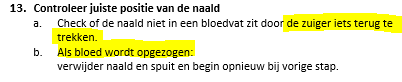


Vaccination can apparently be done with less stringent rules than the average intramuscular injection. Traditional vaccines used weakened or non-reproducing versions of viruses, which most immune systems could handle even in their original state. Should we still distinguish between vaccines and gene therapy?
On the site of the national vaccination program:

Vaccination in Belgium (random Google result)
Aspiration does not seem to be a priority. We will see it automatically after the shot.

