

A breakthrough? The Telegraph, one of the major English newspapers, devotes an article to a publication of Jiménez, Marr and 22 other scientists. The subject is the big drop versus small drop debate, which has been settled scientifically for some time, but not according to our policy makers and their advisors. Medical officials and other advisors appear not to work scientifically and it will also be politically difficult to recognize the persistently wrong collision course.
There are high stakes surrounding one of the biggest medical fiascos ever - and it was so unnecessary. With a bit of bad luck, heads will roll (figuratively!) for these outrages, because since April 2020 science should have been leading in decisions regarding measures. Unfortunately, the 'consensus' of the established order did not allow new insights. The media, who have eagerly collaborated with this wrong policy, are also not eager to announce it. That is the crux and that is why I hope that this represents a breakthrough.
The media are the key to the crisis
Dutch editors also look at foreign newspapers. Hopefully they see the first sheep cross the dam. Because as long as our media leaves citizens afraid and in the dark, clinging to an incoherent narrative, nothing will change in policy. Frightened people want strong leadership, strict measures, heavy protection. Politicians are of course not going to stick their necks out because that costs votes. Tight reins play into the hands of managers. And the major media are again dependent on well-disposed politicians.
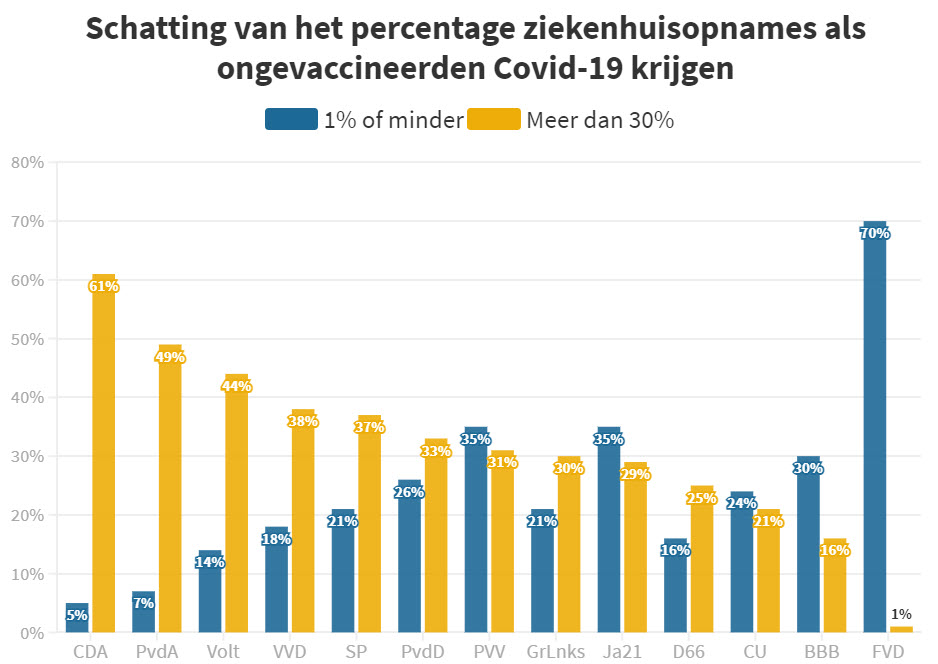
The 'opposition' is still framed in the media as 'extreme right', so no one dares to properly support it. Well, the counter-narrative is not necessarily extreme right, it is also based on science. Recent research by Maurice de Hond does show that estimates of FvD voters are remarkably closer to scientific reality than those of the other voters.
Comments on the article in The Telegraph
The article states that the costs of a ventilation-oriented policy will be enormous. There is something to be said about this - especially compared to the 140 billion that the last crisis has cost. CO2 meters are available from a few tens of euros. If people know what the CO2 levels are that can lead to infections, everyone can protect themselves simply by leaving the room or opening windows. Agencies or companies that like to receive groups of people weaken their market position if their space is not low-contamination (think of the catering industry). Easy-to-read CO2 meters will be inviting, if people know what to do with them. Everything depends on correct information from the major media.
Most infections took place at home, right? A virus-safe environment to create well. We may have to get used to wearing an extra cardigan or sweater indoors again. Fresh air turns out to be healthy. Times are changing.
Focusing on virus-safe environments will also level off the annual flu wave. Healthcare capacity was leading, so that works out well. The social dynamics will do the most important part of the work. Just as restaurants provide a hygienic kitchen, they will also want to ensure clean breathing air. Enforcement will move from scanning individuals to monitoring the indoor climate in (particularly) public spaces. There will undoubtedly be administrators who will look at this with dismay. How do you ever get the entire European population into line, we had almost everyone on a string...?
The link to the preprint: https://papers.ssrn.com/sol3/papers.cfm?abstract_id=3904176
The link to the article from The Telegraph News: https://www.telegraph.co.uk/global-health/science-and-disease/every-medical-authority-failed-realise-covid-airborne-late/
Below is the translation, slightly Dutchified to the best of our knowledge.
The 2,000-year-old airsickness theory that blinded Covid experts
“Precautions such as wearing masks and better ventilation in public spaces have been tragically delayed,” a new report said.
Through Paul Nuki,GLOBAL HEALTH SECURITY EDITOR, LONDEN;Jennifer Rigby,GLOBAL HEALTH SECURITY CORRESPONDENTand Anne Gulland,DEPUTY EDITOR, GLOBAL HEALTH SECURITY October 2, 2021 • 6:05 PM
Er is geen woord dat een arts voor infectieziekten meer kan verontrusten dan het woord 'miasma'. Het is de wortel van alle kwakzalverij, de moeder van misvattingen - en gedurende meer dan 2000 jaar heeft het medicijnen en medici op het verkeerde been gezet. Het woord komt van het oude Grieks voor 'vervuiling' en beschrijft een "slechte lucht" die ziekte verspreidt. In tekenfilms wordt een miasma onvermijdelijk getekend als een schadelijke groene wolk die kilometers ver op de wind kan drijven.
Het idee werd voor het eerst voorgesteld door Hippocrates. “Telkens wanneer veel mensen tegelijkertijd door één ziekte worden aangevallen, moet de oorzaak worden toegewezen aan datgene wat het meest voorkomt en we allemaal het meest gebruiken. Dit is wat we inademen", schreef hij. De waarneming is zowel briljant als fout. Het vat het idee samen dat iets dat we delen ziekte veroorzaakt, maar schrijft het toe aan iets abstracts en externs - slechte lucht - in plaats van besmetting van mens op mens.
Hippocrates is known as the father of medicine for good reason, and his "miasmatists" dominated medical thought into the 20th century, crushing anyone who disagreed with them.
Poor old John Snow, the English doctor who discovered that cholera spread through dirty water, was just one of many who died before their alternative explanations were accepted. No wonder modern physicians shy away from the miasma theory or something similar to it.
But if this fight against an old misconception sounds like progress, you might be in for a surprise. A new paper published by leading academics argues that the Western medical profession's century-long battle against the miasma theory blinded experts to the fact that Sars-CoV-2 infection was airborne.
Unnecessary delays
As a result, a whole series of precautions were taken, including thewearing masksand thebetter ventilationof hospitals, schools, airports and other public spaces, tragically and unnecessarily delayed, the report said.
the article is below the title Echoes Through Time: The Historical Origins of the Droplet Dogma and its Rol in the Misidentification of Airborne Respiratory Infection Transmission written by more than 20 leading academics from around the world and is likely to make waves as it goes through the peer-review process.
"Weerstand tegen het idee van verspreiding via de lucht van een luchtweginfectie is niet nieuw", constateert de paper. “Het is de afgelopen eeuw herhaaldelijk voorgekomen en heeft het begrip van de overdracht van ziekten enorm belemmerd."
“The slow and hesitant acceptance of the evidence of airborne transmission of Sars-CoV-2 by major public health organizations has contributed to a suboptimal response to the pandemic.”
Five pioneers in the field of disease transmission
Hippocrates: the father of modern medicine, who linked "bad air" or miasma to the plague in the 5th century BC
Marcus Terentius Varro: (116-27 BC) whose theories about "little creatures" living in swamps and causing disease led the Roman Empire to drain swamps and inadvertently reduce the incidence of malaria
John Snow: A wealthy physician who theorized that the 1854 cholera epidemic in London was spread by water, not gases. He died before his theories were accepted
Ignaz Semmelweis: Proved in Vienna in 1847 that hand washing vastly reduced the number of deaths from 'puerperal fever' in a maternity hospital - but his struggle to convince colleagues was so uphill that the term 'Semmelweis reflex' is now used to describe the instinctive reaction to new evidence when it contradicts established norms
Carl Flügge: In the 1890s in Germany, droplet theory was essentially born as a means of transmitting tuberculosis - but the results actually applied to all fresh particles, including aerosols
Pas nu - 160 jaar na John Snow - is er eindelijk een nieuwe "paradigmaverschuiving in het begrip van ziekteoverdracht" begonnen, constateren de auteurs.
“Not only are respiratory diseases not transmitted exclusively by droplets, but it is also likely that many or most respiratory diseases have a significant airborne component.
"Dit markeert geen terugkeer naar vroegere miasmatische ideeën, maar een beter geïnformeerd begrip van transmissie via de lucht."
Experimental error...
Professor Jose-Luis Jimenez, lead author of the paper and professor of chemistry at the University of Colorado, says the history of the medical profession has left it behind to an astonishing extent. He says it helps explain an experimental error made more than a century ago that has been taught in medical schools ever since.
In 1910 maakte Charles Chapin, een Amerikaanse arts, naam door te bewijzen dat ziekteverwekkers zich konden verspreiden via uitgeademde druppeltjes, maar hij overschatte zijn resultaten. Zijn bevinding dat ziekteverwekkers "verstoven" ("sprayborne") kunnen worden, werd - ten onrechte - aanvaard als bewijs dat er geen algemenere aerosoltransmissie bestond. Door druppeltjes overgedragen infectie heeft ons bevrijd "van het spook van de besmette lucht - een spook dat de wedloop achtervolgt sinds de tijd van Hippocrates", verklaarde Dr. Chapin destijds.
Policymakers and politicians also have a natural bias against the idea that diseases can be transmitted through the air, says Professor Jimenez.
"Druppels en oppervlakken zijn erg handig voor mensen die aan de macht zijn - alle verantwoordelijkheid ligt bij het individu", zei hij. "Aan de andere kant, als je toegeeft dat het in de lucht is, moeten instellingen, overheden en bedrijven iets doen."
...experimental evidence
Has it now been proven that Sars-Cov-2 really spreads through the air in aerosols? The world's leading institutions have definitely changed their minds.
The World Health Organization (WHO)and the U.S. Centers for Disease Control, both of which initially stated that the virus was transmitted only through large droplets, now recognize that aerosol spread is important.
Infectious diseases and how they spread
- Influenza, smallpox, measles and tuberculosis all have significant aerosol transmission, as do droplets transmitted when people cough or sneeze
- Surface or fomite transmission can also play a role - when viruses or bacteria, for example from sneezes, remain on surfaces
- Some diseases, such as HIV, are sexually transmitted or can be spread through blood or breast milk
- Contact with blood but many other bodily fluids is also how Ebola spreads
- Mosquitoes spread diseases such as malaria and dengue, and other parasites or 'vectors' also spread disease
- Cholera and typhoid are water-borne infections, while hookworm spreads through direct contact with contaminated soil
There is also good experimental evidence. Just as guinea pigs were used in the 1960s to prove that TB was airborne, experiments on both hamsters and ferrets have shown that Sars-Cov-2 can be transmitted via aerosols.
Another reason why public health organizations shy away from the idea of airborne transmission is that it is frightening and can cause fatalism and panic in people.
Professor Jimenez en zijn co-auteurs erkennen dit, maar zeggen dat transmissie via de lucht "niet eng hoeft te zijn".
"We kunnen veel doen om de angst te verminderen, en veel daarvan zijn gratis - het meest effectief is buiten vergaderen, de ramen openen en zelfs minder hard praten", zegt hij.
Major costs of realization
But realizing that Sars-Cov-2 and almost certainly most flu viruses are well-spread through the air to some extent will come at a major cost.
Dr. Julian Tang, associate professor of respiratory sciences at the University of Leicester Hospitals, and one of the authors of the paper, said theremajor investmentswould be needed to modernize ventilation systems in British hospitals. “I've worked in hospitals in Singapore, Hong Kong and Canada. And NHS hospitals are falling apart,” he says.
Hij beschrijft een ziekenhuis in Singapore waarvan de infectieziekteafdelingen na de SARS-uitbraak in 2003 werden vernieuwd. "Dit ziekenhuis is echt iets om te zien", zegt hij. "Isolatiekamers hebben glazen wanden en schuifdeuren zodat verpleegkundigen naar binnen kunnen kijken - zonder fysiek naar binnen te hoeven gaan. Ze hebben omkeerbare luchtstroomventilatiesystemen die negatieve of positieve druk kunnen bieden.
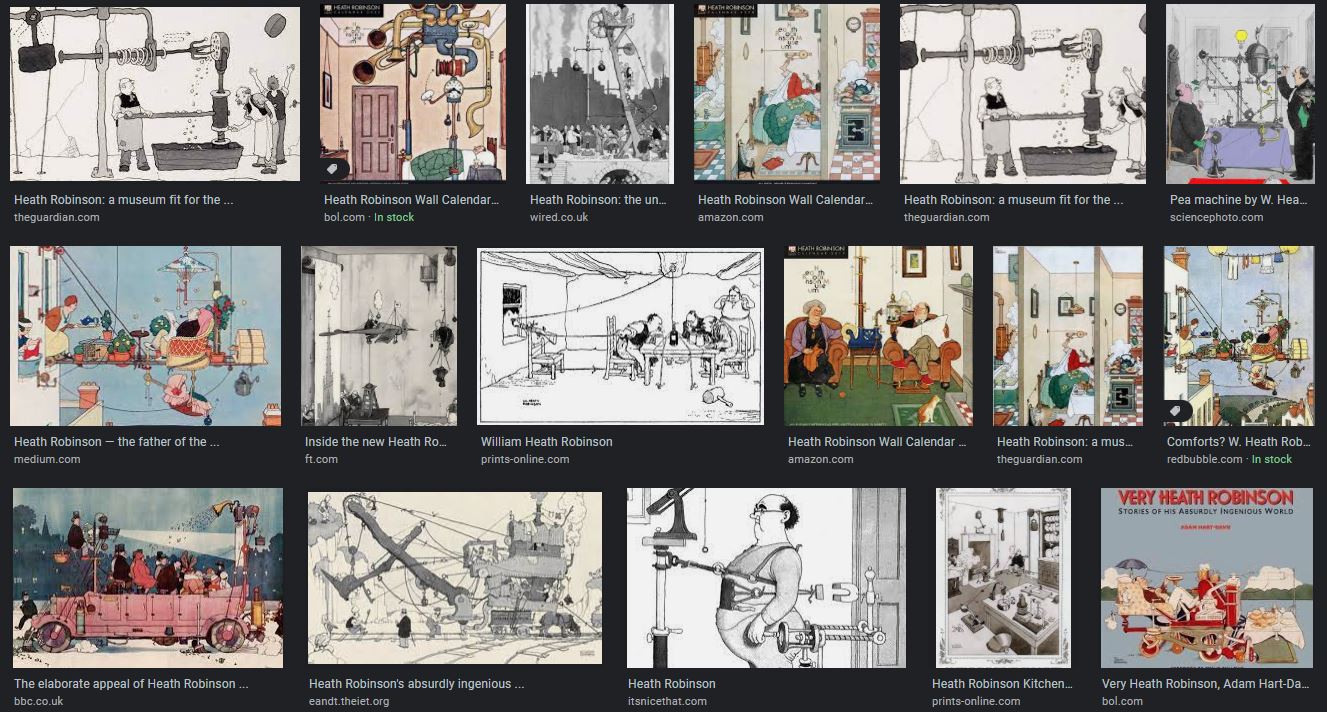
De draagbare luchtreinigers en UV-lampen die nu in sommige NHS-ziekenhuizen worden gebruikt om te proberen de verspreiding van Covid door hun afdelingen te stoppen, waren in vergelijking "Heath Robinson", zei hij.
https://www.google.com/search?q=heath+robinson