

Semantics. Branch of linguistics: science that deals with the meaning of symbols and in particular of language
What is Semantics
Er wordt in wetten en bepalingen gemakkelijk met begrippen gegoocheld. Wie daarop wijst is al snel een muggenzifter (ik laat de mieren even buiten beschouwing). Aanleiding voor dit artikel is de verandering van de Wettelijke definitie van vaccin "tegen Covid-19" in vaccin "tegen het virus SARS-Cov-2". Misschien hebben ze mijn artikelen ter harte genomen dat er juridisch geen sprake meer kan zijn van Covid-19 maatregelen, ook niet als je een verkoudheid die naam geeft. Ook op EU-niveau probeert men er iets op te vinden, zodat er een nieuw kader wordt gevonden waarbinnen de maatregelen alsnog gebruikt kunnen worden, al is de ziekte waarom het ging, Covid-19, er niet meer.
If you're short on time, read underneath the box. It is a linguistic treatise on how concepts and definitions are squandered, with disastrous consequences because words end up in laws.
What is a Semantic Discussion?
Vaak wordt de term "semantische discussie" gebruikt omdat je misschien wel hetzelfde bedoelt als iemand anders maar een ander woord gebruikt. Een semantische discussie lijkt dan niet over de inhoud te gaan maar over iets oppervlakkigs. Dat doet geen recht aan semantiek. Het gaat er immers over of je wel de juiste woorden gebruikt, en vooral dat de definities van beide gesprekspartijen (uitgaand van een discussie) nog wel overeenstemmen. Elk woord is immers een verwijzing, een symbool dat naar iets anders wijst, laten we dat andere even het "concept" noemen. (Vaak wordt de term "begrip" gebruikt maar dat zit mij teveel in de hoek van "begrijpen, inzien, doorgronden". Het woord "concept" smaakt neutraler.)
Agreement on terminology
So, in a discussion, it is essential that the participants in a discussion use their words in the same way. If this is not the case, then there is no meaningful exchange of ideas. Sometimes speakers are sloppy in choosing their words, sometimes it turns out that they have a different concept in mind for the same word or vice versa. If you come across that, you first have to coordinate it with each other. Then you have a semantic discussion. The glossaries must match.
In social conversations, this is not so precise, where condoning an unfortunate choice of words is only cooperative. If something is really at stake, it is different. This is also the case in scientifically tinted conversations and articles.
Connotations, framing, nudging
Woorden zijn complex. Ze hebben connotaties. Dat zijn concepten (of andere woorden) waarmee ze bewust of onbewust geassocieerd worden. Door woorden met negatieve connotaties te gebruiken kun je goed "framen". Framen heeft bijvoorbeeld een negatieve connotatie, waarmee je kunt "nudgen". We willen niet genudged worden - denken we. Want we willen natuurlijk wel graag bevestigd of gerustgesteld worden. Is dat het geval, dan kunnen we ons meestal goed vinden in de woordkeuze. We noemen het dan ook geen framing.
The positive framing of wind turbines and solar panels in the media will therefore escape most people because they are happy with it. Surely a solution will have to be found to the climate problem outlined by the same media, which, according to the media, is caused by CO2 emissions. This creates a narrative.
Sliding panels
Er zijn nogal wat termen verschoven, de afgelopen twee jaar. Het woord "kritisch" wordt als negatiever beschouwd dan voorheen. "Kritische journalistiek" was vroeger toch juist scherp, alert, onderzoekend; nu lijkt "kritisch" vooral de aanduiding voor iemand die altijd wel wat te zeiken heeft, van alles ontkent en overal tegen is.
Zo zijn "Links" en "Rechts" zijn ook niet meer wat het waren, de extreemrechtsen hebben zich progressiever en eigenzinniger getoond dan de (extreem)linksen, die op hun beurt het in zwang geraakte rechtse begrip "totalitarisme" hebben gekaapt.
Context also determines meaning. As society, the context of words, changes, so do the meanings. There are words that mean nothing and derive their value from what the listener makes of them. He would be able to deduce the intention from the context. So you have to know that context, you have to be able to assess the person who uses the word and how they relate to that context. Contexts are individual. You can define a common glossary, but it is more difficult with a context.
Een goed voorbeeld is de zin "Er stond een sanctie op maar het is nu gesanctioneerd." Iets sanctioneren zegt op zich niks: het kan zowel "goedkeuren" als "bestraffen" betekenen. Het woord "maar" en het Nederlands idioom maken duidelijk wat waar bedoeld wordt. Taalgebruikers hebben daar in de praktijk weinig moeite mee. Incidenteel misschien wel maar eens dat lost zich dan wel op door net zo slordig luisteren dus, ach. Geen commissies die zich daarover gaan buigen. Geen herdefiniëringsinitiatieven. Gewoon losjes communiceren en als je het allemaal met elkaar eens wil zijn dan werkt dat prima. Je zult dan afscheid nemen met het weldadige idee dat je het helemaal eens bent terwijl je strikt genomen niet "kritisch" genoeg bent geweest om het breekijzer in een haarscheurtje te zetten. Dat onderscheidt sociale conversaties van rationele (redelijke) discussies.
Uncompromising science and conversation with compromises
In social conversations, the ideal end goal is that you all have the same opinion about something. The outcome of a sum may well be wrong, but as long as you agree on it, everything is fine. In rational discussions, however, by disagreeing with each other, you ultimately try to arrive at the correct outcome.
A conversation can become easier if you mix up the concepts used. For example, by agreeing that you will shave off the sharp corners, you prevent harsh criticism of each other. Softening terms, agreeing that it actually means something different... Compromise is what a democracy lives on.
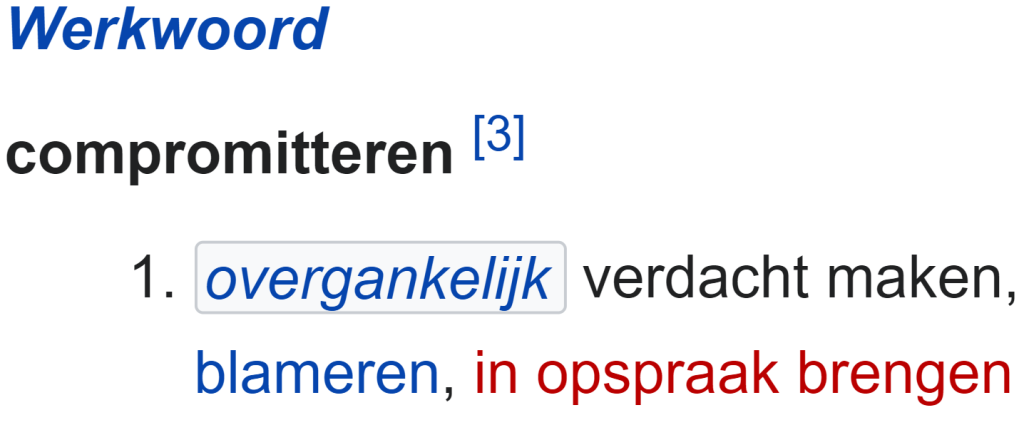
Compromises in communication. In other words: Compromised communication. That sounds different.
Terminology and Definition: Priority #1
A good example of this was the decision of the House of Representatives to equate the word 'positive test' with 'infection'. This is in response to a motion by Wybren van Haga to use both terms in accordance with the scientific definitions. That was not well received because those who wanted to count more infections thought it was a great idea to count positive tests as infections! After all, there were many more of them! (they thought, but in reality this was not the case) There is therefore no further substantive discussion about it. Imagine a substantive discussion - no, leave that to the experts, we are not going to sit in the scientist's seat.
It goes even further: friend and foe agree that a 'contamination' does not necessarily mean an 'infection'. This is accurate enough in everyday use, but if you go into depth you will have to define your core concepts more sharply.
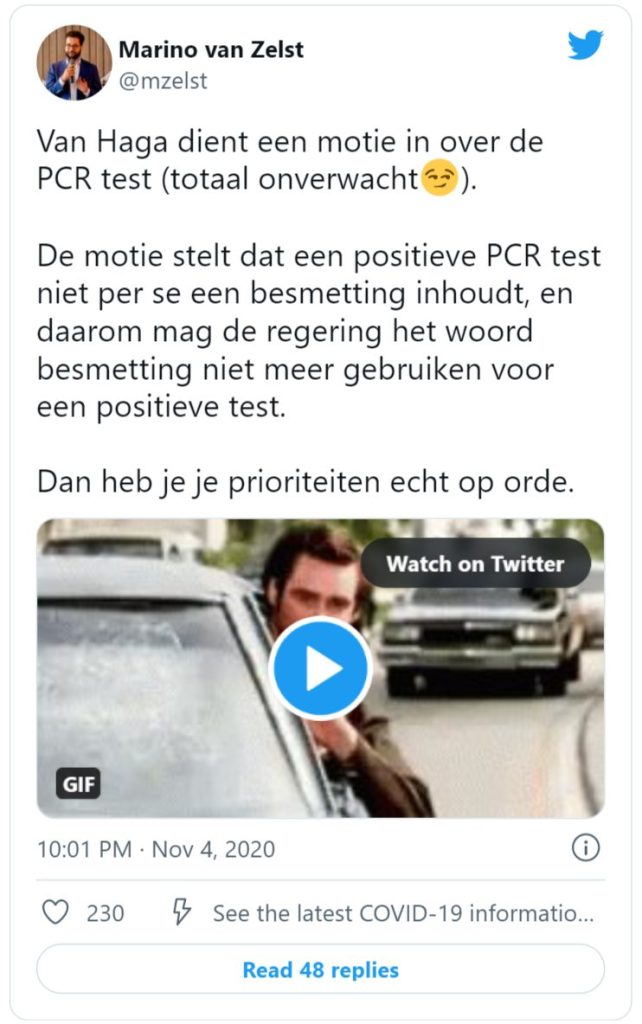
Van Haga had eigenlijk het verschil moeten maken tussen "positieve PCR" en "infecties", niet "besmettingen". Een positieve PCR geeft (mits niet vals-positief) wel degelijk aan dat iemand in aanraking is geweest met het virus en dat dat nog aantoonbaar is (dus ermee besmet).
There are three concepts at play (actually four)
A word can be contaminated. A contagious object has first become contaminated. Air can be contaminated. Your hair may be infected. Your hair is pre-eminently contaminated, there is always a lot of stuff in it. Your nose hair may be contaminated, the same goes for that. Your mucous membrane. All those examples don't say anything about an infection. A bulletproof vest with a dent or even a bullet in it says nothing about whether or not the person wearing it was injured. In the case of an infection, the situation is different:
In an infection, disease-causing microorganisms have entered your body and multiply and cause inflammation.
Gezondheidsplein.nl
- Positive test
This usually indicates whether there is virus present somewhere. Not always correct, so not 100% equatable to contamination. - Infection
Presence of virus on an object - Infection
Virus that causes inflammatory reaction(s) after penetration - Illness (or severity of the disease, if any)
Slordige denkers als mzelst vinden dat er niet gezeurd moet worden over definities van kernbegrippen, we willen immers allemaal hetzelfde. "Het eens zijn", "met één mond praten" die gedachte schuilt daarachter. Daar past nadenken niet bij want voor je het weet verschijnen er haarscheurtjes. Iemand bedenkt een kritische noot en dat willen we niet. Kritische noten worden als lastig ervaren, terwijl ze opbouwend zijn: als je stelling deugt, kun je hem versterken met het juiste weerwoord. Deugt hij niet, dan kun je proberen hem op een andere manier te versterken of op zoek naar een betere.
But yeah, it wasn't like that. There were no probing curious scientists involved in the decision making. They were all canceled - insofar as they were heard at all. There were mainly civil servants who - entirely as civil servants - followed the ministry's line. White collar soldiers. They kept their mouths shut when the minister wanted figures on the corona dashboard that did not do justice to reality.
The source is (for the umpteenth time, but very briefly now) at:
- Science - Het falen van instituten en gremia die claimen wetenschappelijk te acteren en er blijk van geven niet te begrijpen wat wetenschap eigenlijk is. Voorheen als "excellent" aangeduide organisaties als rivm, omt, knaw, stichting skepsis, toezichthouders en overkoepelende organen inclusief hun redacties zoals het ntvg, etc. Allemaal ondermaats gebleken.
More about what science is in this article about scientific integrity - Journalism - Bovenstaande instituten hebben voor journalisten altijd gefungeerd als referentie: checken of iets waar is doe je op de site van het rivm. Ook toen er faliekante onzin en tegenstrijdigheden vandaan kwamen, zijn journalisten nooit onderzoekende vragen gaan stellen of andere bronnen gaan raadplegen. Redacties weigerden aanvallen op het 'narratief', wat leidde tot het volstrekt falen van de Nederlandse journalistiek. Dat viel vooral op als ze opereerden onder het misleidende label "onafhankelijke feitencheckers" (zie https://onafhankelijkefeitencheckers.nl/). A gap emerged in the market that alternative investigative channels and newspapers have jumped into, such as Flavio Pasquino's Blackbox with documentaries, interviews and now also its own TV program (3x a week), or The Other Newspaper, which not only contains worse articles than we are used to from our 'quality newspapers', but also much better ones. And in any case: made with integrity. With what we see on radio, TV and other MSM, that sometimes seems questionable because when you see what happens there... you can't be that stupid as a journalist.
- Politics - What can you expect from them? They are representatives of a people with an average IQ of 100 who allow themselves to be brainwashed by the media. Are they actually capable of crisis management where science might have to take over for a while? A striking example is of course Rob Jetten, someone with a conviction to be jealous of, especially when you consider that he has zero file knowledge.
On the other hand, are scientists doing better? With such 'scientists', civil servants appointed and paid by the government, it is a waste of time. And those civil servants are also not going to let themselves be driven away, see the persistent tweet campaigns of Marion Koopmans. The work of virologists remains crucial for the future, if she is to be believed.
It looks like they're going to do this same word game again now. The law, including at EU level, wants to replace terms with others so that the COVID-19 laws also apply to other diseases. A matter of semantics because COVID-19 no longer covers it well... It still says 'SARS-CoV-2', but when will 'a contagious virus' be replaced? Either way, you don't need another case of illness.
Het lijkt misschien allemaal "een semantische discussie" maar dit soort word games veroorzaken miljardenschulden, faillissementen, leed, eenzaamheid, onteigeningen, duizenden onnodige doden, vaccinatieschade. Ik kom vast nog wel terug op het aanpassen van de term "Covid-19" in de diverse coronawetten. Kennelijk zijn ze het met me eens dat Covid-19 niet meer van toepassing is. Alleen had ik gedacht dat je die wet dan afschrijft, niet dat je er andere woorden inzet waardoor je hem ook elders kunt inzetten. Die move had ik even niet voorzien. Daar moet je dan weer politicus voor zijn denk ik.
I'm sure I'll come back to it, but if not, here's the gist of that story:
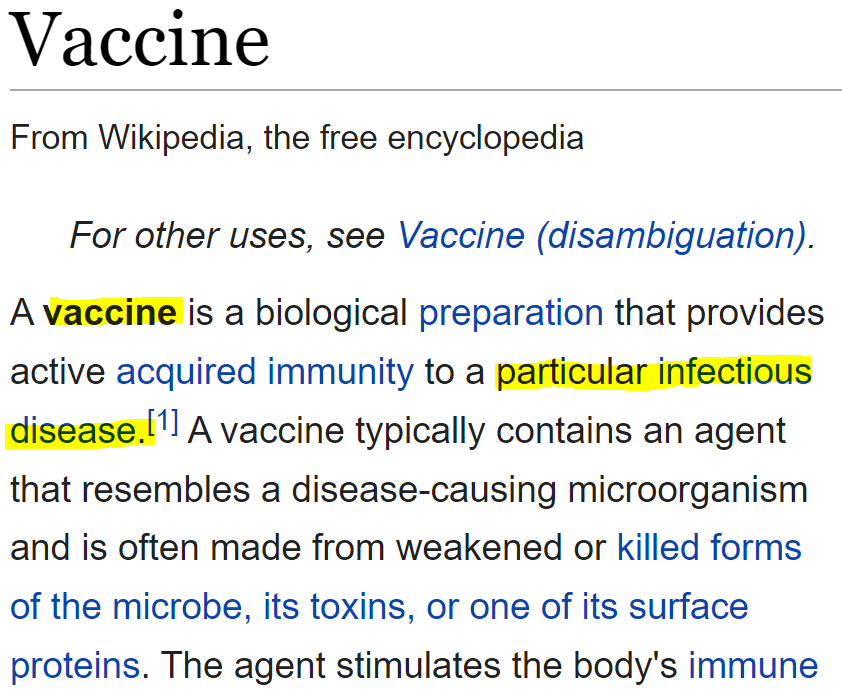
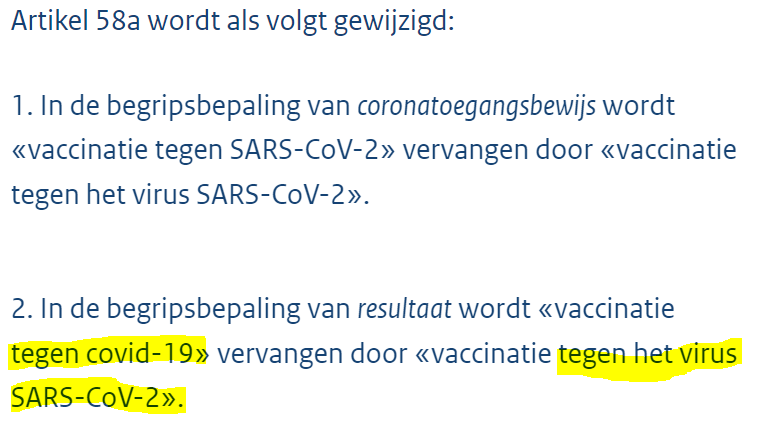
The legislators, the policymakers, our level of government do not care at all. Nonsense or not, scientifically or medically correct or not: the more control, the better.
Movie in the replay
Nog maar eens de uitleg over "besmetting" door het Head of ViroScience van Erasmuc MC. Haar expertise ligt bij "wijzen van overdracht van virussen". Echt, daar zit ze al 30 jaar bovenop. Ik kan niet begrijpen dat zo iemand niet allang met zachte hand van het toneel is afgevoerd. Dit kan alleen bij overheden. In het bedrijfsleven had ze het hier niet zo lang mee gered. Tenzij ze daar ook een Fauci-achtige sponsor had gevonden.
Vanaf 1:00 - van Dissel, die "niet wil uitsluiten dat het zwart-wit is want dat is het niet". (Om maar aan te geven hoe vergevingsgezind spreektaal is.). Met nog geen paar seconden later een van de grootste logische denkfouten ooit. Hoe bestaat het toch.
Then, at 1:30, OMT member Menno de Jong about aerosols - not quite to the point but equally outdated and unsubstantiated blah blah.
