


Since the outbreak of the Corona epidemic, there has been regular excess mortality in the Netherlands. Covid-19 mortality is part of that. However, if you look at 2021 and especially 2022, it is striking that when you take the Covid-19 deaths away from mortality, there is still a substantially higher than expected mortality. For the first time in the summer of 2021, and over a larger period in 2022.
Diffuse
The numbers of Covid-19 deaths, as reported by CBS, are debatable. We have already indicated that we consider it to be on the high side or even significantly too high. People may have died from underlying conditions, but if they have tested positive for the coronavirus in recent months or there was a suspicion of Covid-19, then Covid-19 has been registered by CBS as the cause of death, see also explained here. As a result, certain causes of death may occur less in 2020 to 2022 than in previous years. However, we have analysed the main causes of death and cannot identify causes of death that are less common in 2020 to 2022 than in previous years. This phenomenon may occur but is masked by an increase in other causes. Let's take an example.
About 3,200 people die from cardiovascular disease every month. The actual numbers show a small decrease for 2020 and a small increase for 2022. It may be the case that, for example, approximately 6,000 fewer people died from cardiovascular disease in 2021 because they were counted as Covid-19 deaths, but at the same time approximately 6,000 new cases were added due to other causes. However, we don't know that. And that number of 6,000 can be smaller or larger... Only random autopsies can provide 100% certainty. Statistics also provide certainty, but this is not accepted by everyone because there is no histopathological evidence. Yet no autopsies are performed to obtain a definitive answer.
Interpretation of causes of death
In any case, apart from Covid-19, there is still net excess mortality in 2021 and 2022, which most likely has "somewhere" to do with Corona and everything related to it:
- Is it the corona measures? The lockdowns, staying at home or working from home?
- Or is it mainly the adverse effects of the vaccinations?
'Deferred care' is also mentioned, but a quantified hypothesis for this is lacking. It is unclear how delayed care may be the dominant factor in the reported excess mortality rates, see also explained here.
If (1) in particular, then the causes to be identified should show increased numbers of mortality in the three corona years compared to the previous years.
If (2) in particular, the causes of death would only rise after the vaccination campaign had picked up steam, say from May 2021.
If we compare the mortality in the period 2020-2022 with that in the years 2015-2019 (the average of those years is our reference period) then it appears that all-cause mortality was highest in '22. Given the demographic development, we can also expect it to be about 3 – 5% higher in 2022 than in the reference period. This is equivalent to 0.6 to 1% per year and amounts to an increase of
- 2,800 to 4,700 in 2020
- 3,800 to 6,300 in 2021 and
- 4,700 to 7,900 in 2022
compared to the reference period, when a total of just over 152,000 deaths were counted on average. You would expect that, about 6,000 more in 2022. But by 2022, there will be nearly 18,000 more, out of a total of nearly 170,000.
Het CBS wijst er hiervan ca. 8.000 toe aan Covid-19. De andere doodsoorzaken scoren samen ook een dikke plus van ongeveer 10.000 gevallen. Dat hadden er gezien de demografische ontwikkeling dus maar 4.700 tot 6.900 mogen zijn. Dit alles op basis van een gelijkmatige ontwikkeling, waarbij we nog niet eens rekening houden met de ondersterfte die we na 2020 (en zeker na het daaropvolgende 2021) hadden mogen verwachten. Ook hier gaat het om duizendtallen van ontbrekende ondersterfte, de "onzichtbare oversterfte." Aan de becijfering van deze onzichtbare oversterfte wordt gewerkt.
Approach
If we put the monthly deaths per cause of death in a row from January 2020 to December 2022, a period of 36 months, then we can try to draw a straight line, a trend line, through the measuring points. This line appears to be rising everywhere. However, it's more interesting to see if that increase only started sometime within those 36 months.
Because it is known from the data that unexplained excess mortality only occurred significantly in the second half of 2021, we cut the bill at the beginning of the second half of '21. We therefore divide the period of 36 months into two equal parts of 18 months.
The two largest causes of death "New Formations" (= cancer) and "Cardiovascular Diseases" and also "Suicide" show a slightly larger increase in the second period (i.e. after July 2021) than in the first period, but the differences are small. Hopefully this means there's virtually no damage; It may also be because these are syndromes that do not lead to a sudden meaningful increase in mortality rates within this period.
Compared to the reference period, new diseases are 1.5% higher and cardiovascular diseases are almost 1.3% higher. Lower than the expected 3-5%. It may well be that under-mortality plays a role in this.
For the Suicides, the maximum is 51 extra in 2022, which is more than 2.7% higher, not a quick riser and also (fortunately) definitely a small number, very small when it comes to trends to draw conclusions from.
We conclude from this that, based on the available data, these two largest causes of death curiously play a limited role in the current unexplained excess mortality. The others do show a significantly larger increase and we will discuss them below.
Erratum
In de CBS-data waren "Verkeersongevallen", "Zelfdoding", "Accidentele val" en "Niet-natuurlijke oorzaken" naast elkaar gerapporteerd. Het blijkt nu dat de eerste drie categorieën ook meegenomen waren in "Niet-natuurlijke oorzaken", dus eigenlijk dubbel geteld. Accidentele val en verkeersongevallen behoorden tot de snelle stijgers, zelfdoding niet. Het vervolg van het artikel is hierop aangepast.
In de grafiek hieronder zijn de doublures uit "Niet-natuurlijk" gehaald.
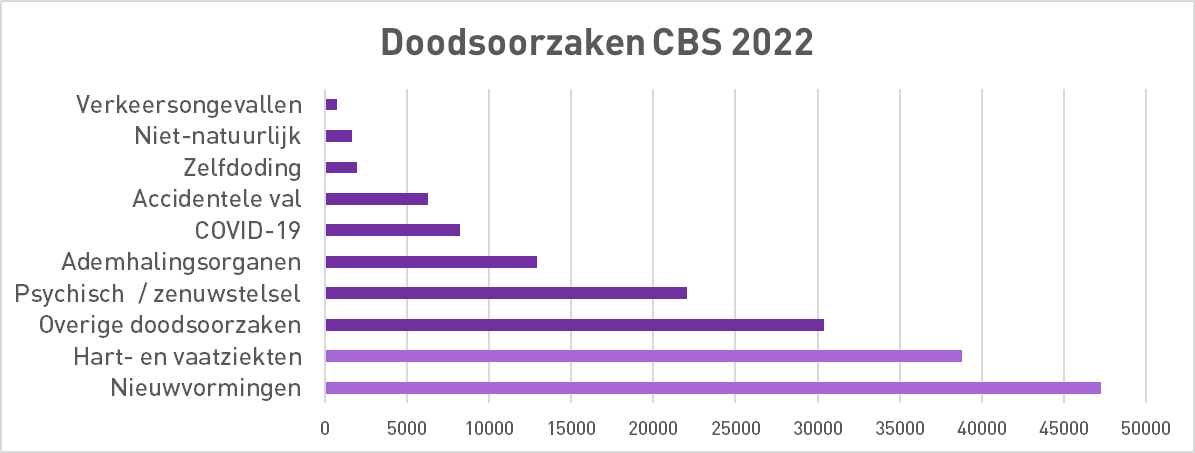
The other causes of death together cause almost as many deaths as the two leading causes of death.
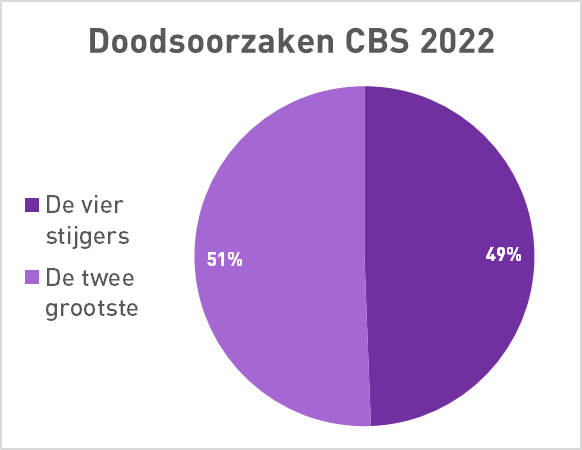
Met de aangepaste indeling hieronder gaan we verder. Belangrijk om te onthouden: Accidentele val is veruit de grootst oorzaak binnen "Niet-natuurlijke overlijdens" en vertoonde met Verkeersongevallen een grote stijging. Die behandelen we ook apart.
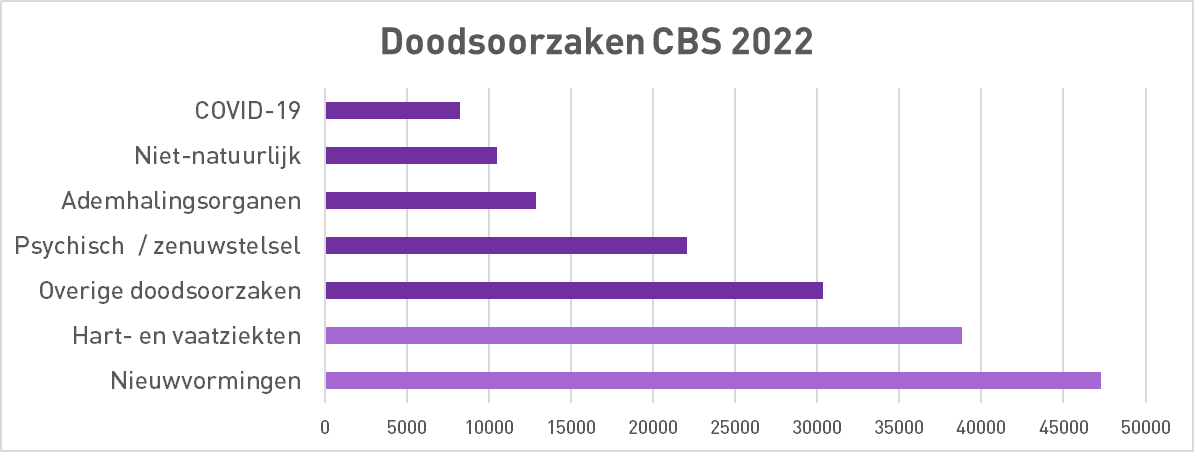
Four causes analysed in more detail
- Non-natural causes of death
- Respiratory organs
- Psychic/nervous system
- Other causes of death
Eerst even wat uitleg aan de hand van de eerste grafiek "Accidentele val", subcategorie van "Niet-natuurlijke oorzaken". Op de X-as zien we de maanden in de periode januari 2020 – december 2022. Op de Y-as zien we een percentage. Dat percentage is de afwijking van de betreffende maand ten opzichte van het gemiddelde van die maand in de jaren 2015-2019.
Example: in October '22, 560 people died from this cause. The average in the reference period was 349 in October. An increase of 211, which is over 60%.
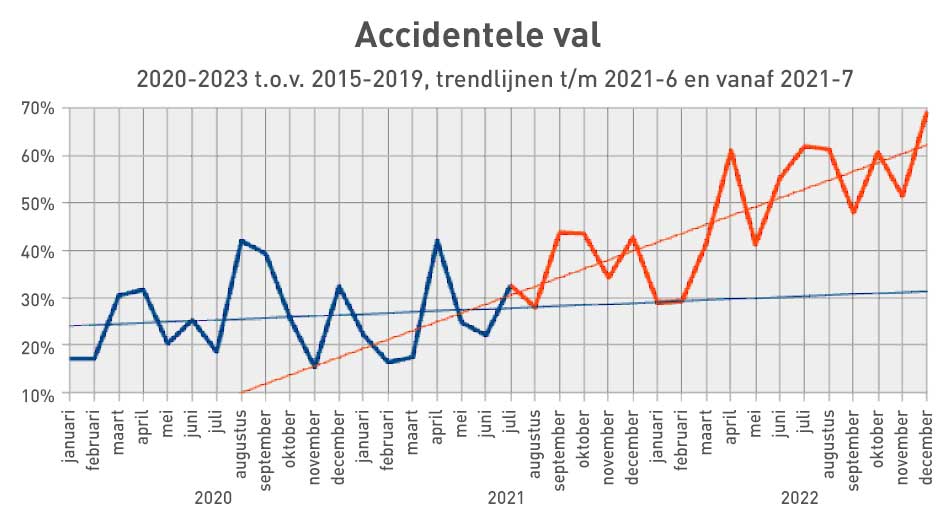
De dunne blauwe lijn is de regressielijn of trendlijn (Excel-functie) van de blauwe punten. Wat we zien is dat deze lijn bij de "Accidentele val" licht stijgend is, 4% in 18 maanden. De rode trendlijn daarentegen stijgt met 32% in 18 maanden, een acht keer zo grote stijging dus. Ook het snijpunt van de twee trendlijnen ligt in de buurt van de overgang van de eerste naar de tweede periode.
The thick blue line connects the percentages of the different months calculated in this way for the first period. The thick red line does that for the second period.
Accidental fall (one of the non-natural causes of death)
The maximum is 2,098 extra in 2022, which is 50.5% higher and therefore many times higher than could be expected on the basis of demographic development.
Respiratory organs
We see a downward trend in the first period. This is of course partly because there was no flu in the winter of '20/'21. There was flu in April and December '22.
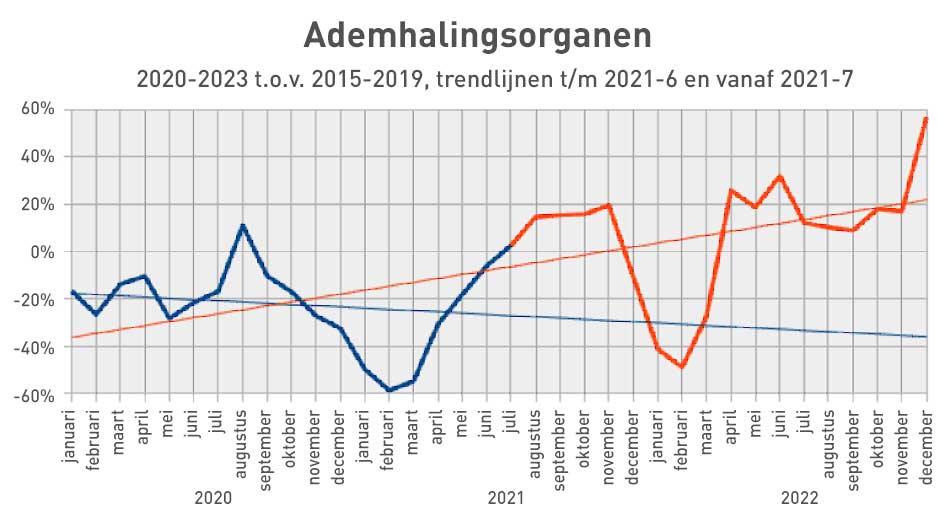
Fewer people died from respiratory diseases in 2020, 2021 and 2022 than annually in the reference period. In '20 and '21 we are talking about a decline of approximately 20%. The causes are the mild flu wave at the beginning of 2020 and the absence of flu until April 2022. However, we cannot rule out that some of the people who died from Covid-19 according to the cause of death forms should actually have been placed in this category. There was flu in 2022, which means that on balance as many people died in 2022 as in the reference period.
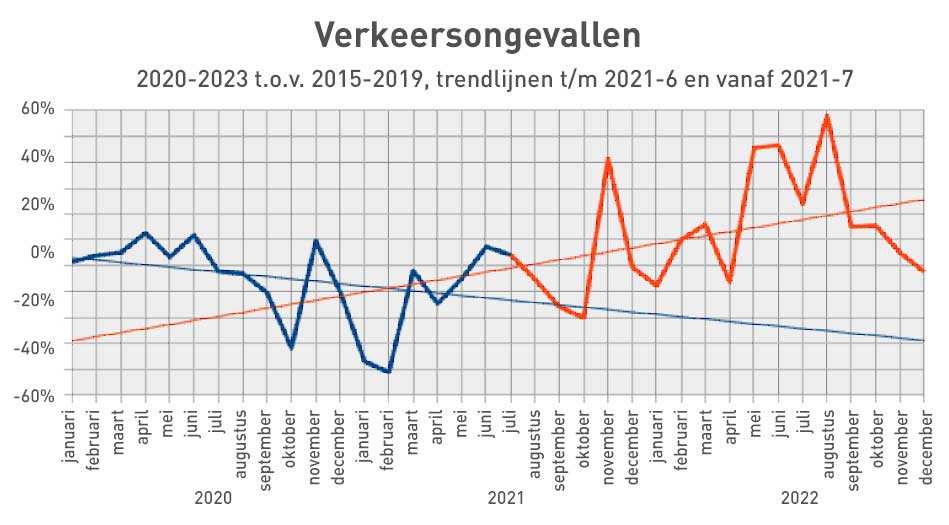
Road accidents (one of the non-natural causes of death)
A maximum of 112 extra in 2022, which is 18.7% higher.
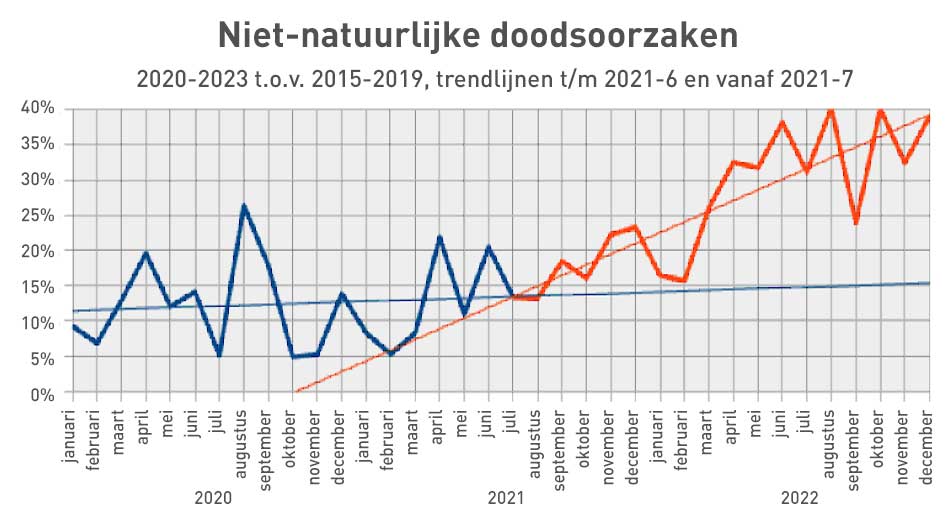
All non-natural causes of death
A maximum of 2,448 extra in 2022, which is 30.4% more than in the reference period.
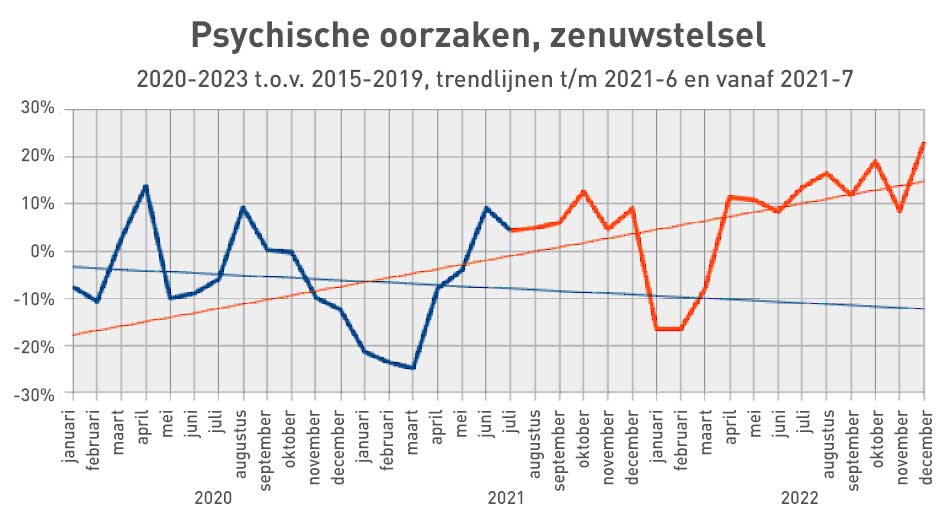
Mental disorders, nervous system
A maximum of 1,219 extra in 2022, that is 5.9%.
Other causes of death
And last but not least, the category “other causes of death”. This requires separate explanation. Statistics Netherlands reports that if the cause of death forms for deceased persons have not yet been received, the deceased persons will be counted in this category. This means that quantities in this category may still decrease. When publishing the causes of death up to and including December 2022, CBS indicated that approximately 5% of the forms for the month of December '22 have not yet been received.
First, let's look at the importance of this category as a whole. In the reference period, this category accounted for 17.8% of the four main categories covered in terms of numbers. That had already risen to 19.2% in 2020 and rose to 21.6% in 2022. This means that this category accounts for one fifth of all deaths (not only excess mortality).
Other causes of death represent an additional 6,612 in the whole of 2022, which is 27.9% more. This category is therefore responsible for the largest increase (outside Covid-19).
Voor goed begrip: een categorie "Overig" die groter is dan 10%, maximaal 15% doet bij een accountant de wenkbrauwen fronsen.
Statistics Netherlands (CBS) states that 95% of the forms have been received in the last month. This means that about 400 – 450 forms are still missing. The number in the "other" category will then go back to 43% compared to the reference period, compared to 66% in December 2022.
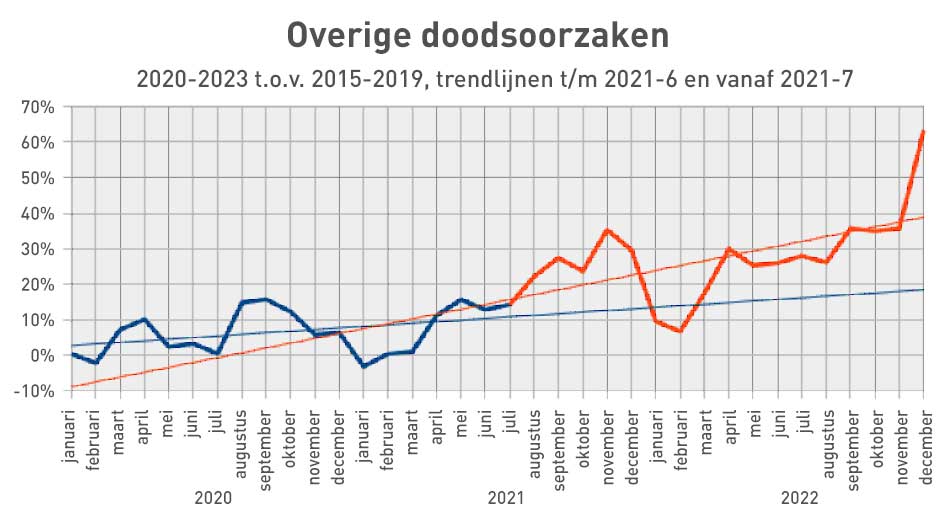
This seems to be a logistical, administrative or perhaps policy issue; Surely it will not be the case that certain causes of death are put on hold because of ambiguities.
The four biggest risers together
Together, these four causes are well able to largely 'explain' excess mortality. It's up to medics to explain why we see these curves.
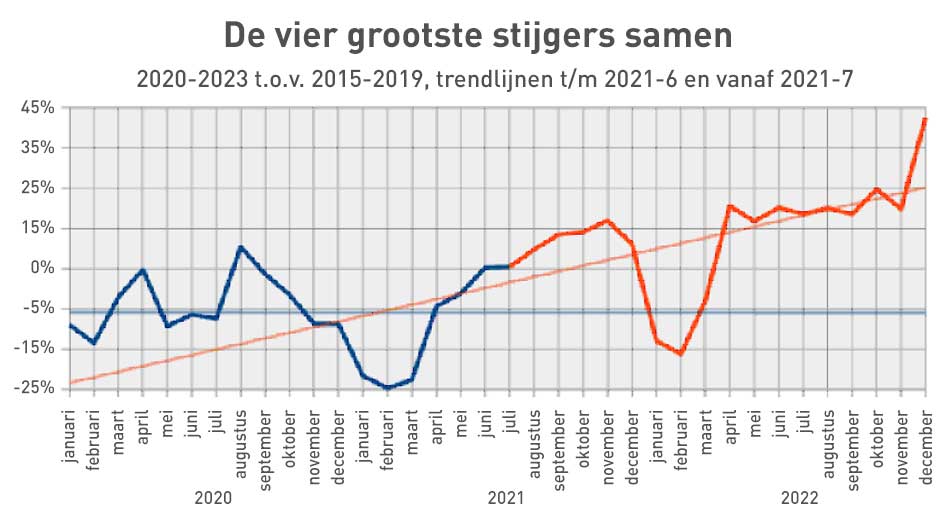
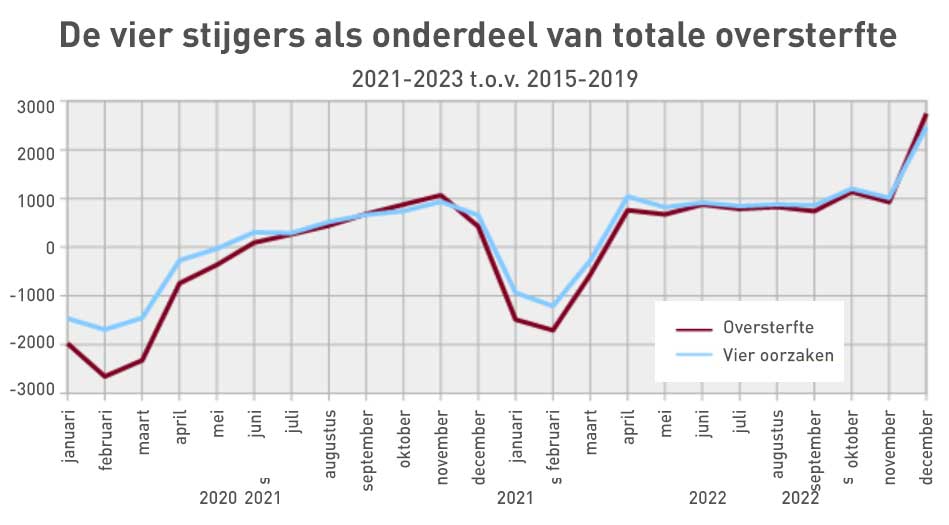
De vier stijgers komen samen iets hoger uit dan de totale oversterfte. Dit komt voornamelijk doordat "Hart- en vaatziekten" er niet bij zit: in de eerste drie maanden van 2021: -15%, in de eerste drie maanden van 2022: Hart- en vaatziekten -13%. Het is traditioneel (samen met nieuwvormingen) de grootste categorie maar die heeft dus relatief weinig invloed, tenzij de categorie "Overige oorzaken" nog verrassingen gaat opleveren.
Dat ademhalingsziekten (groten)deels op het conto van Covid zijn geschreven is niet verwonderlijk: er was geen influenza. Griepdoden vielen altijd onder "ademhalingsziekten", ook als het in het verleden coronavirussen betrof. Die zijn daar nu uitgehaald en in een nieuwe categorie ondergebracht: Covid-19. De terugval van de categorie "ademhalingsziekten" is dus uitlegbaar: dat zijn de overlijdens die anders door griep zouden zijn veroorzaakt.
What causes these causes of death?
In deze grafiek is te zien hoe de besproken categorieën zich door de tijd heen tot elkaar verhouden. In de laatste maand lijkt het alsof alle categorieën een enorme jump maken maar die wordt bijna helemaal veroorzaakt door de onderste categorie "Overig", die nog deels moet worden ondergebracht bij andere groepen.
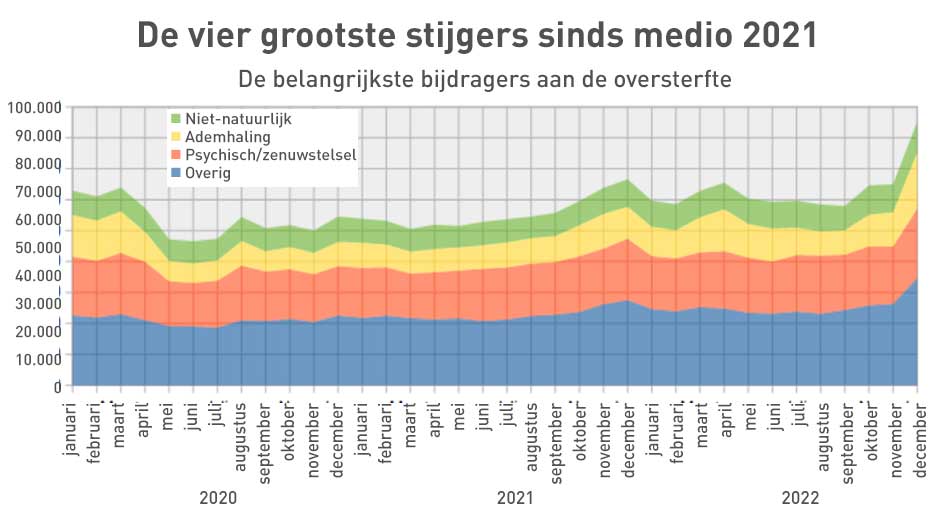
The accidental fall (by far the most important factor of the non-natural causes of death) could very well be the canary in the coal mine. We've seen that category 50% is verhoogd: het simpelweg vallen van mensen - als doodsoorzaak! Het is weliswaar geen grote doodsoorzaak maar samen met de stijging "verkeersongelukken" kan die stijging bijna geen toeval zijn. Raken mensen plotseling (even) de controle kwijt? Vallen ze dan compleet buiten westen op hun hoofd? Komt dat dan door een neurologisch probleem? Of door zuurstoftekort vanwege een probleem met het hart of een bloedpropje...?
Accidental fall, traffic accidents: non-natural death: Fainting or even dizziness can be fatal if it happens at an unfortunate moment: driving in a car along the canal, on a kitchen step, while working on heavy machinery... Social media is flooded with video compilations of people falling over, athletes, TV presenters. Unfortunately, we don't know any figures.
Another conceivable cause could be problems with the eyes, i.e. reduced vision. We also have no figures for this, but we do have case reports of eye diseases due to vaccinations since June 2021 (1, 2, 3 etc.)
Respiration: Dit zou kunnen wijzen op immuniteitsproblemen of overreactie op respiratoire infecties. Zaken als luchtvervuiling spelen niet pas sinds medio 2021, die zitten ook al in de eerdere trends. Door de temporele correlatie en de bekende "immune imprinting" komen de vaccins dan weer in beeld (immune imprinting: het verkeerd trainen van het immuunsysteem bij de eerste kennismaking met een nieuwe indringer.)
Psychological causes: The desocialization and polarization, the fear campaigns (see the Nocebo series part I and part III), loss of livelihoods, decline in quality of life due to economic or medical conditions (vaccine damage?), neglected care, lack of attention: these are all options, most of which will be difficult to quantify – if they are ever independently investigated.
Nervous system: The occurrence of serious neurological side effects such as cortical sinus venous thrombosis (blockage of blood drainage in the head), Bell's palsy (facial paralysis, usually temporary), transverse myelitis (inflammation of the nerve bundle in the spinal cord) and Guillain-Barré syndromes (autoimmune disease of the nerves) is greater than expected, together with other common effects such as headache. The development of new demyelinating brain lesions (autoimmune disease with inflammation in the brain and spinal cord) with or without detection of specific antibodies and the exacerbation of pre-existing neurological conditions (e.g. epilepsy, multiple sclerosis) are also of great concern, although there is as yet no conclusive evidence that the vaccines are involved (this, by the way, is the 'boilerplate' disclaimer that closes almost every published study these days.)
Incidentally, neurological problems, whether sudden or not, can also manifest themselves in accidents and accidental falls.
Remaining: It is scary how CBS has increased the "other" category from 17.8% to 21.6% in 2022. That will save almost 7,000 deaths... What will come out of this?
Among the two traditionally largest causes of death, neoplasms (cancer) and cardiovascular diseases, there is no noticeable increase. Now we have looked at percentage increases. An increase of a few dozen (or even hundreds) of deaths is less visible at these cohort sizes. The uproar that has arisen around peri-/myocarditis in young people is not reflected in the totals of cardiovascular diseases. To do that, we would have to look at what happened by age. For example, if a 30% increase in heart failure can be seen among under-40s, this does not necessarily lead to a huge increase in the total: the number is too small compared to the elderly.
Conclusion and discussion
What are the drivers of the mentioned causes of death that emerged quite suddenly since mid-2021 and continued to rise? Deferred care? Covid? Long Covid? Lockdowns? Why not from mid-2020?
Only necropsies, preferably carried out systematically and randomly, can provide a definitive answer. The difference between virus spikes and vaccine spikes is detected. It raises suspicions that this evidence is not being used. As a result, the vaccines remain emphatically in the picture as the main drivers of excess mortality.
No one - who has been informed - wants a Corona vaccine now. In this way, soon the flu vaccines will be dragged into the trap and maybe others too (my prediction). It is advisable to thoroughly revise the job description of a possible future Think Tank Disinformation.

Who wants a vaccine after all the lying and deceiving of governments and pharma? My prediction: mandatory vaccination... with the expanded WPG and WHO pandemic treaty, that's very likely.
Very clear, top analysis, which also fits well with the mechanistic (delayed) action of injections with mRNA.
Regarding accidental fall: it is very possible that in addition to the aforementioned causes, slowly accumulating damage to (small) blood vessels in the brain, especially the brain stem, lead to bleeding that causes people to fall, and then (acutely) die. Necropsy or CT scan can show/rule this out, but serological examination for the presence of Spike protein itself and/or antibodies to Spike protein and/or Nucleocapsid protein can also indicate at least a certain direction.
Mechanistically, the body continues to produce mRNA Spike protein after injection with Pfizer or Moderna, which can also be detected in blood for months after injection. Because Spike protein binds to ACE2 that is found anywhere in the blood vessels, bleeding can basically occur throughout the body, in addition to immunological reactions and blood clotting.
Modified mRNA and lipid nanoparticles (LNPs) containing modRNA can also be detected in almost all organs after injection: liver, heart, lungs, kidneys, brain, spleen, AND is expressed there in different cell types (1).
If the modRNA is written in DNA, which has also been demonstrated in the vials themselves by means of contamination, and after injection built into a stem cell, egg cell or sperm cell, you will continue to produce Spike for life and the amount of cells that produce Spike protein can increase through cell division! Incidentally, Pfizer itself had already demonstrated this in Japan (2).
It is almost certain that Spike protein is expressed in all organ systems, and that may explain why excess mortality has increased across all lines, as the injection does not remain locally in the muscle but spreads throughout the body. In addition, 10% of all injections are injected intravenously "by mistake", so that Spike LNP modRNA enters the bloodstream directly.
It is therefore the case that people like Tijs vd Brink who only know "traditional" vaccines do not understand that you can also get complaints of side effects that are potentially fatal months after injection, AND why those responsible do not want this to be investigated, because if something has not been demonstrated / proven, legally less or nothing is possible.
1. https://www.sciencedirect.com/science/article/pii/S0168365922000414
2. https://pandemictimeline.com/2021/05/japan-shares-biodistribution-study-of-pfizer-covid-19-vaccine/
Thanks for the addition! We wrote a bit more extensively about the spike earlier. https://virusvaria.nl/wat-covid-19-en-mrna-vaccins-gemeen-hebben/
The tricky thing can be the potentially cumulative causes. Multi-cause correlation with factors that can also influence each other. For example, poor mental health (such as high stress over developments) exacerbates the impact of a compromised immune system rather than being able to compensate for it. Similarly, three or more influences can coincide over a period of time and at some point become visible in the data, but without a good explanation of why it is at that moment and not before. Also, delay effects of an infection or vaccination if it would manifest in the form of change of recovery time or robustness. Only with another new factor will a vulnerability begin to manifest itself. These are not unusual scenarios. And I doubt the data will ever reveal its secret. Personally, I suspect that the immune system is a complex whole in which behavior, habits, exposure and mental state are an important part. Many if not all diseases and the concept of "well being" revolve around the immune system. Deep in the core, this has been massively and suddenly tinkered with: change in social behavior, vaccinations, hygiene, interaction, negativity or nervousness and so on. The puzzle will probably remain difficult without positive theory: a change in thinking about the coherence of many things.
Notable increase in road fatalities from 2022:
https://www.cbs.nl/nl-nl/nieuws/2023/16/meer-verkeersdoden-in-2022-vooral-fietsende-75-plussers-vaker-slachtoffer
Gives idd to think. Incidentally, CBS *** quietly reduced the number of road deaths in 2022 from 737 to 713. That is still quite a few more than in the period for Corona.
Perhaps it would be good – now that it is all starting to fade into the background at "the institutes" (CBS to 2-weekly update and RIVM can no longer report corona deaths) – to once again address how RIVM is covering up excess mortality:
calculate those on the data of / with as baseline the average of the previous 5 years minus the flu waves, to better monitor flu, or in their own words:
https://www.rivm.nl/monitoring-sterftecijfers-nederland
"The purpose of monitoring mortality rates is to visualize the impact of an epidemic or an incident. Statistics Netherlands looks at the averages over the past few years for the week in question, which include increased mortality during the flu season. RIVM also wants to map excess mortality due to the flu every year. For this reason, the estimates of CBS and RIVM differ."
Now Covid has become endemic and eig. has turned out to be a (new) type of flu, it is (certainly) not correct to calculate excess mortality from an epidemic on numbers that also include Covid mortality. Then – until those years have fallen out of the 5-year average, i.e. until 2026 – you will cloud that very impact. Do these statisticians not realize that, or do they? Or am I making a fallacy myself?
No, you are not making a fallacy. If RIVM wants to visualize the impact of flu or future epidemics, all incidental factors must be omitted from mortality, not only flu waves but also the excess mortality of recent epidemics.
But perhaps this is the tacit acknowledgement of the RIVM that the health of the population has structurally deteriorated due to the Covid-19 crisis and/or that the healthcare system has structurally deteriorated. In other words, there is no 'bounce back' to old levels; Current levels of mortality are largely permanent.
In my opinion, there is another annoying calculation error in this piece. In 2022, the mortality rate will not be about 179000 but about 170000.
I think there is a double counting: deaths from accidental falls, from traffic accidents and from suicide are parts of 'mortality from non-natural causes'. So you don't have to add those parts to the main category. That also initially went wrong for me yesterday when downloading the file.
But if you correct this, the mortality totals of the causes of death also match the already known annual totals of mortality elsewhere.
Sounds like you're right! Let's see.
We still expect confirmation from CBS, but given the addition, you can't help but be right. The article has been updated.
Thanks for reporting!
And the confirmation is there. Not that I've had an email from CBS saying "sorry for the inconvenience", no I haven't. But in the recently published table in which the causes of death up to January 2023 were listed, it was now clear from the indication that there are three subcategories among the Non-Natural Causes of Death.
5f has become 5e1,
5g has become 5e2,
5h has become 5e3,
5i has become 5f.
Thank you CBS for this clear way of communicating!
Good morning Anton,
You say in the piece that there is no significant increase in the number of deaths due to cardiovascular disease. However, I do see an increase.
source: https://www.cbs.nl/-/media/_excel/2023/47/doodsoorzaken-2020-juli-2023.xlsx
The number of deaths for cardiovascular disease has a seasonal effect and has a certain noise on the signal. However, if we simply take the annual totals (with this you filter out the seasonal effects and the noise) then we get;
2015 39379
2016 38647
2017 38153
2018 37795
2019 37541
2020 36622
2021 37446
2022 38986
2023 39332*
For 2023, I extrapolated the figures up to July for the total year.
I also noticed it last year: the sharper decline in 2020 and the trend reversal in 2021 and 2022 (and now also 2023). Personally, I think that the sharper decline in 2020 was partly caused by an erroneous (or erroneously listed as the primary) cause of death – more with Covid than with Covid.
The second phenomenon is worrying. I haven't read a plausible, well-substantiated explanation for it anywhere.
Statistics Netherlands (CBS) and the National Institute for Public Health and the Environment (RIVM) have released "some" data on the vaccination status of the deceased. But at the level of the causes of death, they remain silent.
I find that remarkable.
It would not surprise us if the percentage of vaccinates are higher than expected with cardiovascular and accidental fall.
That can of course also be completely reversed. But then I think: if that were the case, they would have come out with it.
Beats. We initially looked at the average of the 2015-2019 period and not at the trend, which is steadily declining until the beginning of 2021. So there is indeed a significant increase from the beginning of 2021.
Thank you for your answer.
I have another question about these causes of death reporting that you might answer.
Table states;
Not received a cause of death form
% of the total number of deceased people
2015 0,2%
2016 0,4%
2017 0,5%
2018 0,5%
2019 0,5%
2020 1,0%
2021 1,5%
2022* 2,0%
January 2023* 2.4%
February 2023* 2.5%
March 2023* 2.5%
April 2023* 2,9%
Mei 2023* 3,5%
June 2023* 3.7%
July 2023* 5.0%
I assume that it is for a part of death declaration that will be received at a later time. But I don't think that's the whole story. Do you have an explanation for this?
Good point. Of course if you look at the past month after month, the number decreases.
But if someone, for example, made a 19-month curve, he would be increasingly supposed to be higher.
This indicates increased workload on the one hand, but on the other hand also death due to "vague" complaints. We don't know what to fill in, so we don't fill in anything.
The cause of death R99 "unknown" accounts for as many as almost 7,000 deaths in 2022, while just over 4,000 were expected from the five-year trend 2015-2019.
But the eyes remain closed. Tonight also at Pointer: Tinnitus (ringing in the ears) is caused by too loud noise. Yes, there is certainly a cause, but why the explosion now???